A Practical Framework for Safe & Ethical Use of Generative AI
Generative AI is rapidly becoming part of the everyday toolkit for teachers and students. From lesson planning and resource creation to feedback, research, and creative expression, these tools offer powerful opportunities to enhance teaching and learning.
At the same time, their use raises important questions around ethics, data privacy, academic integrity, bias, and responsible use in schools.
This resource provides a practical framework for the safe and ethical use of generative AI in education.
Start with Purpose, Not the Tool
Ask yourself …
What problem am I trying to solve?
Is AI the best tool for this?
What human judgement is still required?
AI should augment thinking, not replace responsibility.
Protect Data & Privacy First
Golden rules:
Never upload confidential, personal, financial, or sensitive data.
Avoid entering identifiable information about clients, students, or colleagues.
Use organisationally approved tools where possible.
If it wouldn’t go on a public website — don’t put it into an AI tool.
Be Transparent About Use
Encourage normalising disclosure.
Say when AI assisted your work.
Clarify what was AI-generated.
Avoid presenting AI output as entirely your own thinking.
This builds trust — especially with sceptical colleagues.
Treat AI Output as a First Draft
AI is:
Confident
Fluent
Occasionally wrong
Always:
Fact-check key claims.
Check dates, statistics, and references.
Verify anything that influences decisions or policy.
Watch for Bias & Ethical Blind Spots
AI systems reflect patterns in their training data so ask these questions …
Whose voices might be missing?
Does this reinforce stereotypes?
Would this advice work equally for all groups?
Ethical use requires human oversight.
Maintain Human Accountability
AI cannot:
Hold professional responsibility
Exercise moral judgement
Understand context fully
AI can generate options. Humans make decisions.
Avoid Over-Reliance
If you use AI for:
Every email
Every report
Every idea
You risk:
Reduced originality
Skill deterioration
Loss of authentic voice
Keep use to a minimum
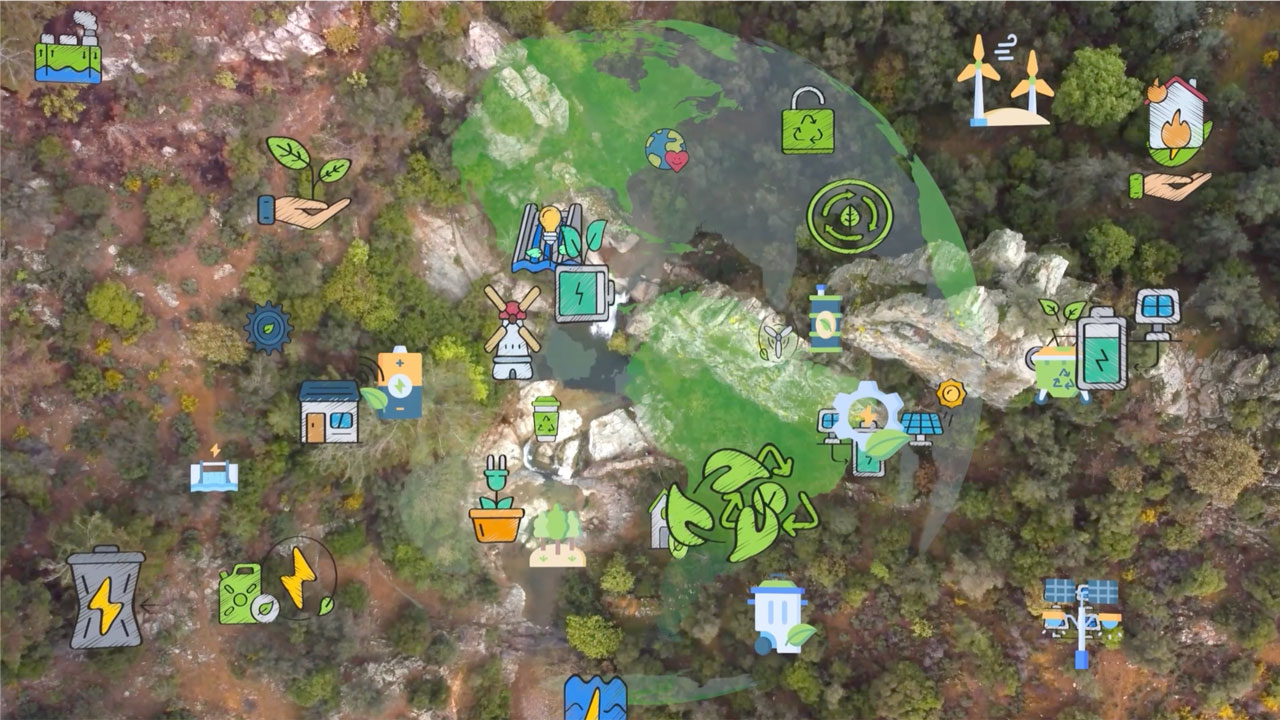
Large models (like those behind tools such as OpenAI, Google, and Meta) require enormous computing power to train.
Every prompt:
Activates servers in data centres that use water cooling systems
Consumes electricity
AI systems depend on rare earth minerals
Like all digital infrastructure, gen AI has an environmental cost. But in many cases it is replacing higher-emission activities such as driving & flying.
Focus on Human Advantage
In an AI-rich world, the uniquely human capabilities become more valuable:


 Dr Tim Kitchen