
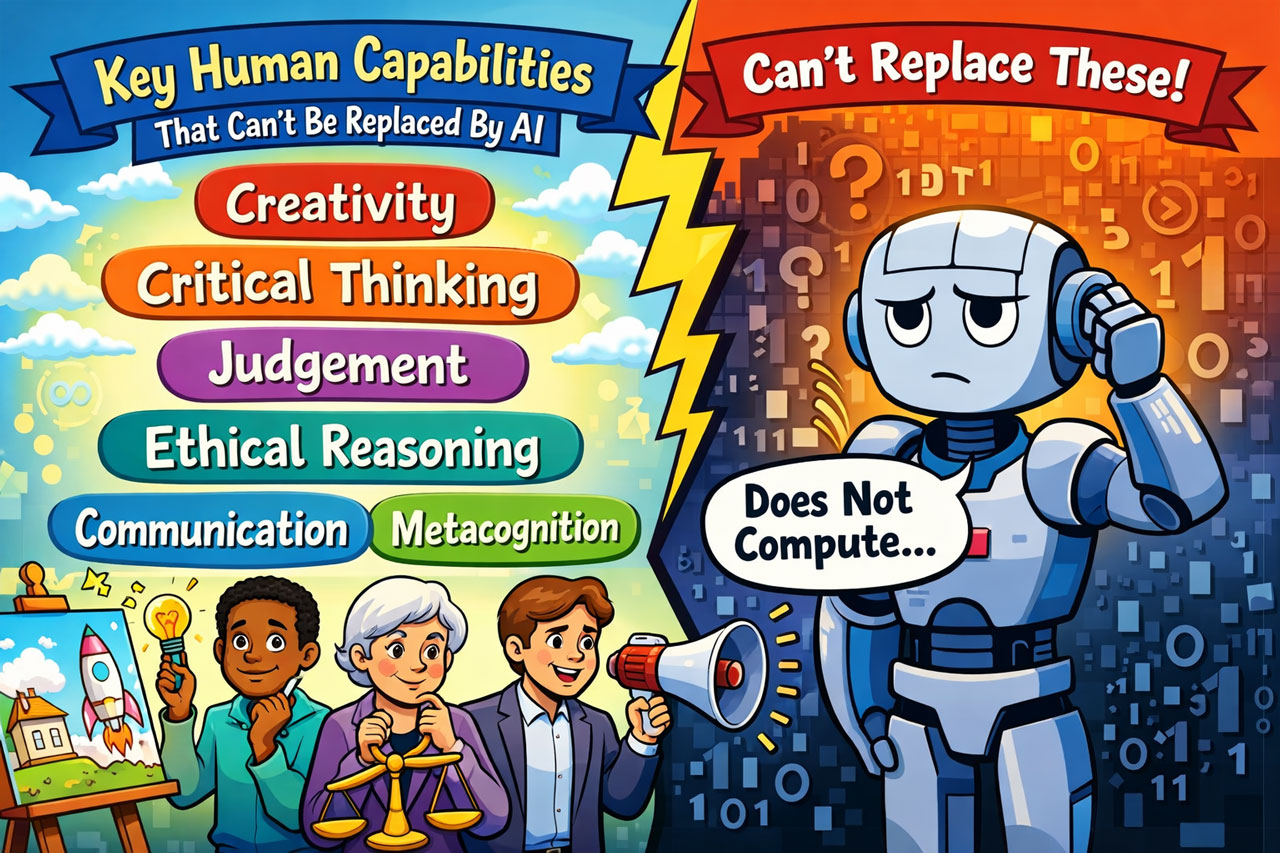
We’re living through a moment where generative AI can produce content faster than ever before. It can draft essays, summarise articles, generate lesson materials, and reformat information in seconds. For both teachers and students, this has the potential to save significant time and reduce the friction of getting started.
But speed isn’t the same as understanding.
To use AI effectively in education, it helps to recognise a simple but powerful distinction: AI excels at production tasks, but struggles with judgement.
What AI Is Good At
Generative AI is highly effective at tasks that are time-consuming, repetitive, or mechanical in nature. It can:
- Draft first versions of writing and lesson materials
- Summarise complex information into key points
- Reformat content into different structures or formats
- Generate multiple ideas, examples, or variations
- Edit for clarity, grammar, and tone
- Create resources like quizzes, rubrics, or worksheets
- Translate and adapt content for different audiences
Used well, these capabilities help remove the “blank page problem” and allow learners to move more quickly into refining, questioning, and improving their work.
Where AI Falls Short
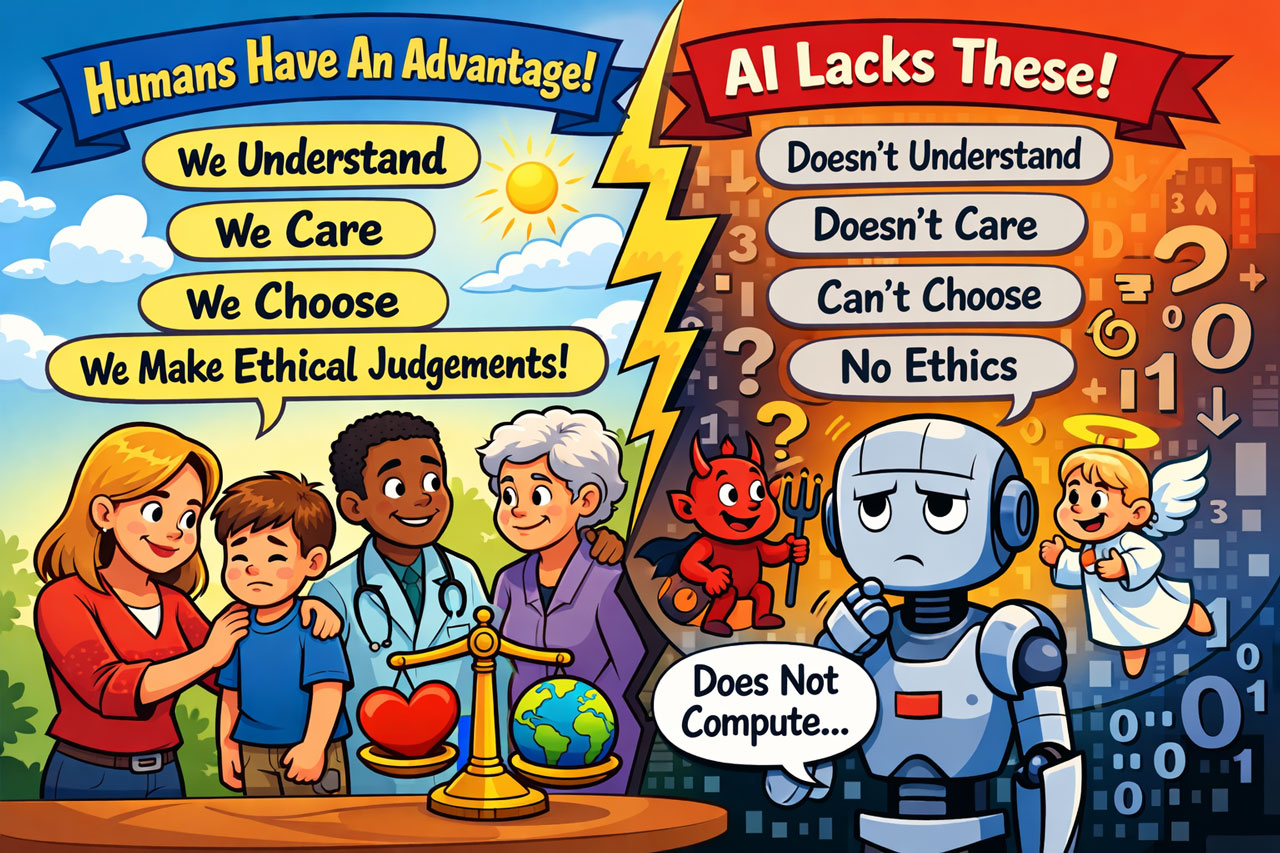
However, the most important parts of learning are not about producing content—they’re about making decisions about that content. This is where AI struggles.
Generative AI cannot reliably:
- Make nuanced judgement calls in complex situations
- Navigate ethical decisions or values-based questions
- Guarantee accuracy or recognise when it is wrong
- Fully understand context, audience, or intent
- Read relationships, emotions, or social dynamics
- Prioritise what matters most in a task
- Know when it shouldn’t be used
- Develop genuine insight, originality, or personal voice
These are deeply human capabilities, grounded in experience, responsibility, and critical thinking.
Why This Matters
The rise of AI doesn’t reduce the importance of human thinking—it increases it.
If AI can handle much of the doing, then the real value in education shifts to:
- Evaluating quality
- Making informed decisions
- Thinking critically about outputs
- Applying knowledge in context
- Creating with purpose and originality
In other words, AI can generate the work—but it can’t decide what good work looks like.
A Simple Way to Think About It
AI can help you:
- Start faster
- Work more efficiently
- Explore more options
But it’s up to humans to:
- Judge what’s accurate
- Decide what’s relevant
- Shape meaning and intent
- Take responsibility for the final result
The goal isn’t to replace thinking with AI.
It’s to use AI to enhance thinking.
Because in the end, the most important learning doesn’t come from what AI produces—
it comes from what we choose to do with it.

 Dr Tim Kitchen