


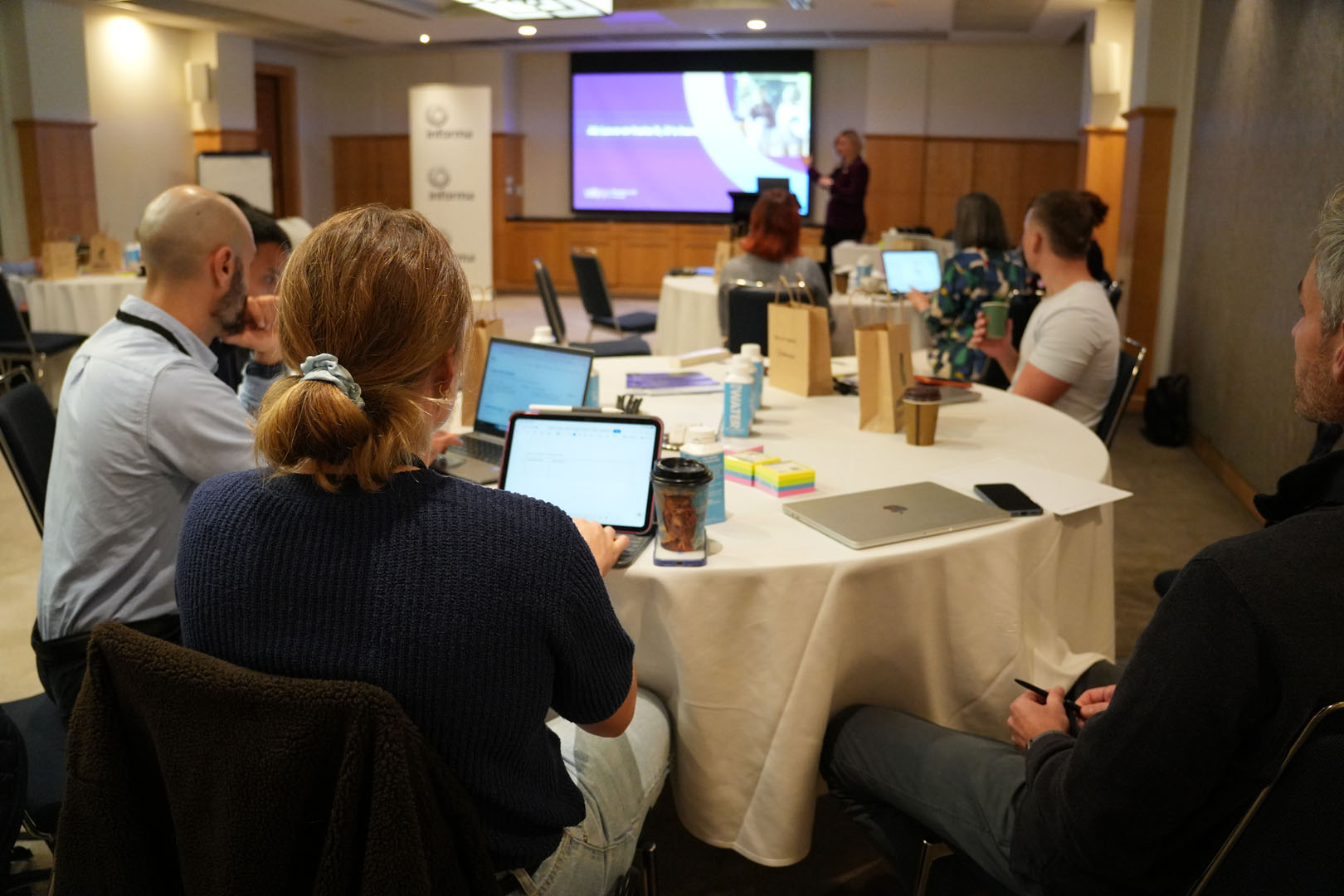
The Informa AI in Education Pre-Conference Masterclass (New South Wales) was held on Monday 18th May 2026 at the luxurious Swissôtel in Sydney. It brought together a passionate group of 25 school leaders and teachers from across New South Wales for a day of deep thinking, practical workshops and collaborative conversations about the future of AI in education. Hosted by the amazing Matt Esterman (from The Next Word and the new Educator Intelligence), the masterclass created a valuable space for educators and leaders to move beyond the hype and explore what meaningful, ethical and sustainable AI integration can actually look like in schools.

Rather than focusing on AI as simply another digital trend, the day centred on a far more important question: how can educators harness AI in ways that genuinely enhance teaching, learning and human capability?
Amanda Rose (Founder & CEO, Western Sydney Women), explored why AI literacy is now becoming a core capability for every educator. Amanda challenged participants to move from simple awareness of AI tools towards meaningful action and implementation. Her session encouraged educators to collaborate with industry and think critically about the role everyone plays in guiding students through an increasingly AI-rich world.

Dr Tim Kitchen led an interactive workshop titled AI First Aid – A 101 on Generative AI for Educators. Designed for educators either starting their AI journey or looking to strengthen their foundational understanding, the workshop covered core concepts behind generative AI, responsible and ethical use principles, practical prompting techniques, and strategies for building a personalised AI toolkit. Participants explored a range of tools hands-on and left with their own personal AI use protocol, a practical framework to guide safe, ethical and effective use of AI in their professional context.

Assessment redesign was another major focus of the day, with Adrian Cotterell from Thinking Mode presenting a highly practical workshop on redesigning assessment for an AI-enabled world. Participants worked through a structured framework to audit existing assessment tasks and rebuild them using principles of authenticity, process visibility and AI resilience. The workshop reinforced a growing reality in education, that assessment must increasingly prioritise critical thinking, creativity, reflection and evidence of learning processes, not simply final products.

The final workshop from Shahenda Kandil (founder of Teggie) explored how AI can support the personalisation of learning at scale. Through hands-on activities, participants developed differentiated resources, scaffolds and learning pathways using AI-supported workflows and protocols. Importantly, the session maintained a strong focus on ensuring that AI-supported personalisation still respects the diverse needs, backgrounds and capabilities of learners.

Across the day, one message became increasingly clear: while AI tools are evolving rapidly, the human side of education has never been more important. Critical thinking, ethical judgement, creativity, empathy and relationship-building remain at the heart of effective teaching and learning. The masterclass highlighted that successful AI integration is not about replacing educators, but about empowering them with better tools, stronger understanding and clearer frameworks.
The energy and openness of the participating school leaders also stood out. There was a strong sense that schools are actively searching for balanced, practical and ethical approaches to AI adoption, approaches that enhance learning opportunities while protecting the human relationships and critical thinking skills that education depends on.
As schools continue navigating the opportunities and challenges presented by generative AI, events like this masterclass play an increasingly important role in helping educators move from uncertainty to informed action.
Gallery




Check out and share Educator Intelligence