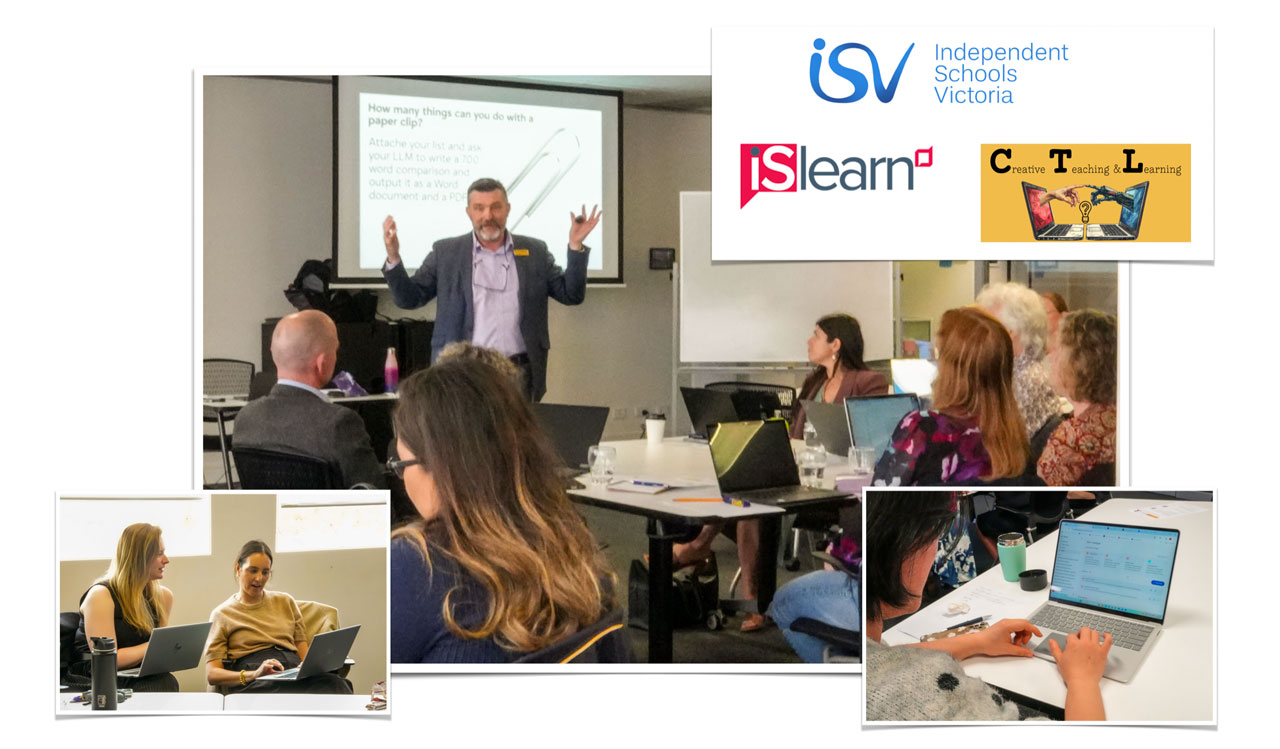
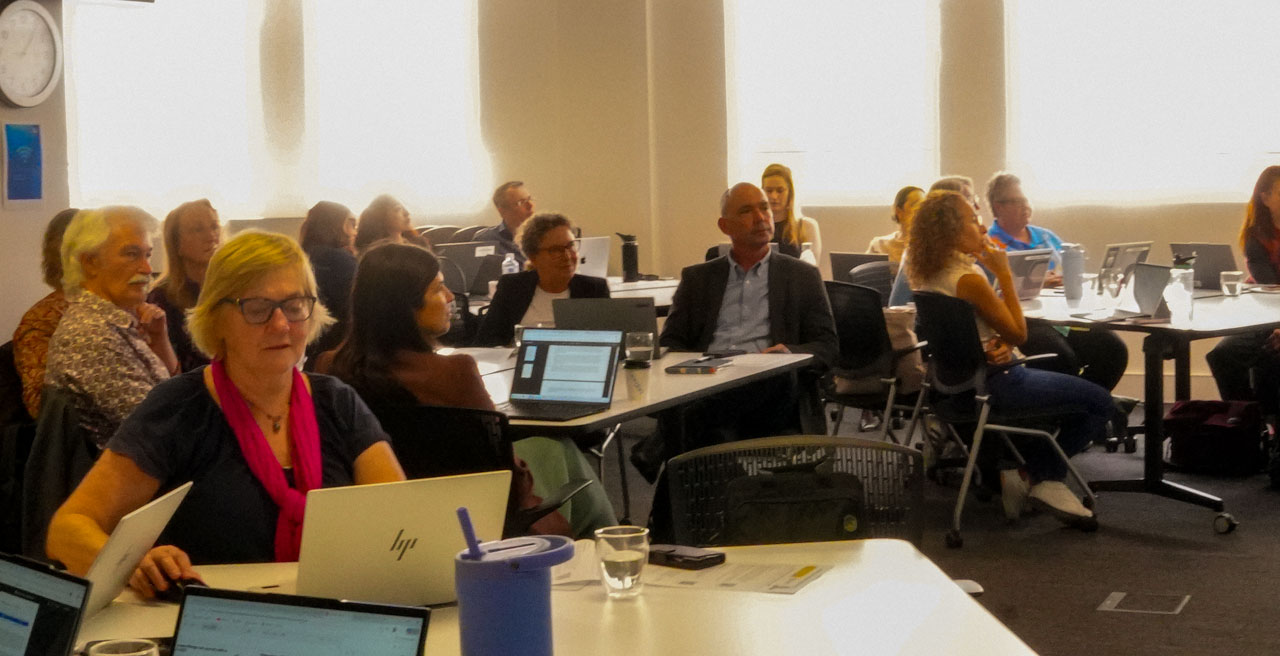
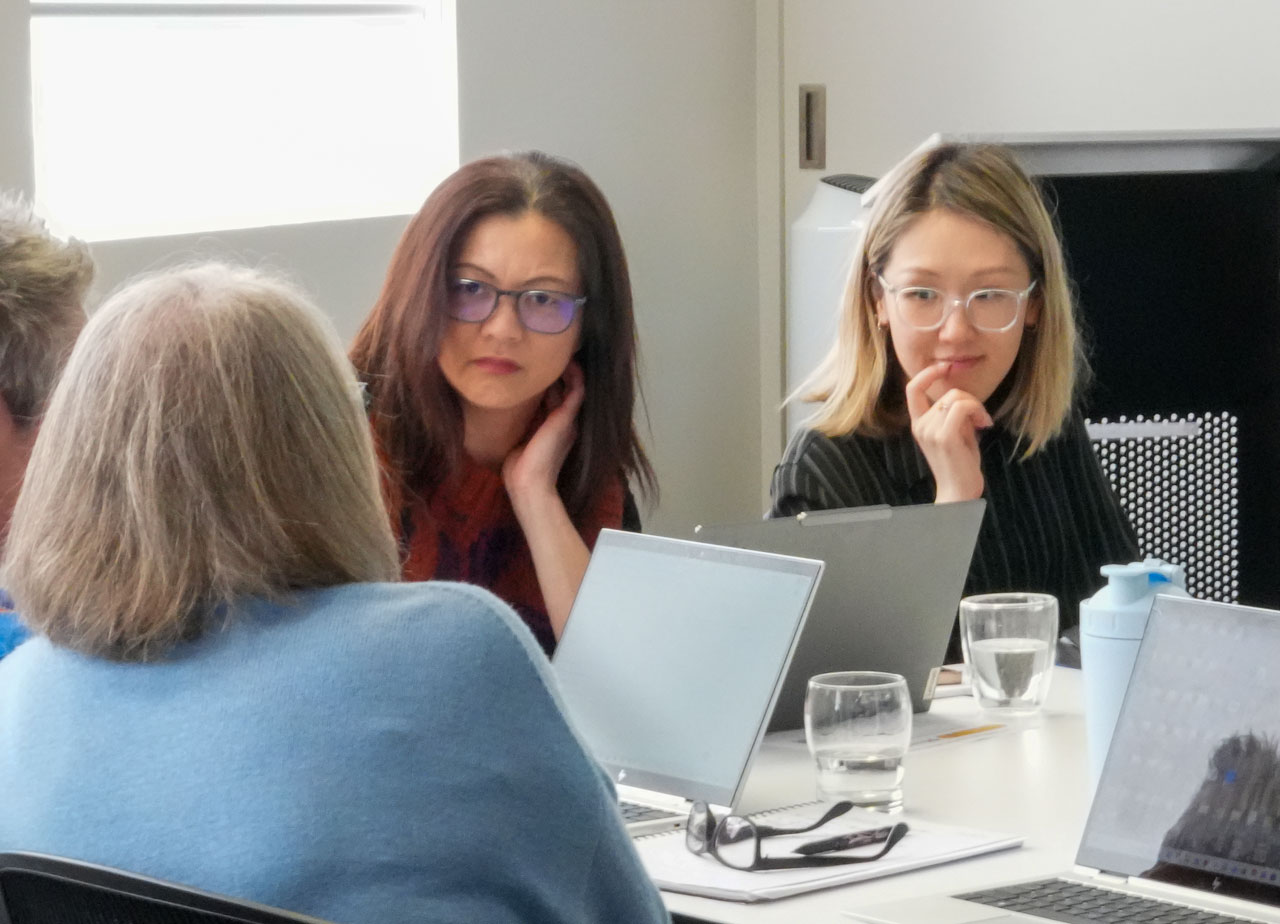
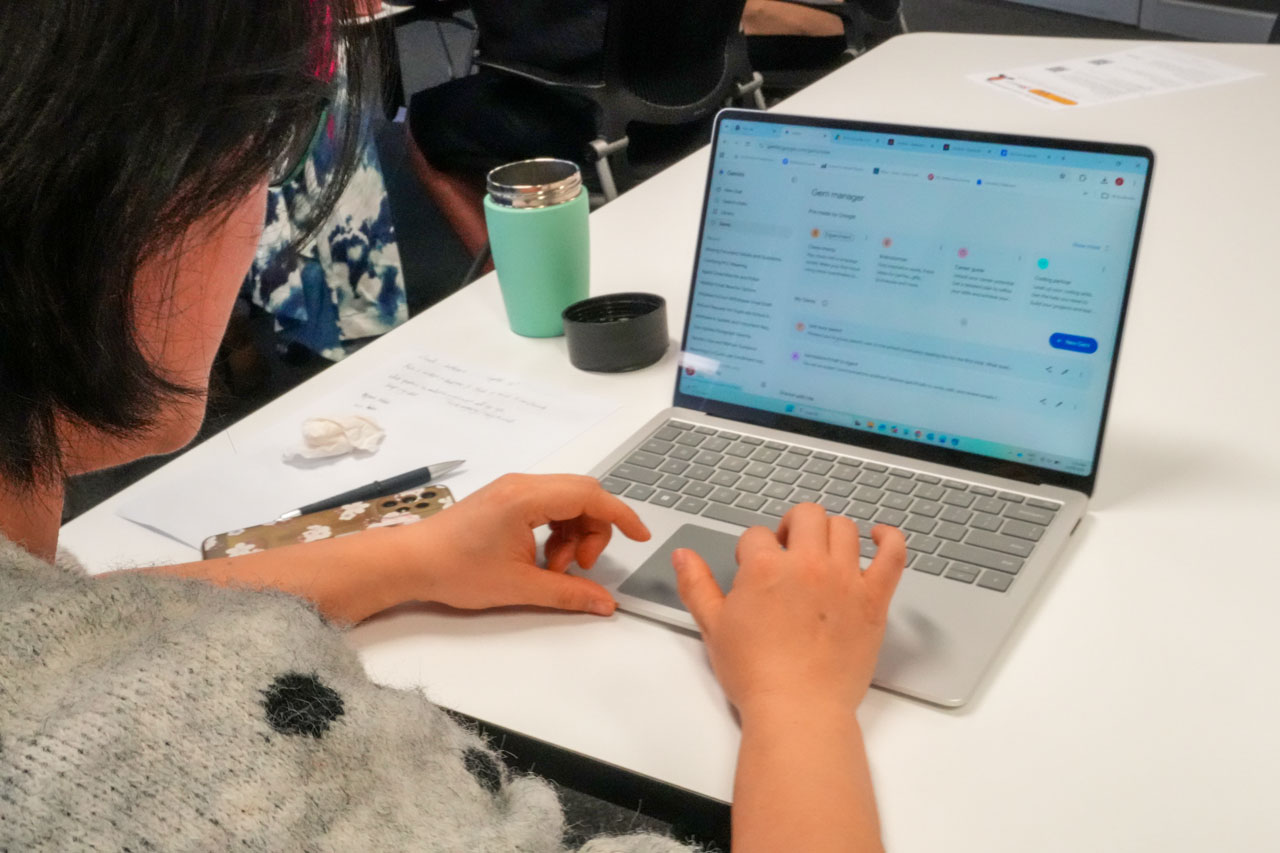
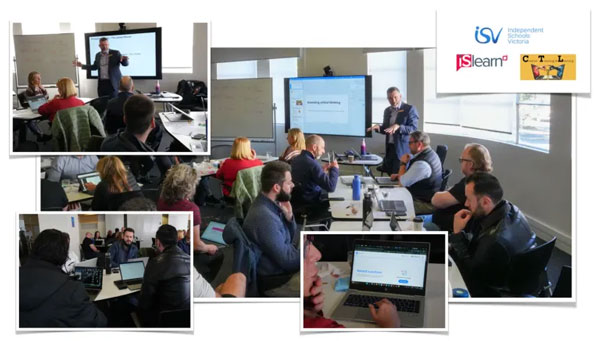
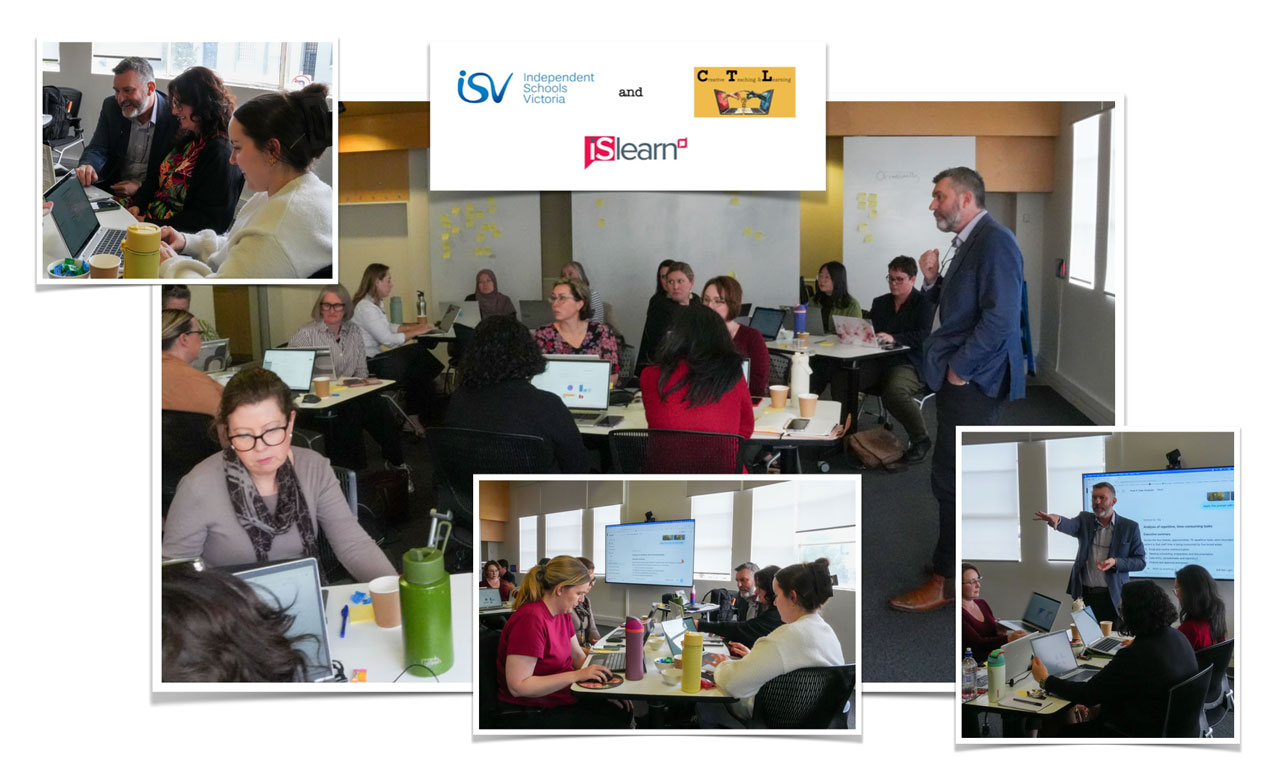
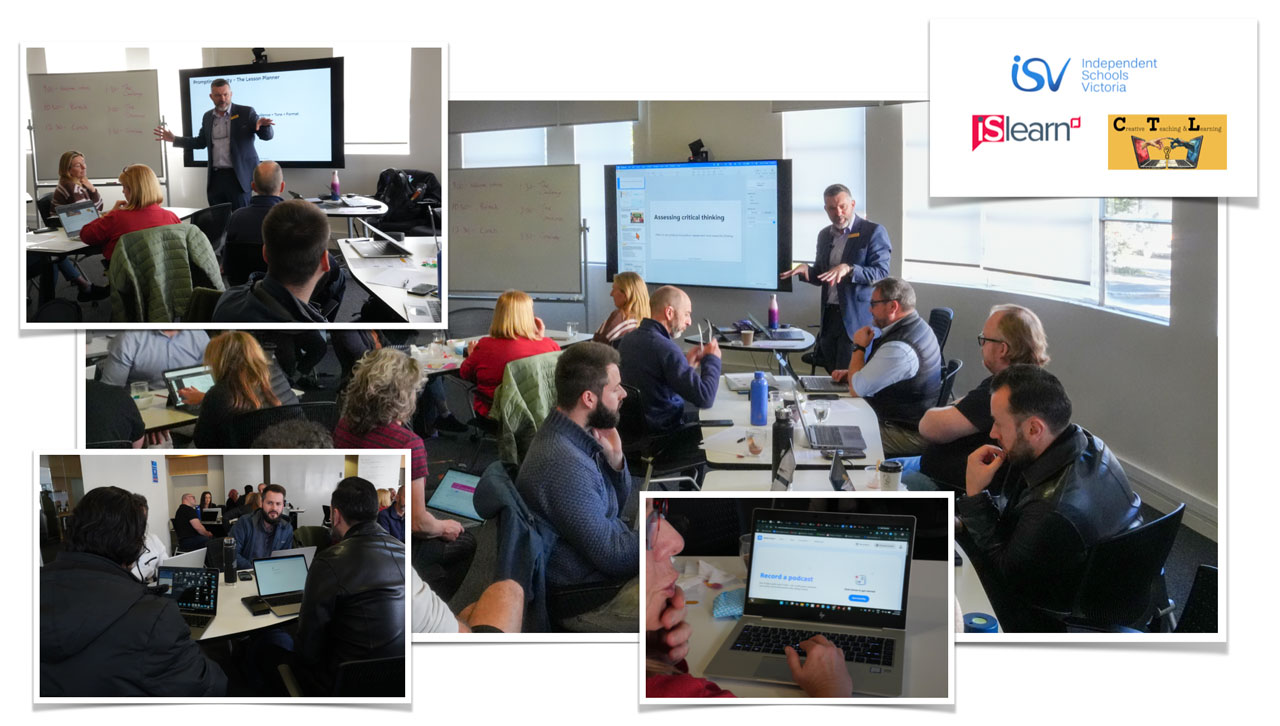
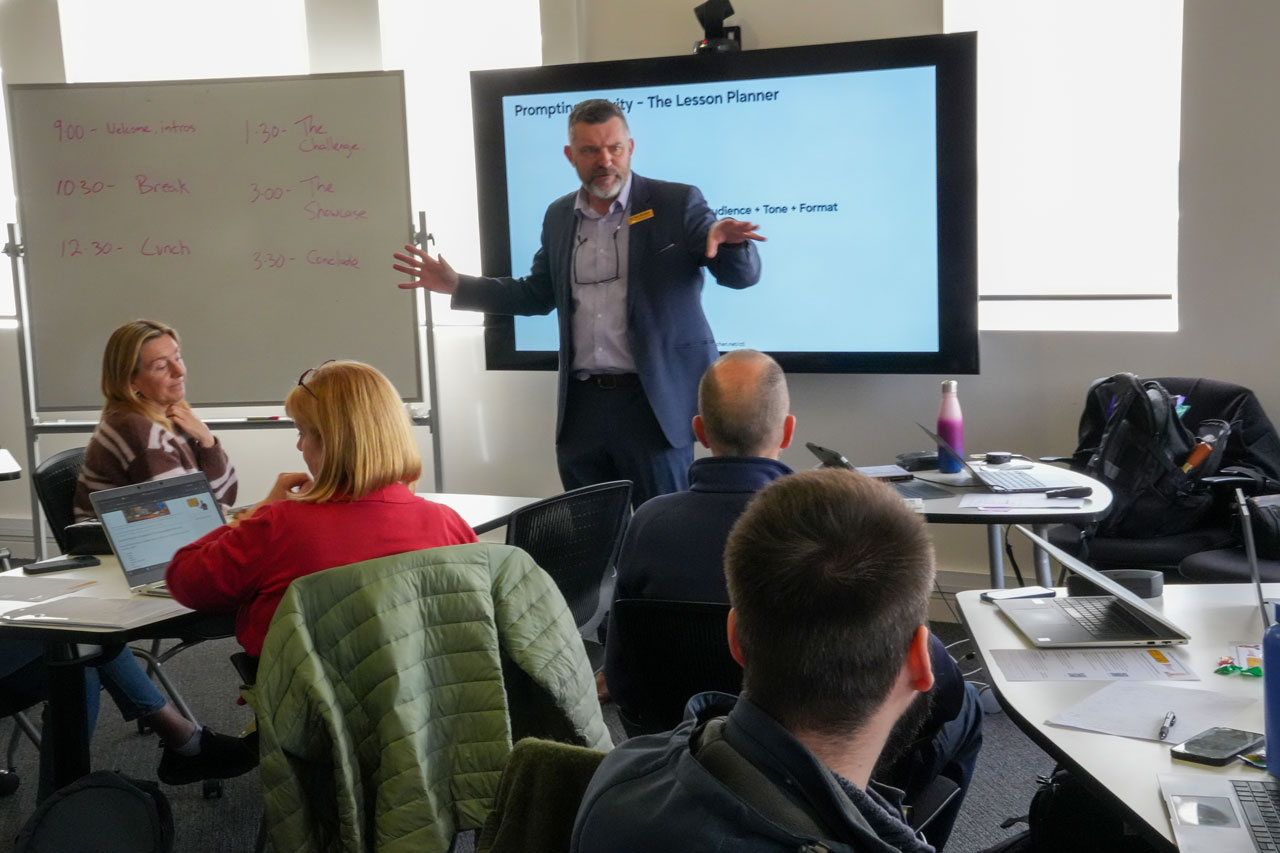
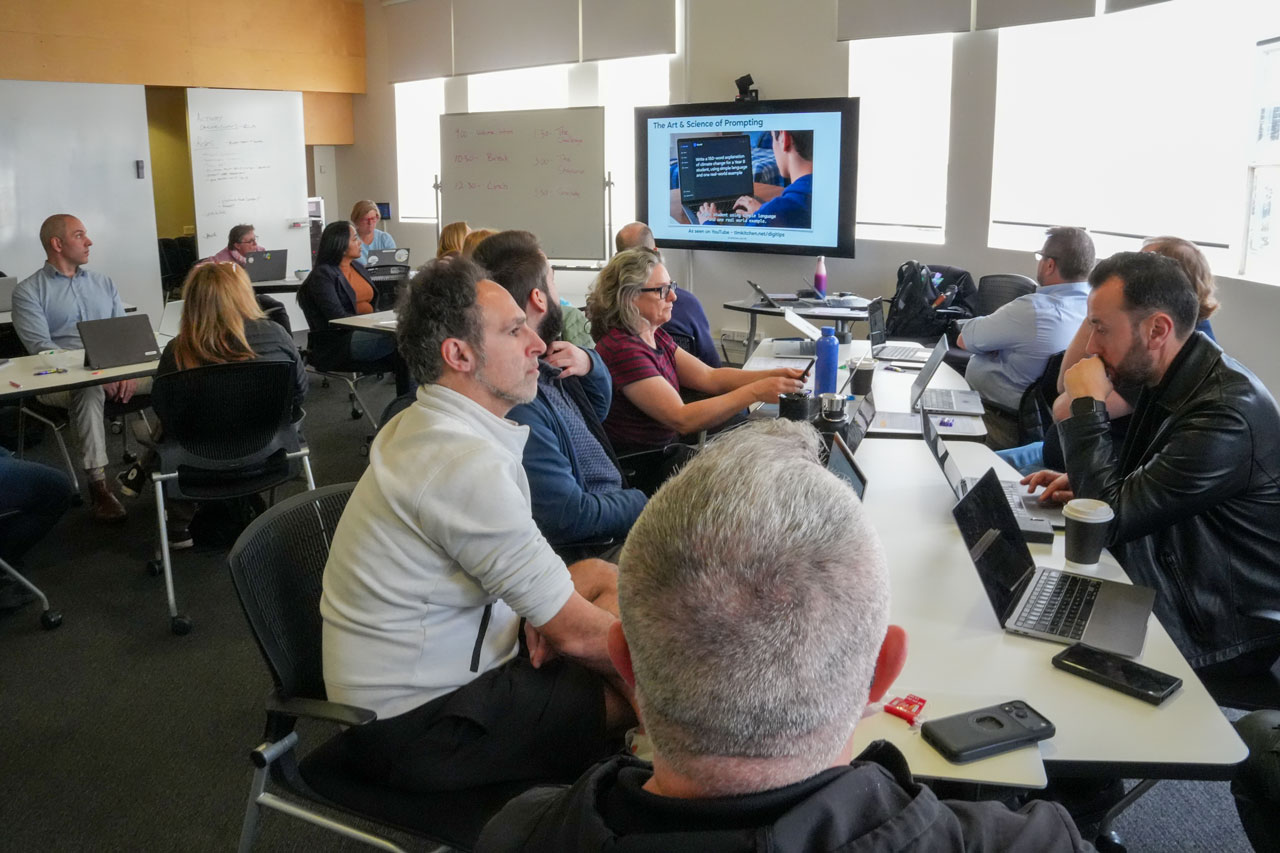
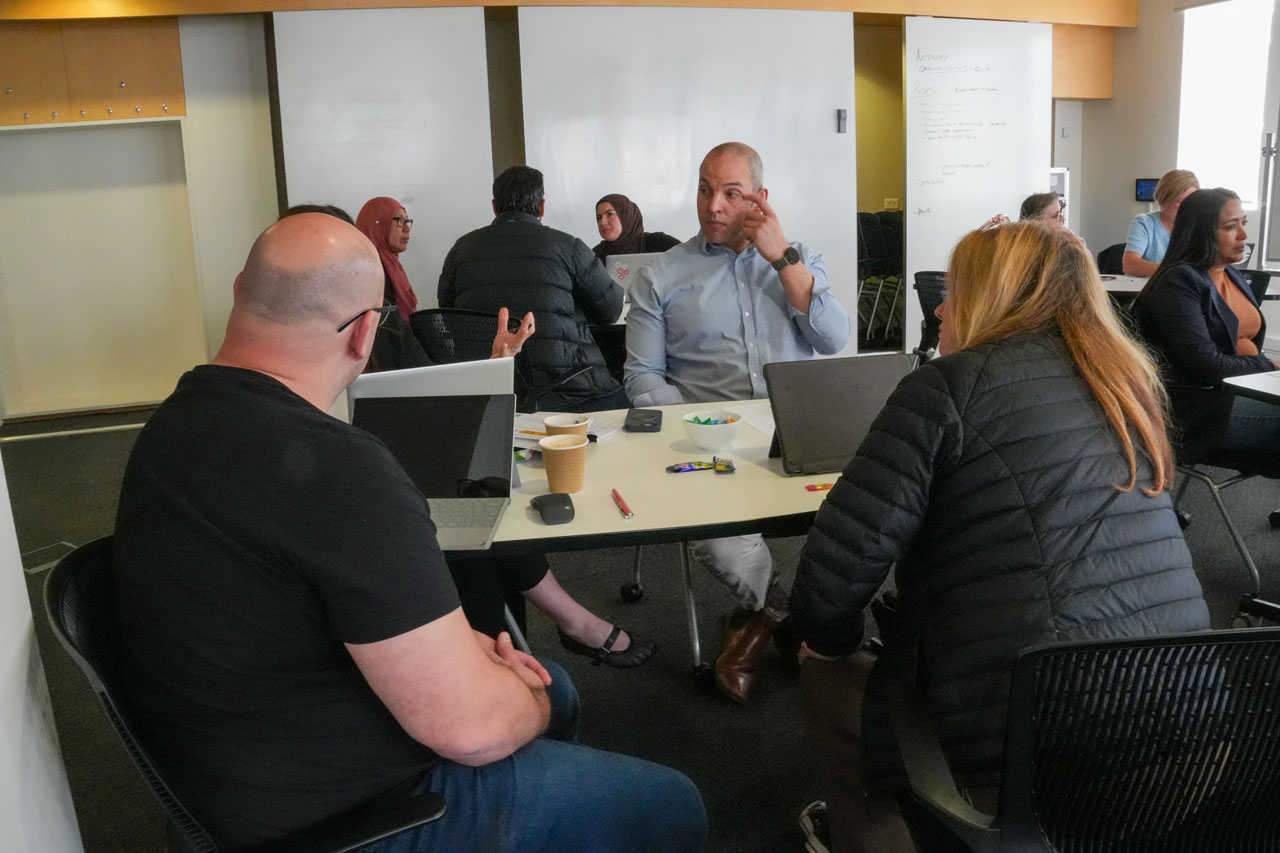
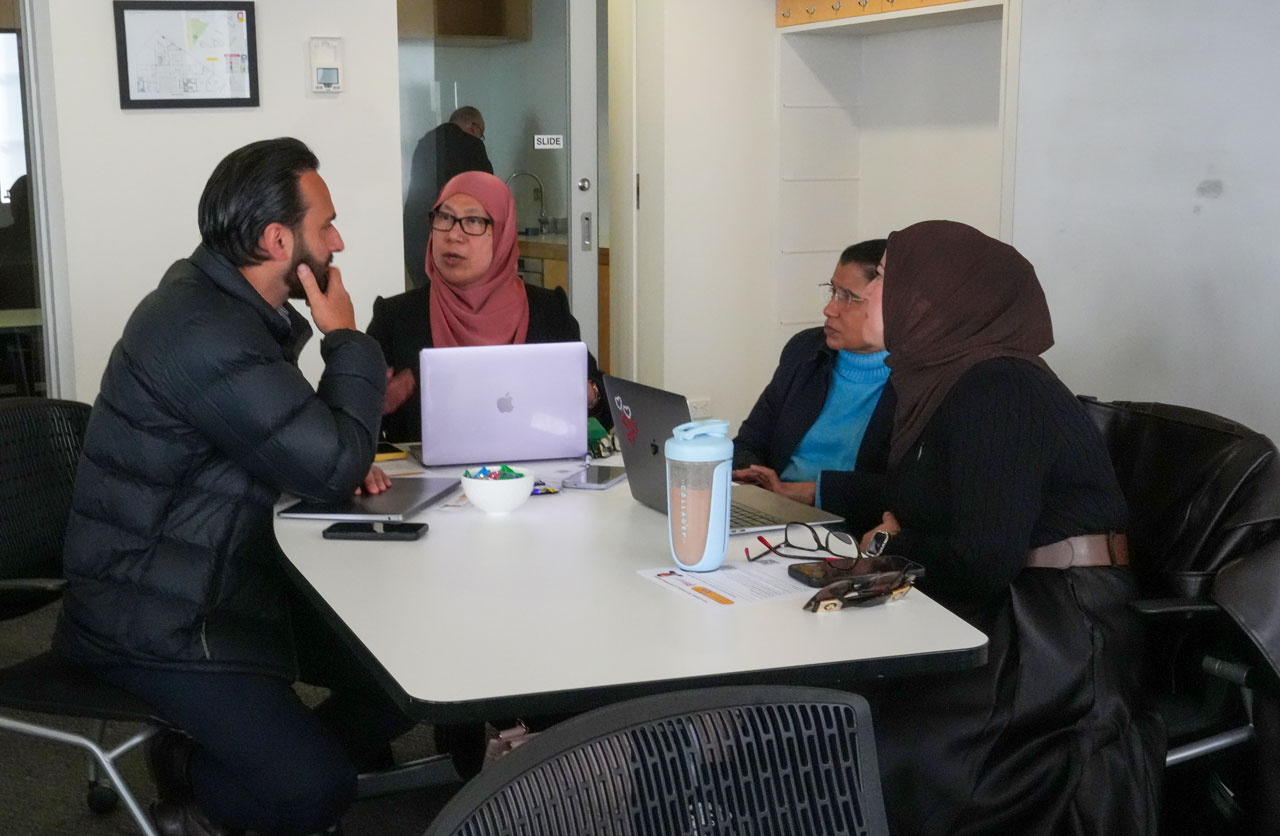
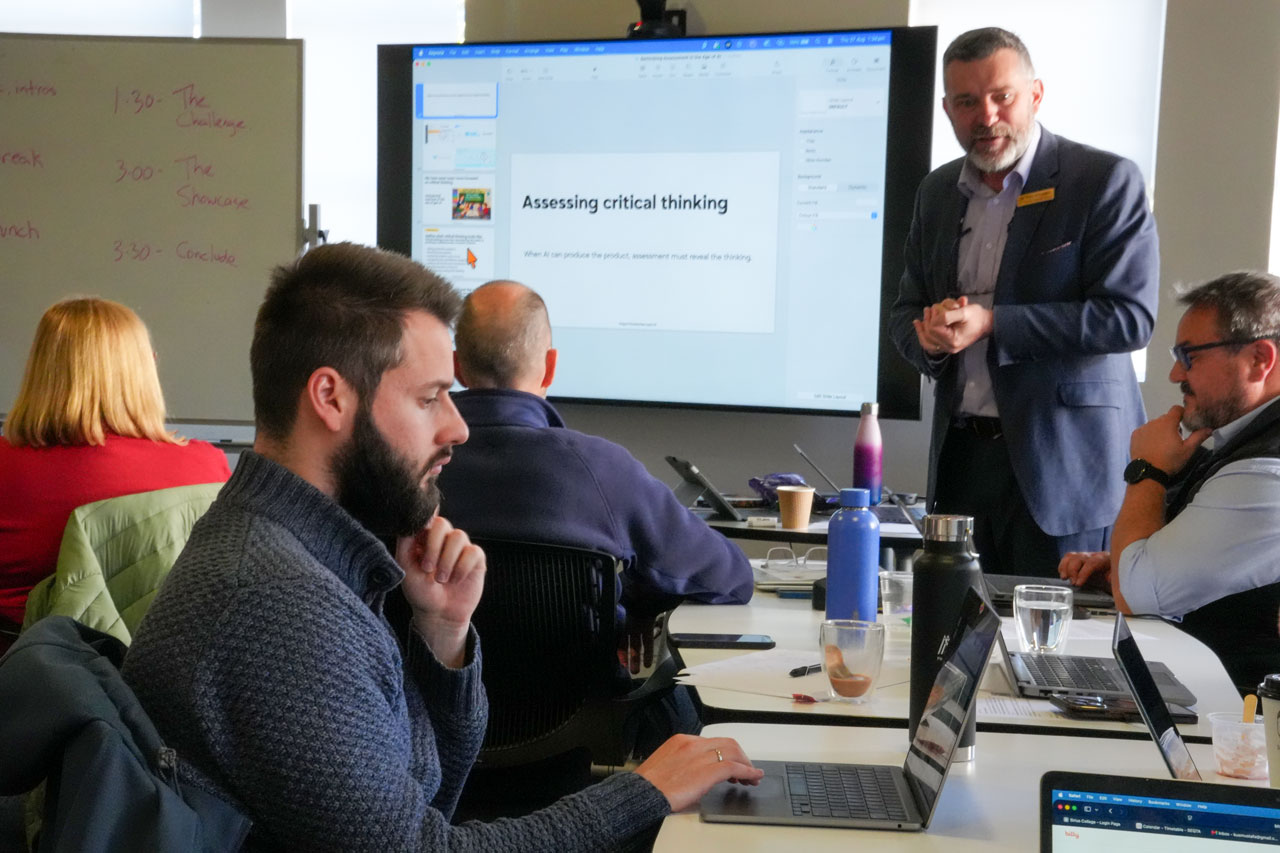
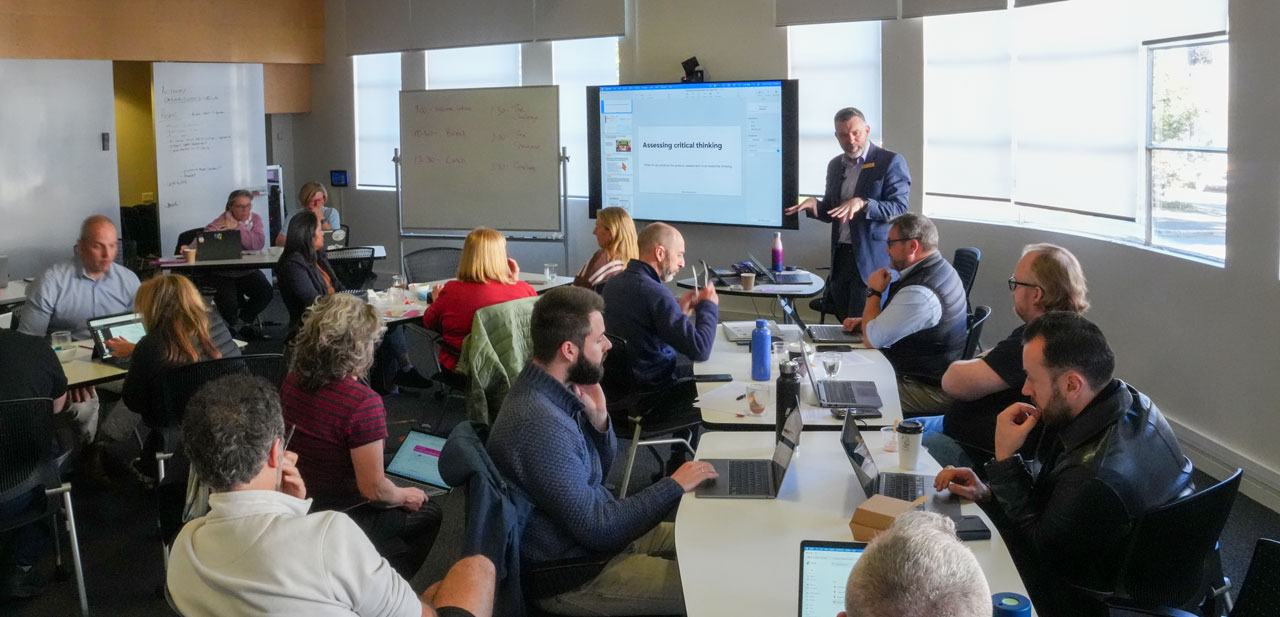
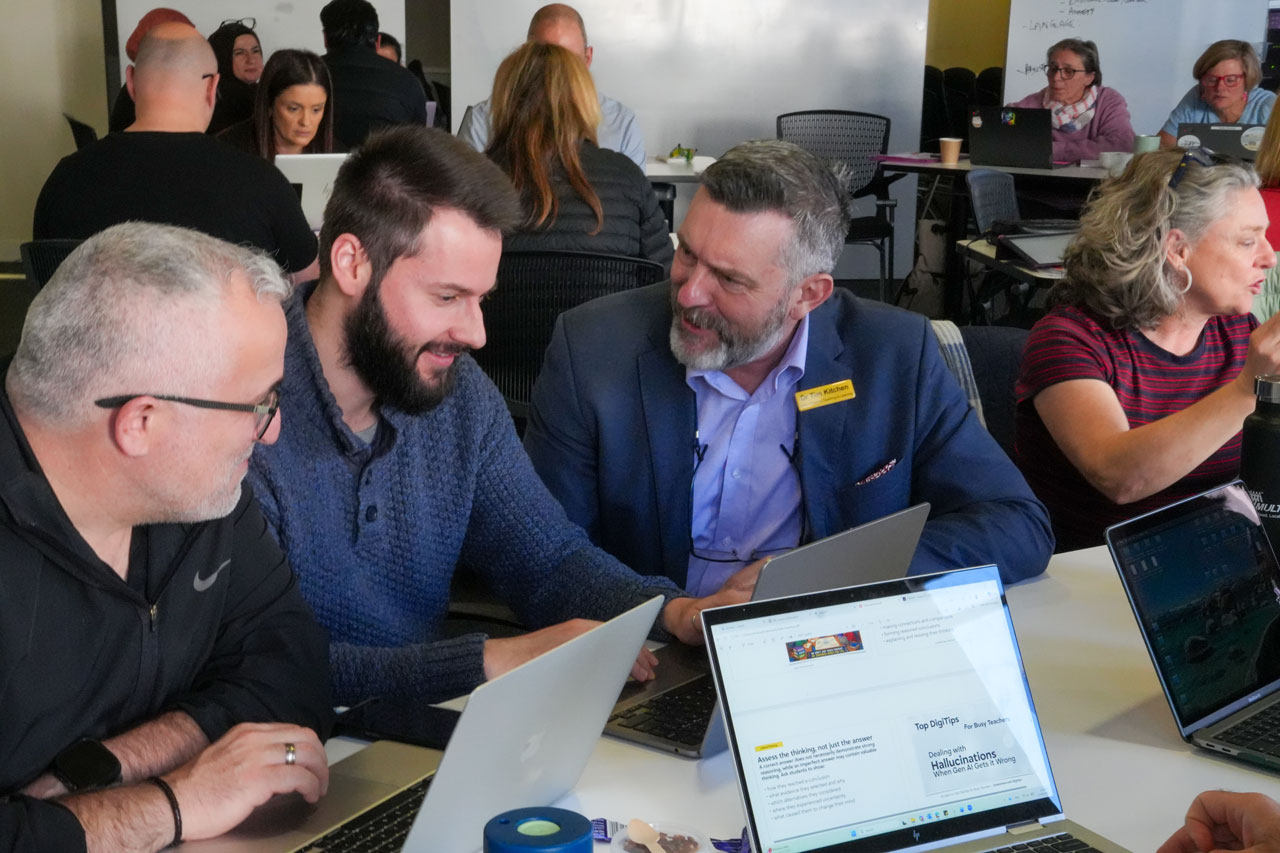
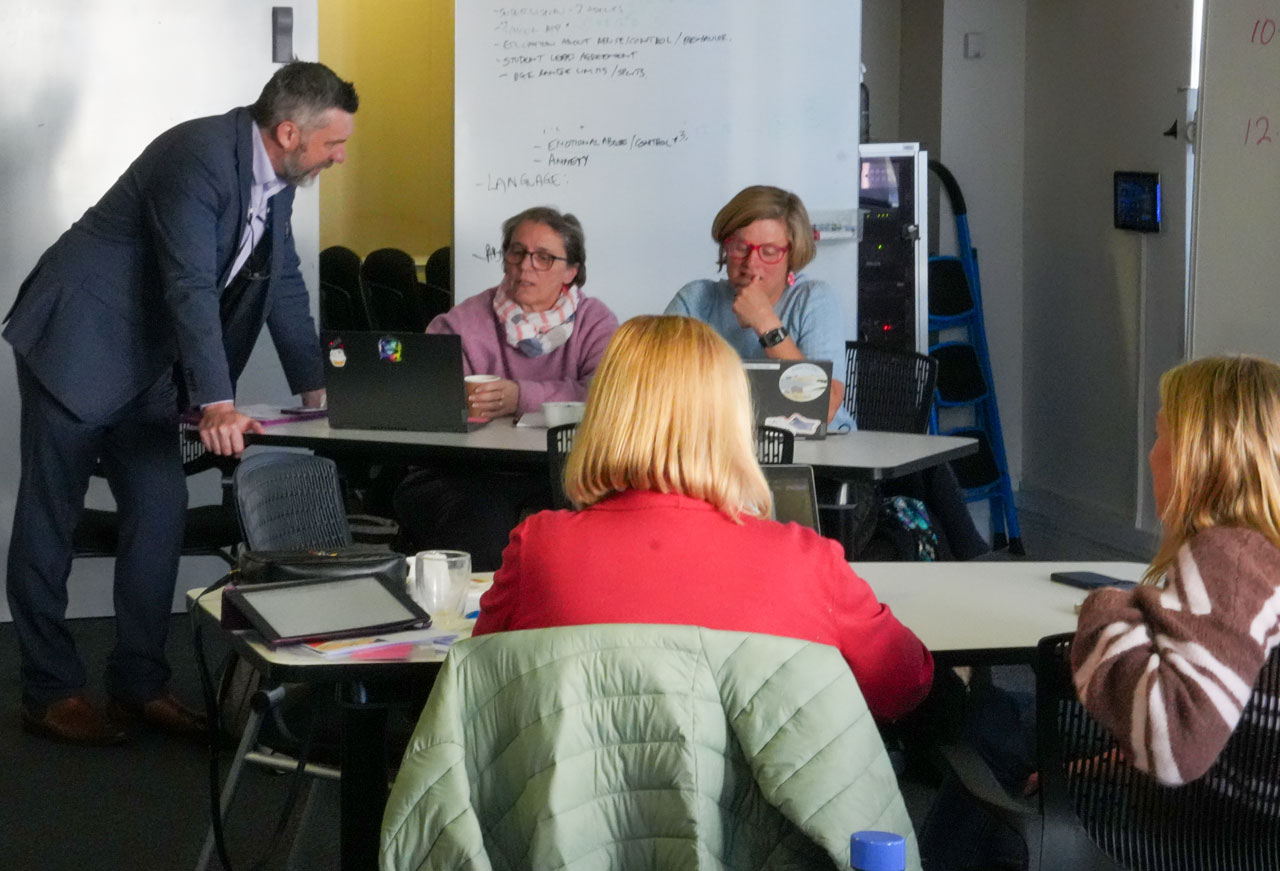
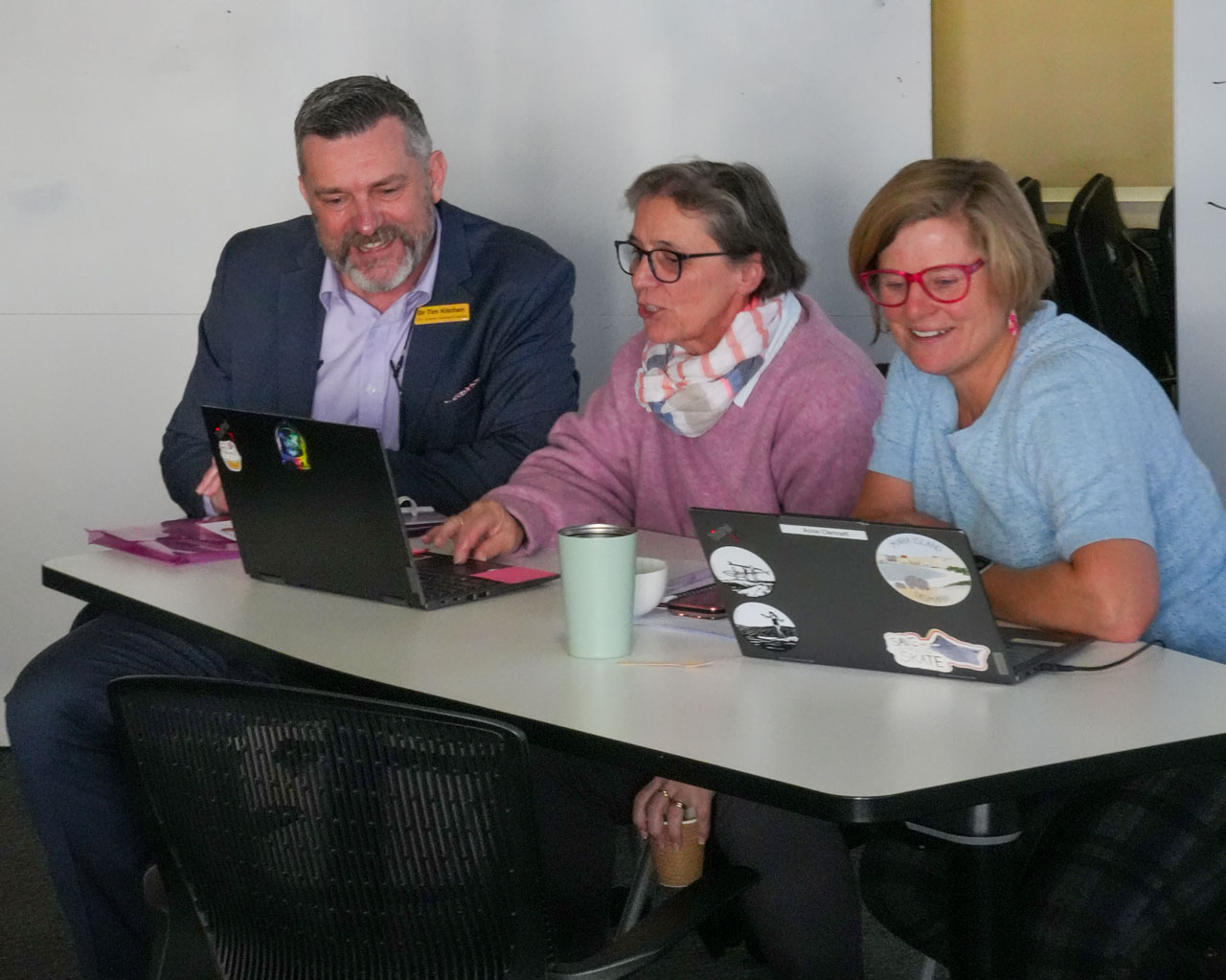
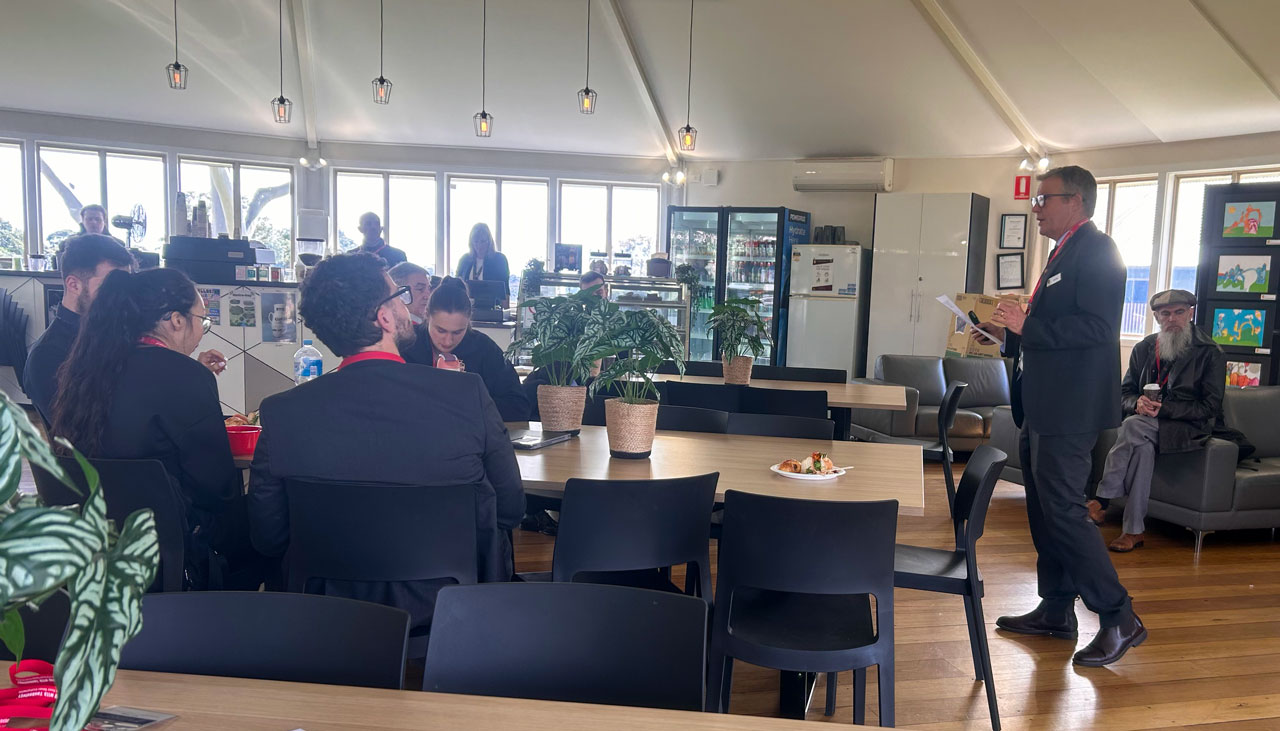
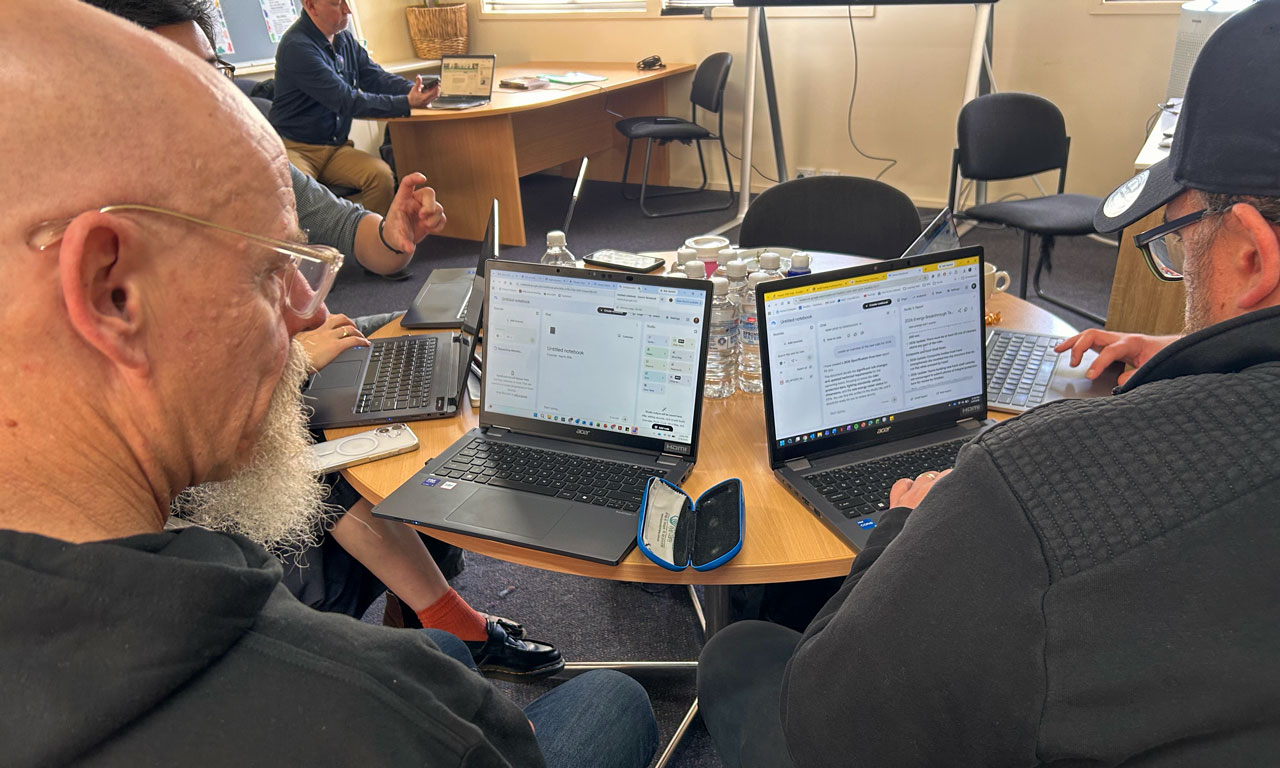
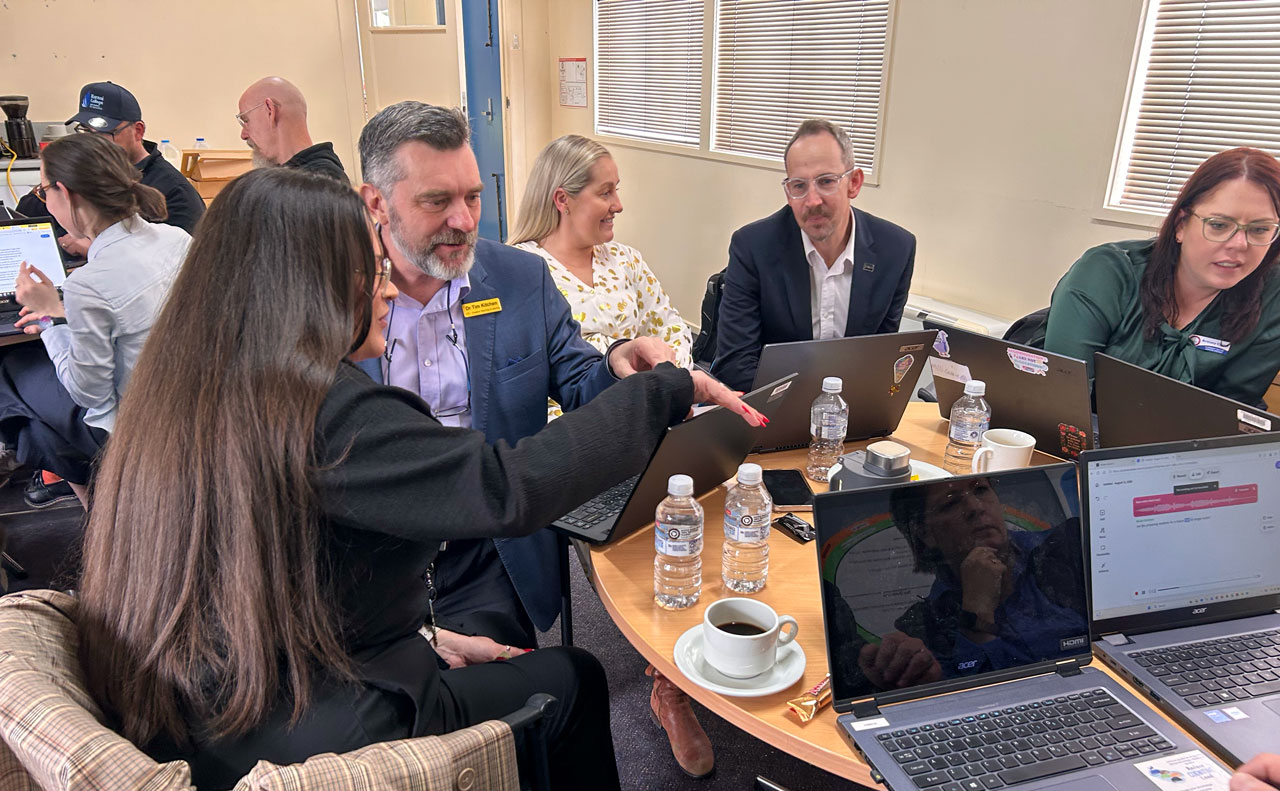
On 14 September, I facilitated a workshop with ISV titled AI for Everyday Communication: Writing Smarter, Not Harder that involved about 30 non-teaching admin staff from 15 different Victorian independent schools. The session was designed specifically for staff who manage much of a school’s daily communication.
These staff are often responsible for an extraordinary range of writing tasks. On any given day, they may be drafting emails to parents, preparing staff notices, updating newsletters, responding to enquiries, writing event announcements or translating complex information into language that is clear and accessible.
Each task may seem relatively small, but together they consume a significant amount of time. They also carry considerable responsibility. A poorly worded message can create confusion, damage trust or result in a long chain of follow-up emails.
Generative AI can help, but only when it is used thoughtfully.
The aim of the workshop was not to hand school communication over to AI. It was to explore how AI could support staff as a drafting assistant, helping them work more efficiently while maintaining the care, professionalism and distinctive voice of their school.
The blank page is often the hardest part
For many people, the most time-consuming stage of writing is getting started. You may know exactly what needs to be communicated but struggle to find the right opening sentence. You might write and rewrite the same paragraph several times, trying to make it sound professional without becoming too formal or impersonal.
Generative AI can be particularly useful at this early stage.
Instead of asking an AI tool to simply “write an email”, we explored how to provide it with the context it needs:
Who is the audience?
What is the purpose of the communication?
What information must be included?
What tone should be used?
Is there anything that should be avoided?
What action should the reader take?
Finding the right tone
Tone is one of the most important (and difficult) parts of school communication.
A message can be factually correct but still sound abrupt, defensive, overly formal or strangely impersonal. This is particularly risky when communicating about complaints, overdue payments, student wellbeing, changes to school procedures or other sensitive issues.
During the workshop, participants explored how AI could help revise a message without changing its underlying meaning.
One message, different audiences
Schools regularly need to communicate the same information to different groups. A policy update might require one version for staff, another for parents and a simplified explanation for students. Information supplied by a government department or external organisation may also need to be rewritten in plain language before it can be shared with the wider community.
Generative AI can help transform a source document into several audience-specific drafts.
Newsletters, notices and announcements
Newsletters and community announcements are another area in which AI can reduce the time spent drafting and editing.
Participants explored how brief notes or dot points could be developed into a polished article. AI could also suggest headings, shorten a long draft, remove repetition or generate several versions for different communication channels.
The purpose of using AI for everyday communication is not simply to produce more words, more quickly.
It is about reducing the time staff spend staring at blank pages, restructuring paragraphs and repeatedly rewriting routine messages. That time can then be redirected towards the work that requires genuine human understanding: supporting a concerned parent, helping a colleague, coordinating an event or strengthening relationships across the school community.
The most effective use of AI is not to remove people from communication. It is to give them more time and capacity to communicate well.
Used carefully, generative AI can become a valuable writing partner for non-teaching staff. It can help create first drafts, improve clarity, adjust tone, simplify complex information and adapt messages for different audiences.
But the human contribution remains essential.
The AI may help write the words. It is the people within the school who provide the context, judgement, empathy and authentic voice that give those words meaning.
That is what it means to write smarter – not harder.
If you would like to find out more about Dr Tim Kitchen’s consultancy CTL – click here
The Kitchen Think podcast/vodcast – Season 1, Episode 8
What if the city itself became the classroom?
In this episode of The Kitchen Think, Dr Tim Kitchen interviews Laura Bain, Director of Vision and Development for the Immanuel Lutheran College Urban Campus Project on Queensland’s Sunshine Coast.
Laura is helping to develop an innovative senior learning community in the heart of the Maroochydore CBD on the Sunshine Coast on QLD, Australia. Built around the idea that “the city is your campus”, the project aims to connect students with local businesses, universities, community organisations and authentic real-world learning opportunities.
During the conversation, Laura explores:
Why traditional schooling does not meet the needs of every student
How curriculum, wellbeing, technology and community partnerships can work together
The importance of student agency and personalised learning
How physical spaces can influence learning
The potential for AI to provide timely feedback and support individual learning journeys
How schools can help young people use AI thoughtfully, responsibly and discerningly
At the heart of the conversation is a hopeful vision for education – one in which every student is deeply known, learning is connected to the wider world, and schools become springboards into the future.
Subscribe to The Kitchen Think for more conversations about education, creativity, technology and preparing young people for an AI-rich world.
Dr Kitchen’s CTL – Creative Teaching & Learning site – https://timkitchen.net/ctl is also worth a look if you for more resources and support around the safe & ethical use of AI and digital creativity.
Across Australia this year, “back to basics” has become an increasingly attractive answer to some of the challenges facing schools. Put the laptops away. Bring back exercise books. Get students writing by hand. Less screen time, fewer distractions and perhaps a return to the quieter, more orderly classrooms many of us remember.
Schools are dealing with genuine issues around attention and distraction. Young people spend a lot of their lives looking at screens. Anyone who has watched a student flick from a piece of schoolwork to YouTube in about half a second knows the challenge is real.
But I think we’re asking the wrong question. The question isn’t whether screens belong in classrooms. They’re already part of the world our students live in, and they’ll be part of the world they graduate into. The better question is what we’re asking students to do with them.
Are they creating something? Solving a problem? Getting feedback? Collaborating with someone? Thinking more deeply? Or are they sitting in front of a laptop completing a digital worksheet that would have been just as useful on paper?
Because putting a worksheet on a screen doesn’t make it better learning. But taking the screen away doesn’t automatically make the learning better either.
That’s where I worry about the “back to basics” conversation. There’s a danger that we confuse nostalgia with evidence. The classroom we remember isn’t necessarily the classroom our students need. And quieter doesn’t always mean better learning.
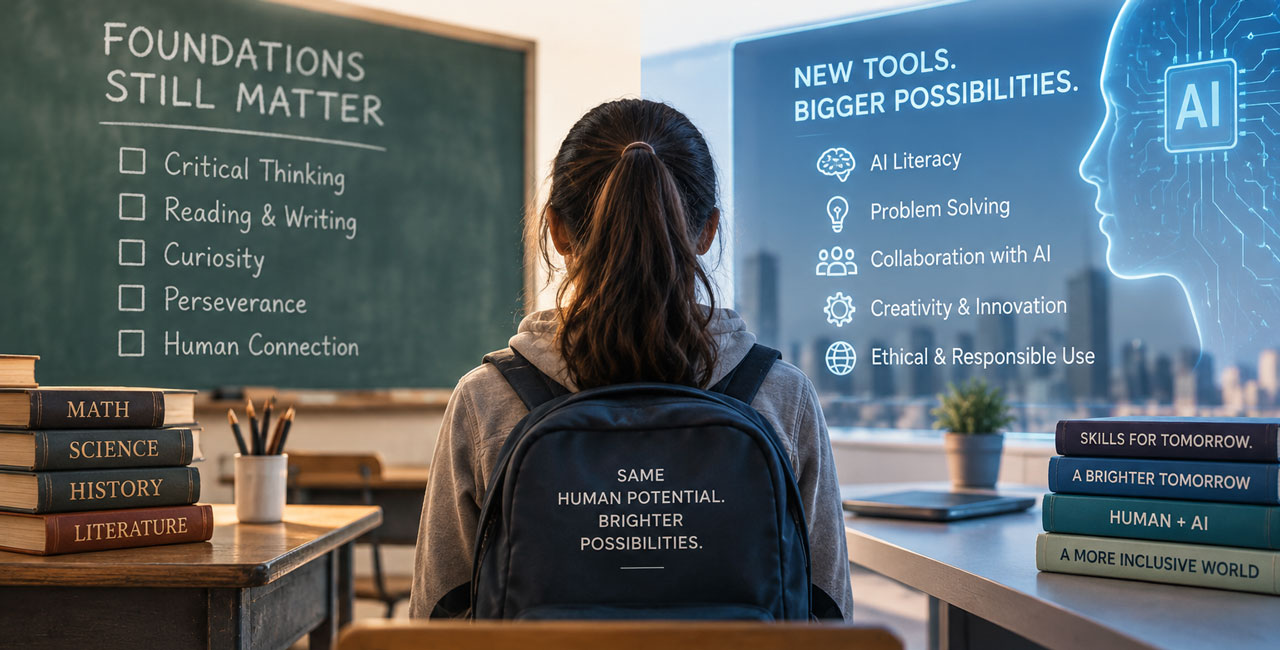
Made with ChatGPT 5.6 and Photoshop
We absolutely should teach students to write by hand. They should read books, work without distractions, talk to each other, concentrate for extended periods and sometimes put every device in the room away.
But they also need to learn how to use technology well. When to reach for it. When to ignore it. How to question what it gives them, and how to use it to do things that simply weren’t possible in the classrooms we grew up in.
So perhaps the conversation shouldn’t be about choosing between exercise books and laptops. It should be about choosing the right tool for the learning. Because if we diagnose the problem as “technology”, taking technology away feels like a solution. If the real problem is how we design learning, that’s a much harder conversation. And it’s one worth having.
The decisions we make now will shape the future our students walk into.
What the recent PISA results tell us
When I started teaching more than 35 years ago, nobody talked about a “digital detox”. We used pens, paper and textbooks because, well, that was school. There wasn’t really another option. A lot has changed since then.
If you’re looking for evidence that technology has become a problem in Australian classrooms, the latest PISA results give you plenty to work with. Around 41% of Australian students said noise and disorder were a regular feature of their classrooms, compared with a global average of 31%. Another 39% said their peers were distracted by digital resources, well above the OECD average of 28%.
Australia’s disciplinary climate ranked behind 68 participating countries. Over the longer term, our results in reading, mathematics and science have also continued to slide. Yes, Australia remains above the OECD average in all three, but I’m not sure that should make us feel particularly comfortable (Cassidy, 2026).
Stop there and the solution seems pretty straightforward. Take away the devices. Except that’s not the whole PISA story.
One of the findings that has received far less attention is how Australian students performed in the newer “learning in the digital world” domain. This looks at whether students can use technology to learn, evaluate information, solve problems and create things.
Australian students performed well above the OECD average (OECD, 2026). That makes the picture a bit more complicated. The same students who tell us technology is distracting them are also developing strong skills in using it. And PISA does show a relationship between distraction, excessive device use and poorer academic performance. What it doesn’t show is that putting a laptop in front of a student automatically makes the learning worse.
In fact, moderate use of digital devices for learning is associated with better results than no use at all. Performance starts to fall away when that use becomes excessive, or when the device becomes more about entertainment than learning (OECD, 2026).
So perhaps we need to be careful about what lesson we take from these results. If a student is watching YouTube while the teacher is explaining algebra, the problem is fairly obvious. If that same student is using a digital simulation to test a mathematical idea, collaborate with classmates or get immediate feedback on their thinking, we’re talking about something quite different.
Both involve a screen. They’re not the same learning experience. Which brings us to the question I think matters far more than whether technology belongs in our classrooms:
Are we actually using it well?
A phone is not the same as a laptop
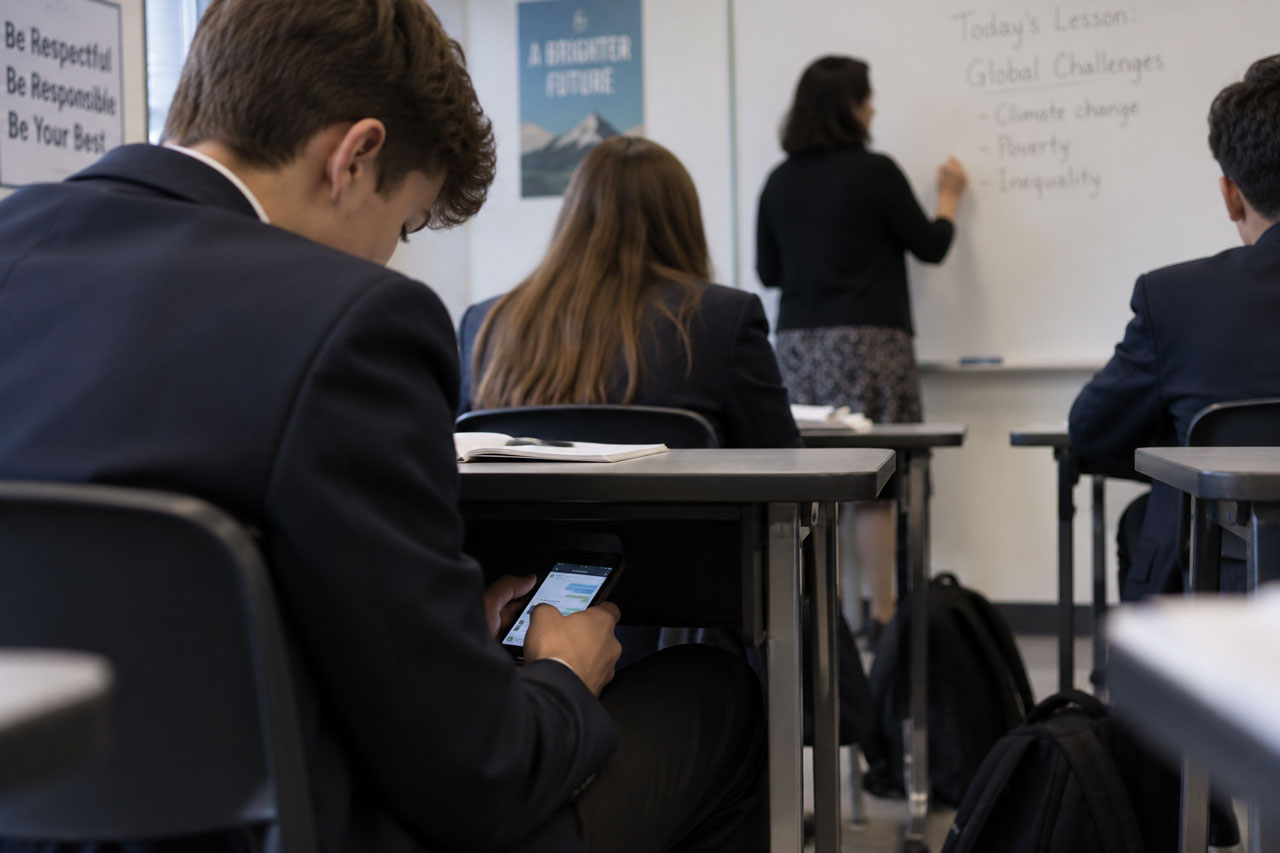
Made with ChatGPT 5.6 and Photoshop
On balance, I think restricting mobile phones in schools has been the right move. I didn’t always think that.
I was teaching at an independent girls’ school in Melbourne when students having their own phones started to become the norm. This was before our 1:1 laptop program, and at the time those phones were actually pretty useful.
A student could quickly research a question that came up in class, check another perspective or take a photo of something on the whiteboard to come back to later.
Were they distracting? Absolutely. Parents would sometimes message their daughters during lessons. Occasionally they’d even ring them, which was always interesting in the middle of a class.
My approach was fairly simple. Phones on silent, face-down on the desk where I could see them. It wasn’t perfect, but most of the time it worked. But those were different phones. Or perhaps more accurately, it was a different digital environment.
That was before “the algorithm” really took hold. The phone I was managing in those classrooms is quite different from the one sitting in a teenager’s pocket today. What was once a useful device that occasionally interrupted a lesson is now connected to social feeds, recommendations, notifications, messages and a seemingly endless stream of content, all competing for attention.
I noticed the change outside the classroom too. My work as Adobe’s Education Specialist took me into schools regularly, and before the phone bans I’d often walk through playgrounds at recess or lunchtime and see groups of students sitting together, each absorbed in their own phone.
They were together, but they weren’t really together. Not much conversation. Not much laughter. Mostly heads down, scrolling.
Then the phone bans started arriving and the difference was hard to miss. I saw students kicking a ball around again. Sitting in groups talking. Laughing. Moving around. Looking at each other.
For me, that shifted the conversation. This wasn’t just about whether a teacher could manage phones during a lesson anymore. Something bigger had changed.
But this is also where I think we need to be careful. A phone is not the same thing as a laptop. Yes, laptops can distract students too. Anyone who has taught in a 1:1 classroom knows that. But a laptop is also a working environment.
Students use laptops to research, write, analyse data and code. They design things, edit video, build portfolios, collaborate and access specialist tools that simply don’t have a paper equivalent. That distinction gets lost surprisingly quickly when we bundle everything together under the label of “screen time”.
An hour scrolling through social media is screen time. So is an hour editing a documentary, building a 3D model or writing an essay. Counting the minutes tells us very little about what was actually happening during them.
That’s why I’m quite comfortable supporting phones being kept out of classrooms while also wanting students to have access to laptops when there’s a good educational reason for using them.
They both have screens. That doesn’t make them the same thing.
From screen time to screen purpose
Maybe we need to stop talking quite so much about “screen time” and start talking about “screen purpose”. Because the number of minutes a student spends looking at a screen tells us surprisingly little about the learning taking place.
What are they actually doing? Are they passively consuming content or making something of their own? Are they bouncing between websites with no real direction, or using a digital tool as part of a lesson that has been carefully designed? Are they distracted, or so absorbed in what they’re doing that they’ve lost track of time?
Those are much more useful questions.
I’d be very happy to see less low-value screen use in schools. Much less, in fact. But at the same time, I’d like to see better digital learning. More creating. More designing and investigating. Students analysing information, solving problems, making things and working with other people. Some of that can happen perfectly well without a computer. Some of it can’t.
Paper still matters enormously. There are plenty of times when I’d rather walk into a classroom and see pens in hands, books open and laptops closed. Students should write by hand. They should read physical books, make things, have conversations without a device between them and learn how to concentrate on one thing for more than a few minutes.
If we’ve lost some of that along the way, then yes, let’s bring it back. But let’s not pretend paper can do everything.
You can read about video production in an exercise book, but eventually you need to pick up a camera and edit some video. You can explain coding on a whiteboard, but at some point, students need to write code, run it, break it, work out why it broke and try again.
The same applies to data visualisation, multimedia, design and collaborative publishing. These are things students learn by doing, and doing them requires digital tools.
Generative AI now sits in that mix too. Whether we’re comfortable with it or not, students are going to encounter these technologies well beyond the school gate. I’d much rather they learn how to question them, use them responsibly and understand where they fall short while there’s a teacher in the room.
So, I don’t think the choice was ever paper or laptop. Sometimes the best tool is a pen. Sometimes it’s a conversation around a table. It might be a camera, a laptop, a piece of software or no technology at all. Good teaching is knowing which one to reach for, and when.
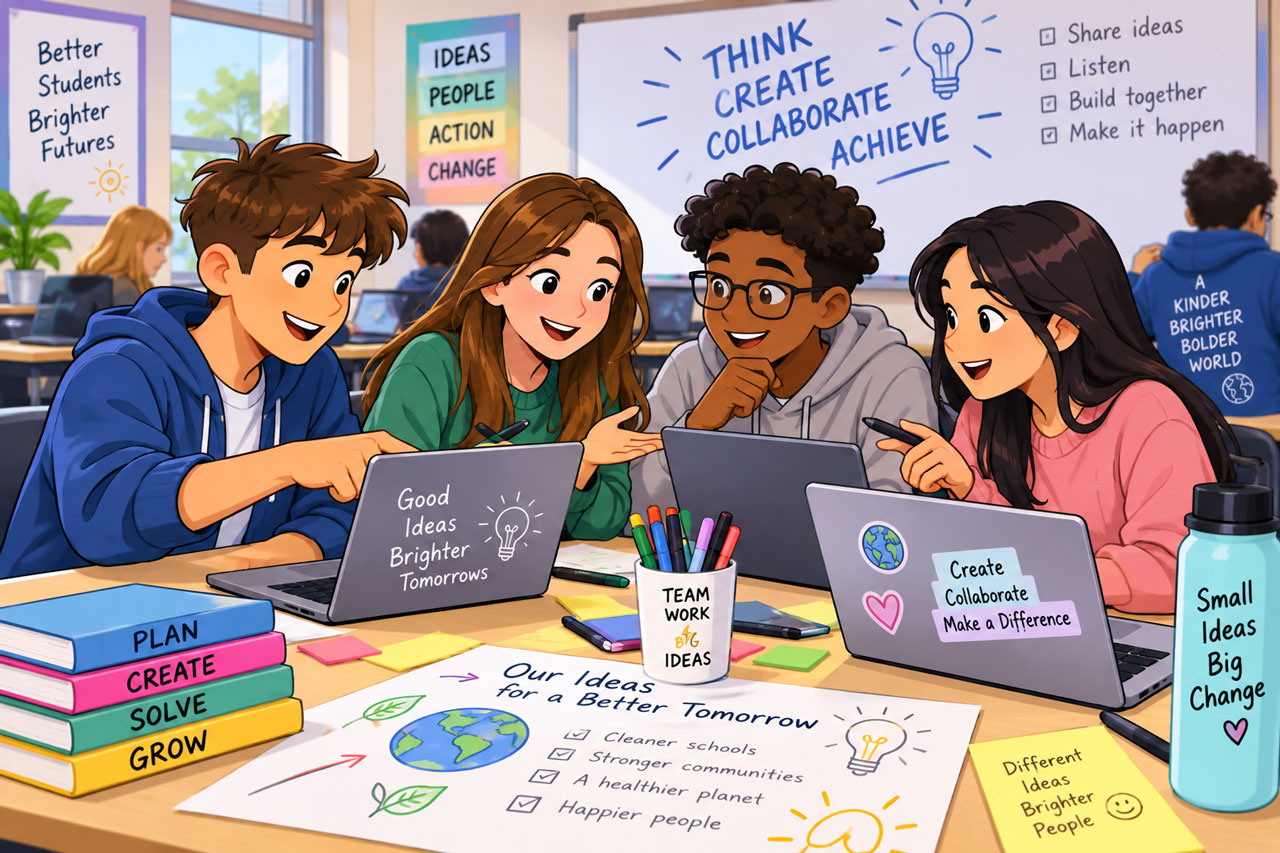
Made with ChatGPT 5.6 and Photoshop
We cannot prepare students for 1991
When I began teaching, there was no generative AI. No social media. No Google. The web hadn’t arrived in our classrooms and nobody was walking around with a computer in their pocket.
If students needed to research something, we went to the library. We were preparing them for the world they were about to enter. But we’re not preparing students for 1991.
The students sitting in our classrooms today will work in a world of AI, algorithms, digital communication, data and multimedia. They’ll collaborate with people they may never meet. They’ll need to work out whether information is credible, recognise when an algorithm is shaping what they see and decide whether an AI response is useful, misleading or just plain rubbish.
None of that happens simply because we hand them a laptop. It has to be taught.
Taking laptops away might mean fewer tabs open and fewer opportunities to disappear down a digital rabbit hole. The classroom might even become quieter. But quieter doesn’t necessarily mean better.
Remove technology from learning altogether and we also remove the chance for students to learn how to manage it, question it and use it well, with a teacher nearby.
Our job isn’t to recreate the schools we remember. There are things from those classrooms worth keeping. There are probably a few things worth bringing back too. But our students aren’t heading into our past.
They’re heading somewhere we never had to navigate at their age.
AI makes digital capability more important
Our students are going to use generative AI. Many already are. It’s appearing in search engines, writing tools, phones and the apps they use every day. We can ban ChatGPT from a classroom, but that doesn’t make AI disappear when students walk through the school gate.
I’d rather they learn how to use it with a teacher in the room. They need to know when using AI makes sense and when it doesn’t. They should question those wonderfully confident answers it produces, recognise hallucinations and bias, and think carefully about what happens to the information they type into these systems.
Then there’s the much harder question of authorship. If AI writes the paragraph, creates the image, summarises the reading and answers the question, where exactly is the student’s thinking? That’s a conversation worth having with students.
When is AI supporting your work? At what point is it doing the work for you? What have you learned if you hand the thinking over to a machine?
Students won’t learn to make those calls by pretending AI doesn’t exist. A student who is shielded from generative AI throughout school doesn’t magically walk out the gate as an AI-literate young adult. They’ve simply missed years when they might have experimented with it under supervision, got things wrong, challenged its answers and talked through the messy questions with a teacher.
They’ll learn about AI somewhere. I’d prefer school was one of those places.
What purposeful technology use looks like
So, what might this look like in practice? For a start, I’d keep classrooms phone-free. I’d also deliberately build device-free times into lessons. Students need time to write by hand, read quietly, talk to each other and make things. They need opportunities to concentrate without a stream of notifications sitting a few centimetres away.
Sometimes the best thing we can do with technology is turn it off.
And when a laptop genuinely adds something to the learning, open it. Use it to research, create, code, analyse data, edit video, collaborate, design or experiment with AI. Just don’t open laptops automatically at the beginning of every lesson because they happen to be sitting there.
Classroom routines make a difference here too. “Screens down” should mean screens down. Notifications can be turned off. Unnecessary tabs can be closed. Students can learn that opening a laptop comes with an expectation about what they’re there to do.
That sounds simple. In practice, it takes good classroom management and clear habits. Schools need to support teachers with this as well. Buying devices is the easy part. Working out how to use them well for learning takes time, professional learning, experimentation and plenty of conversations between teachers about what works and what doesn’t.
We should also be teaching students how to manage their own attention. They’re growing up with digital environments deliberately designed to keep them clicking, watching and scrolling. Telling them to “concentrate” probably isn’t enough.
Assessment needs another look too. If AI can produce a polished response in seconds, perhaps the polished response shouldn’t be the only thing we assess. Show me the drafts. Explain why you made that decision. Tell me what you changed and why. Show me where AI was used. What did it get wrong? What did you reject? Where did you struggle?
I want to see some evidence of the thinking. That, to me, is purposeful technology use. The laptop comes out because there’s a reason for it to be there. When there isn’t, close the lid.
Equity: who loses when schools withdraw?
There’s another part of this conversation that worries me. Imagine two students walking out of the same school at the end of the day. One goes home to reliable internet and their own laptop. Their parents understand digital tools and AI. There might be paid software, online courses, tutoring and plenty of opportunities to experiment.
If the school cuts back on digital learning, that student will probably be fine. They’ll keep learning anyway.
The second student goes home without those things. Perhaps there’s no suitable computer. Maybe the internet is unreliable. Nobody at home is experimenting with AI or showing them how to use digital tools well.
For that student, school might be the place where they get access to the technology. More importantly, it might be the only place where they get access to someone who can teach them what to do with it.
Take digital learning out of school and those two students don’t lose the same thing. That matters.
Socioeconomic background remains strongly connected with educational achievement in Australia, and we should be very careful about introducing policies that might make that divide wider (OECD, 2026).
A rule can look equal because it applies to every student. The opportunity it removes isn’t necessarily equal at all. For some young people, school is one place among many where they’ll develop digital and AI skills. For others, it might be the only one.
Better basics for a different world
Perhaps what we really need is a better definition of “the basics”. Literacy and numeracy remain foundational. Of course they do. But the basics students need today are broader than the ones I was teaching when I walked into my first classroom in 1991.
Students need to think critically about what they read, watch and hear. They need to understand something about how digital media works and how algorithms influence what appears in front of them. They need to distinguish credible information from something that simply looks convincing.
They need to create, communicate, collaborate and solve problems. And now they need to work out when AI is useful, when it needs to be questioned and when they’re better off doing the thinking themselves. That’s part of literacy now.
I began teaching with pens, paper and textbooks, and I still value all three. Walk into a good classroom today and I hope you’ll still see students writing by hand. I hope you’ll see books open, conversations happening, practical work underway and stretches of time where nobody is looking at a screen.
But I’d also hope to see students creating with technology. Analysing information. Editing media. Coding. Designing. Working together. Experimenting with AI and having a teacher challenge them when they accept its first answer without thinking.
We don’t need screens everywhere. And we don’t need to recreate the classroom of 1991. Phones can stay out. Laptops can stay closed when they add nothing to the lesson. Books, pens, conversations, practical work, cameras, laptops and AI can all belong in a modern classroom.
The important question is why they’re being used. That decision is best made by the teacher who knows the students in front of them, understands the learning and knows what they’re trying to achieve.
Maybe that’s a version of “back to basics” I could get behind.
Good teachers, clear purpose, and the freedom to choose the right tool for the learning in front of them.
Tim regularly works with teachers, admin staff and students both in-person and online with a focus on safe, ethical & creative use of AI and other digital technologies. You can find out more and book Tim to work with your school via – https://timkitchen.net/book-tim
AI Use Statement
Generative AI tools were used to support the research and development of this article. Claude Sonnet 5 and ChatGPT-5.6 assisted with exploring ideas, locating and synthesising information, refining the structure, and editing selected passages. Adobe Firefly and ChatGPT-5.6 were used to create supporting visual content. All AI-generated material was critically reviewed, fact-checked and revised by the author, who takes full responsibility for the article’s final content, arguments and conclusions.
Drawing on his recent PhD research, Leon and Amba Press have produced an outstanding and highly practical resource that addresses many of the questions teachers and school leaders are currently grappling with around AI in education. I highly recommend grabbing a copy and including it in your school’s professional learning program.
AI in Education Podcast
I was rather chuffed to receive a mention and recommendation from Ray Fleming and Dan Bowen towards the end of their popular AI in Education Podcast episode, “AI in Education: Who Gets to Decide?”, released on 27 August. I’m always impressed by the quality of the content and interviews Ray and Dan share, as well as their ability to produce such a valuable podcast every week. Very impressive!
Partnering with The Smith Family
It is hard to believe that Term 3 is already drawing to a close across Australia. Over the past month, I have had the privilege of working with a number of schools, teachers, leaders and administrative staff to build awareness, confidence and practical skills for working effectively, safely and ethically with generative AI.
It is a pleasure to support such a diverse range of schools, from communities facing significant socioeconomic challenges to some of Australia’s most well-resourced schools. Despite their different contexts, every school is navigating the opportunities and complexities created by the rapid growth of AI.
One recent highlight was partnering with The Smith Family to support educators from several schools across Victoria and South Australia.
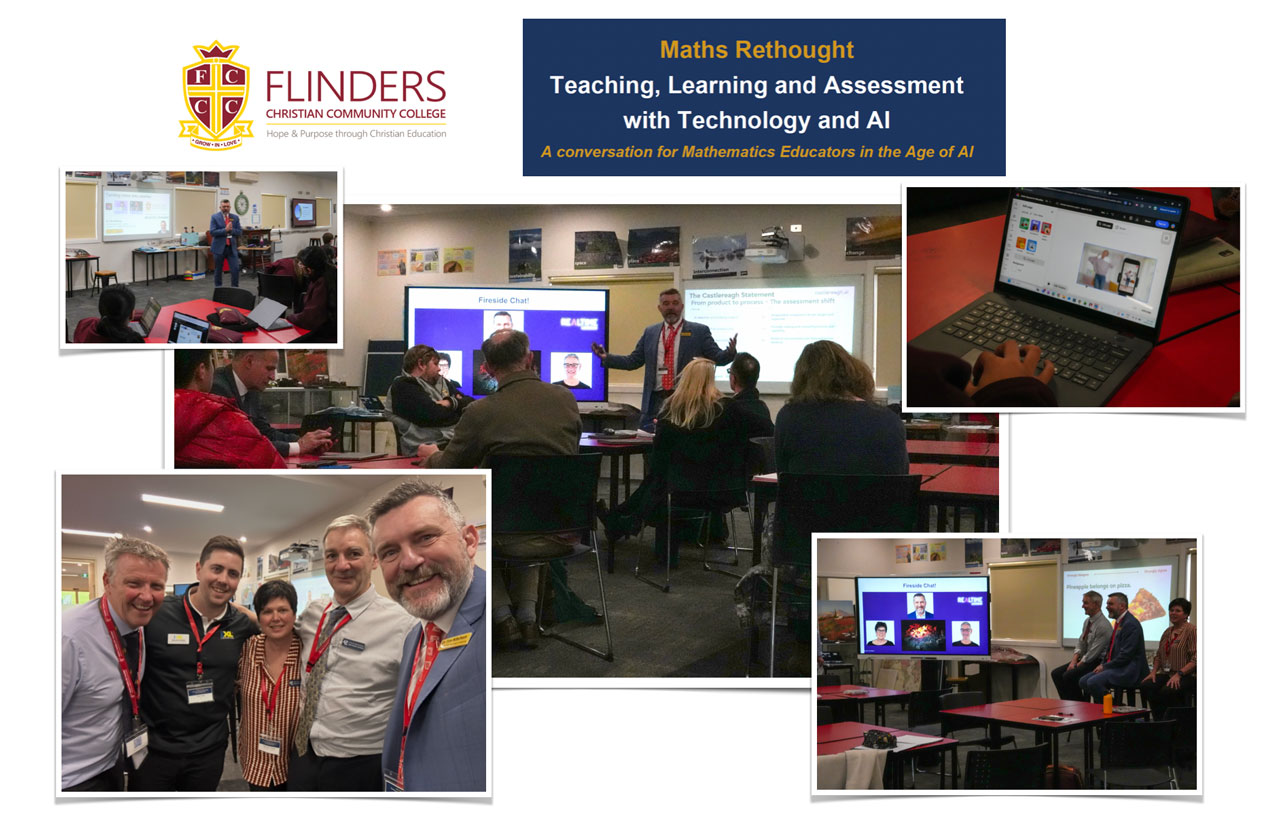
I also partnered with Real Time Learning to facilitate a full-day event at Flinders Christian Community College focused on rethinking mathematics teaching and learning in an AI-rich world.
I’ve enjoyed working with teaching & non-teaching staff from Victorian independent schools through my professional learning series with Independent Schools Victoria (ISV).
It was lovely to be back involved in the 2026 National Education Summit at the Melbourne Convention and Exhibition Centre. This event brought together teachers, school leaders, education consultants, authors, researchers and industry partners for two days of professional learning, practical ideas and valuable conversations. With conference streams, free seminars and an extensive education exhibition, the Summit provides educators with many opportunities to learn, connect and be inspired.
Book Tim to work with your school
If you would like to book me to work with your school (either in person or online) click here to find out more and get in touch.
Some of the presentation and workshop topics currently available include:
Taking Control of AI in Your School
Talking to AI: How Great Prompts Unlock Great Answers
Who Owns AI-Generated Work and How Should We Use It Fairly?
When Does Generative AI Support Learning and When Does It Cross the Line?
Your Feed Is Watching You: How AI Shapes What We See, Believe and Share Online
AI Has a Hidden Cost: Energy, Water, Carbon and E-Waste
Rethinking the Way We Do Assessment in the Age of AI
Generative AI for School Administration
Engaging Students Through Digital Creativity with Adobe Express
Two new episodes of The Kitchen Thinkhave been released over the past month.
Episode 6 — The Castlereagh Statement: What It Means for Everyday Teachers
This episode explores Australia’s cross-sector call to action for education in the age of AI, translating its big ideas into practical strategies for everyday teaching and learning.
Episode 7 — School Culture, Leadership & AI
Featuring an interview with Sean McMahon, Assistant Principal at Braybrook College, this episode explores how a strong and diverse school community can help students thrive and prepare for an increasingly AI-shaped world.
You can listen to or watch The Kitchen Think through Spotify, Apple Podcasts and YouTube.
My New Book
My new book (and my first with Amba Press) The Human Advantage: Teaching, Learning and Leading in a Gen AI World is now available to pre-order ahead of its official launch in November. Drawing on more than 35 years of experience in classrooms, school leadership and education consultancy, the book offers practical strategies and frameworks to help educators rethink curriculum and assessment, embrace AI wisely and ethically, and strengthen the uniquely human qualities that matter most. Find out more and pre-order your copy.
Booklet Resource
Volume 1 of the Top DigiTips for Busy Teachers booklet is now available via Amazon for AUD $16.50 This is a practical, companion for the YouTube series designed to help educators confidently navigate the rapidly evolving world of educational technology and generative AI.
The Next Word
Is your school in need of an AI audit, or some extra support and advice about AI use in the classroom? The Next Word is a forward-thinking education consultancy that helps schools navigate the rapidly evolving world of generative AI.
I am very pleased to be on The Next Word team as an Associate and encourage you to look up what we can offer your school.
The Best Way to Learn is to Make – Creativity in a Gen AI World is available here through Amazon.
Teacher PD Australia
Have you discovered Teacher PD Australia yet? It’s a growing Australian platform designed to help busy educators easily discover high-quality professional learning opportunities — courses, events, webinars, books, and resources tailored to their subject areas, career stage, interests, and teaching context. An all-in-one, easy-to-navigate directory built specifically for Australian teachers. Well worth sharing with your networks.
Book me to visit your school
If you would like to book some time for me to visit your school(s) to work with key leaders, teaching staff, non-teaching staff and/or students, use this site to help with the planning.
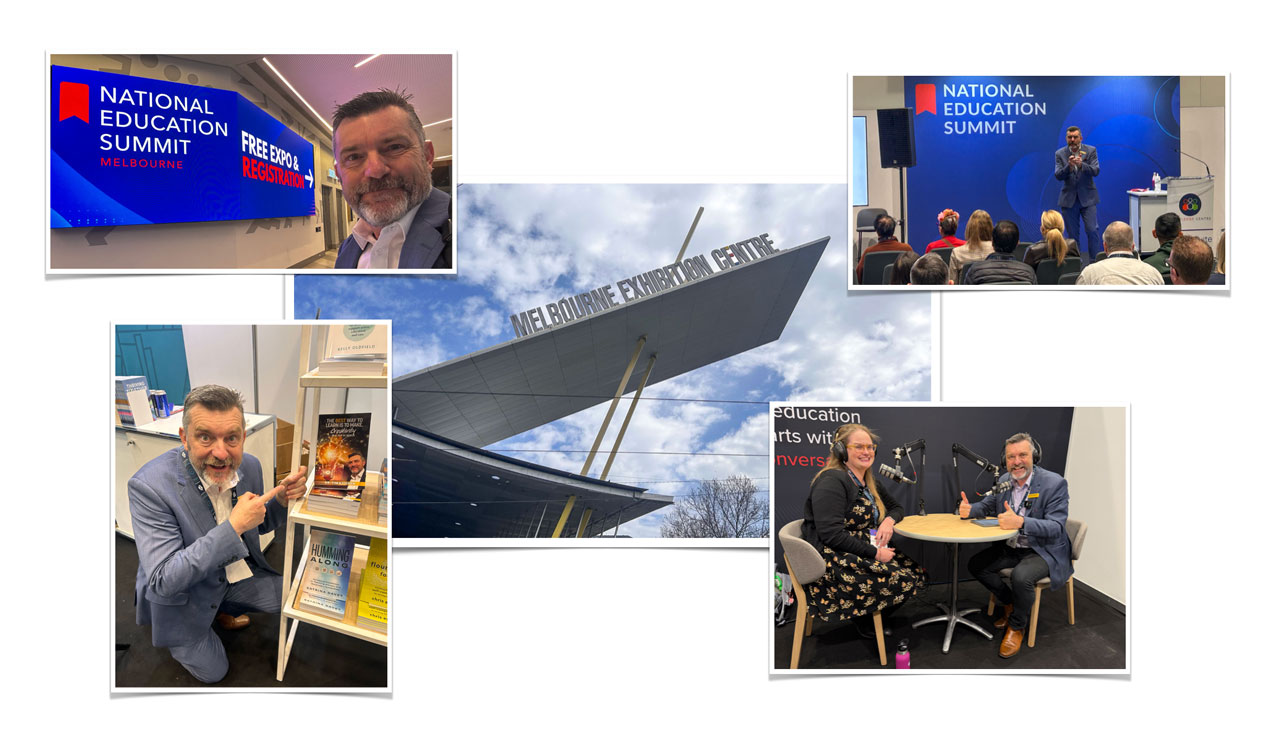
On 3 and 4 September, I had the great pleasure of being involved in the 2026 National Education Summit at the Melbourne Convention and Exhibition Centre.
This event brought together teachers, school leaders, education consultants, authors, researchers and industry partners for two days of professional learning, practical ideas and valuable conversations. With conference streams, free seminars and an extensive education exhibition, the Summit provides educators with many opportunities to learn, connect and be inspired.
My involvement across the two days included MCing, podcasting, presenting and book signing – four activities I thoroughly enjoy.
Day 1: Early Stages, podcasting and conversations with readers
My first role on Thursday was to MC the Early Stages Theatre. This free seminar program focused on early childhood and the early years of schooling, featuring a range of educators and specialists sharing practical insights and experiences.
One of the great privileges of being an MC is the opportunity to help create a welcoming environment for both presenters and audience members. It was a pleasure to introduce the speakers, learn from their work and help keep the program flowing throughout the day.
Sam Butterfield, Director of Teaching and Learning, Hume Anglican Grammar
Alice Vigors, Principal, Tumut Public School
Between MC responsibilities, I moved across to the Summit’s Podcast Hub to record two special episodes of The Kitchen Think. My guests were Adrian Cotterell, Managing Director of Thinking Mode, and Tory Spicer-Stuart, Head of Teaching and Learning – Digital Practice at Beaconhills College. The Podcast Hub was located on the exhibition floor and hosted a curated series of live recordings featuring education podcasters, researchers, teachers and school leaders.
With Adrian Cotterell,
With Tory Spicer-Stuart,
Adrian and I explored the increasingly complex relationship between assessment, generative AI and AI-detection software. We discussed why schools need to be cautious about relying too heavily on detection tools and why assessment practices must evolve to place greater emphasis on process, dialogue, reflection and evidence of learning. We also promoted his amazing assessment resource for schools called Thinking Mode.
Tory shared some of the thoughtful work taking place at Beaconhills College to integrate AI into teaching and learning. Our conversation also considered a much bigger question: what does it mean to be human in a world increasingly influenced by generative AI?
I also spent time signing books and meeting educators in the Amba Press Book Nook area. These sessions are about much more than simply adding a signature to a book. They provide an opportunity to speak directly with readers, hear about the challenges they are encountering in their schools and discuss the ideas that are most relevant to their work. This was an opportunity to promote my soon to come publication with Amba Press – The Human Advantage: Teaching, Learning and Leading in a Gen AI World.
For an author, there is something particularly rewarding about meeting the people who engage with your writing. Each conversation is a reminder that books can become the starting point for new thinking, professional dialogue and meaningful change.
Day 2: Exploring the Human Advantage
On Friday morning, I had the honour of opening the Knowledge Centre Theatre with my presentation:
The Human Advantage – how teaching and learning is changing in an AI-rich world
The session examined the rapid influence of generative AI on education and the need to reconsider some of our established approaches to teaching, learning and assessment.
AI can generate text, images, audio, video and computer code within seconds. It can help educators brainstorm ideas, differentiate resources, provide feedback and reduce time spent on repetitive administrative tasks. It can also support students as a creative partner, research assistant and thinking companion.
However, easy access to sophisticated AI-generated content also raises important questions. What does authentic student work now look like? How can teachers assess understanding rather than simply evaluate a polished final product? How do we help students use AI safely, ethically and transparently?
A key message from the presentation was that AI may change how we teach, learn and assess, but it does not diminish the importance of being human.
Our advantage lies in qualities such as curiosity, empathy, judgement, creativity, ethical reasoning and meaningful connection. These are not optional extras in education. They are central to the kind of people and communities we are trying to develop.
A highlight for me was seeing the work created by Marty from Sketch Group, a talented artist who visually captured the key ideas from my presentation as I spoke.
A valuable two days
Across both days, the strongest feature of the Summit was the opportunity to connect.
Whether I was MCing a theatre, recording a podcast, presenting to educators or signing books, the most valuable moments came through conversations with people who care deeply about education and the future of young people.
With Andrew FullerWith Matt EstermanWith Ray Flemming & Adrian CotterellWith Dan Bowen & Tory Spicer-Stuart
Events such as the National Education Summit remind us that educators do not need to navigate rapid technological and social change alone. By sharing our experiences, asking difficult questions and learning from one another, we can develop more thoughtful and human-centred responses.
Thank you to the National Education Summit team, the presenters, exhibitors, podcast guests, Amba Press and everyone who attended my session or stopped by for a conversation.
It was a busy, energising and inspiring two days, and a wonderful opportunity to celebrate the human advantage at the heart of education.
On Tuesday 1st September, I had the pleasure of facilitating a practical workshop titled Time-Saving Automation with AI for 19 non-teaching staff representing approximately 12 Victorian independent schools.
Designed specifically for school administrative and office staff, the workshop explored practical ways AI tools can help reduce repetitive work, streamline everyday processes and give staff more time to focus on the people and responsibilities that require human judgement and care.
A poll conducted with the group revealed that generative AI is already becoming part of everyday administrative practice. Ten participants, or 53%, reported using generative AI daily, while another four, or 21%, said they use it several times a week. However, confidence has not necessarily kept pace with adoption. Fourteen participants, representing 74% of the group, described themselves as “still learning.” This included six of the ten daily users.
This was one of the most interesting findings from the workshop. Regular use does not automatically translate into confident, safe or effective practice. Staff may be experimenting frequently with AI while remaining uncertain about prompting, privacy, accuracy, appropriate use and the reliability of the information being generated.
Microsoft Copilot was the most widely used AI tool among the group, selected by 79% of respondents. Canva or Adobe Express AI features followed at 63%.
The most established applications were:
Drafting emails — 84%
Writing documents — 79%
Preparing meeting notes — 58%
Brainstorming ideas — 53%
These results reflect the immediate value that generative AI can offer administrative staff. Email and scheduling were also identified as the most time-consuming responsibilities, making them logical areas in which to explore safe and practical automation.
During the workshop, we examined how AI could assist with repetitive administrative tasks without removing human responsibility. The emphasis was not on handing entire roles over to AI, but on identifying small, recurring tasks where AI could provide a useful first draft, organise information, suggest a structure or accelerate an established process.
Participants were interested in applying AI to a broader range of practical tasks, including:
Organising files
Analysing spreadsheets
Drafting meeting notes
Creating standard letters and forms
Summarising documents
Responding to routine enquiries
The workshop highlighted the need for schools to establish clear guidance around approved AI tools, data privacy and human oversight.
Professional learning for non-teaching staff should be practical and closely connected to their roles. It should include opportunities to work with genuine administrative processes, learn how to check AI-generated outputs and understand how to handle confidential information safely.
The workshop reinforced that school administrative staff are not waiting for AI to arrive. Many are already using it regularly and are eager to develop more sophisticated workflows. The priority now is to ensure that adoption is supported by the confidence, guidance and safeguards needed to use these tools well.
When introduced thoughtfully, AI has the potential to take some repetitive work off the plates of busy school staff. However, the most effective approach will continue to combine the efficiency of AI with the experience, accountability and human judgement of the people who keep schools running.
Click here to find out more this series of events for non-teaching & teaching staff at ISV schools.
Click here to book Tim to work with your school (on-line or in-person)
On 27th August 2026, I had the privilege of working with 22 teachers from about 10 different schools for a professional learning workshop hosted by ISV titled Rethinking Assessment in the Age of AI.
Generative AI is placing increasing pressure on many traditional forms of assessment. When students can produce polished essays, reports, images and presentations within seconds, it is becoming more difficult to determine what they genuinely understand and how much of the work reflects their own thinking.
However, the answer is not simply to return to handwritten examinations or rely on unreliable AI-detection tools. Instead, schools have an opportunity to design assessment that provides richer evidence of learning, makes students’ thinking more visible and values the learning journey as much as the final product.
The morning was devoted to exploring and discussing several important aspects of this challenge.
We began by considering why traditional assessment is under pressure and identifying the types of tasks that are particularly vulnerable to inappropriate AI use. Teachers reflected on whether some long-established assessment practices still provide trustworthy evidence of student learning.
From there, we explored ways of designing more AI-resilient assessment tasks. These approaches included making tasks more personal and contextual, incorporating opportunities for discussion and oral explanation, collecting evidence at different stages of the learning process and asking students to reflect on the choices they made.
A major focus was the principle of process over product. A polished final submission does not always reveal how a student developed an idea, responded to feedback, overcame difficulties or used AI and other forms of assistance. Digital portfolios can help address this problem by capturing drafts, research, feedback, reflections and evidence of revision over time. They provide teachers with a much clearer picture of how learning has developed.
We also examined practical principles for redesigning assessment through an AI lens. This involves asking questions such as:
What do we genuinely want students to learn?
What evidence would demonstrate that learning?
Which parts of the task should students complete independently?
Where might AI appropriately support the learning process?
How will students explain and take responsibility for their decisions?
What evidence of thinking and development should be collected along the way?
Podcasting was explored as one valuable alternative to conventional written assessment. A podcast requires students to understand their topic, organise their ideas, communicate clearly and make decisions about audience, tone and structure. It can also incorporate conversation, questioning and reflection, making it more difficult for students to submit material they do not understand.
We spent time examining how critical and creative thinking can be assessed more explicitly. Rather than treating these capabilities as vague qualities or judging only the final outcome, teachers can look for observable evidence. Critical thinking might involve evaluating sources, questioning assumptions, comparing perspectives and justifying conclusions. Creative thinking might be demonstrated through generating possibilities, experimenting with alternatives, making connections and refining an idea in response to feedback.
During the afternoon, the teachers moved from discussion to creation. Working in small groups and using Adobe Express, they were asked to produce either a podcast or a short animation addressing one of two topics: defining what critical thinking looks like or exploring how creative thinking might be assessed.
The results were very impressive. In a relatively short period, the groups transformed complex educational ideas into engaging and accessible multimedia pieces. The activity also modelled the kind of assessment we had been discussing throughout the day. Teachers needed to collaborate, interpret a challenging concept, generate ideas, make creative decisions and communicate their understanding to an audience.
Importantly, the task was not simply about producing a polished podcast or animation. The conversations, decisions, revisions and reflections that took place during its creation provided equally valuable evidence of learning.
Generative AI has exposed weaknesses in assessment practices that were already present. It has also given schools a powerful opportunity to reconsider what they value, what they assess and how students can best demonstrate genuine understanding.
Rethinking assessment in the age of AI is not about making every task resistant to technology. It is about designing assessment that values human thinking, creativity, judgement, communication and reflection. Yesterday’s workshop showed what is possible when educators are given the time to question established practices, experiment with new approaches and become learners and creators themselves.
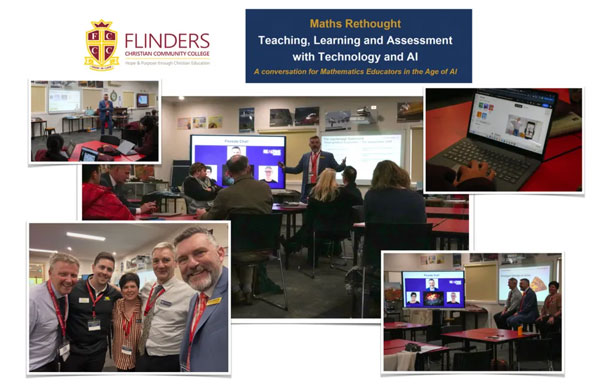
On 24 August 2026, Flinders Christian Community College hosted Maths Rethought at their Carram Downs Campus, a day of professional dialogue, live classroom demonstrations and practical exploration focused on the changing nature of mathematics education.
The event brought together school leaders, mathematics educators and education specialists to consider an important question: how can we best prepare students and teachers for learning, working and contributing in a rapidly changing, AI-rich world?
Luke Kerr, maths teacher at Flinders as well as the founder of Real Time Learning, was the brains behind this event which was partnered by Texas Instruments, Realtime Learning, Leigh Lancaster Consulting, IXL, Edunet and CTL.
The day began with a think tank involving members of the Flinders Christian Community College executive team. Our discussion explored the growing influence of artificial intelligence on education and the strategic directions schools may need to consider.
Rather than focusing only on particular AI tools, the conversation examined broader educational priorities. What knowledge, skills and human capabilities will students need? How should curriculum, pedagogy and assessment evolve when AI can generate sophisticated content almost instantly? How can schools support teachers to use emerging technologies safely, ethically and purposefully?
Following the think tank, mathematics teachers from several schools joined the event to observe a series of live teaching demonstrations. These sessions provided an opportunity to see experienced educators working with real students and to reflect on the decisions teachers make while learning is taking place.
Dr David Leigh-Lancaster and Antje Leigh-Lancaster (from Leigh Lancaster Consulting), conducted two live demonstrations. The first was a VCE mathematics lesson exploring modelling with circular functions. The second involved a Year 10 class working with quadratic functions. Both lessons demonstrated the importance of helping students move beyond simply applying a memorised formula or procedure. Through questioning, modelling and discussion, students were encouraged to recognise patterns, make connections and develop a deeper conceptual understanding of the mathematics.
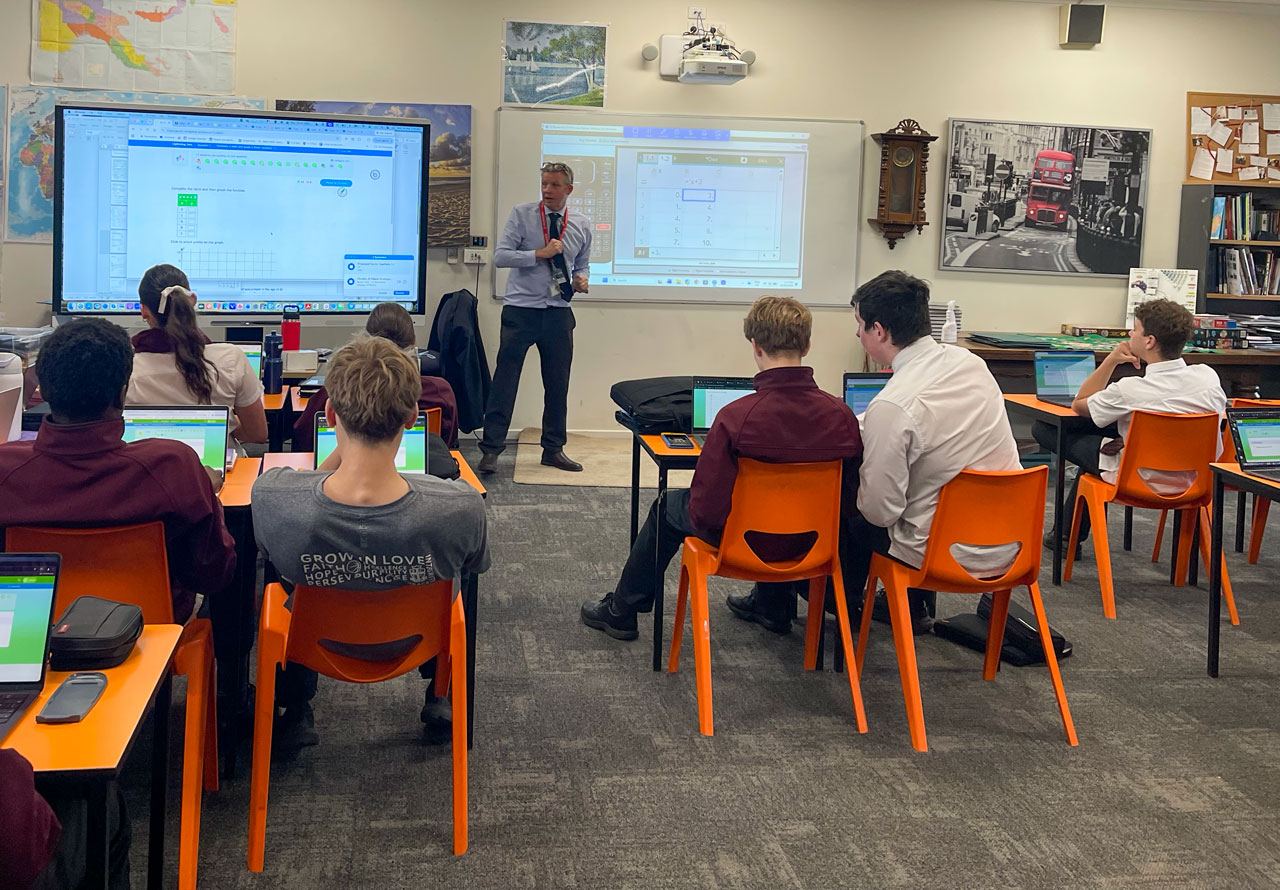
Kelvin Finger from IXL Learning and Luke Kerr from Flinders then conducted a Year 9 lesson on linear graphs. Their session explored how understanding could be developed using PhET, Navigator and IXL. The combination of interactive simulations, visual representations and targeted practice enabled students to explore the relationships between variables and connect abstract mathematical ideas with more visible and dynamic representations. The lesson demonstrated how digital tools can complement one another when each is used for a clear educational purpose.
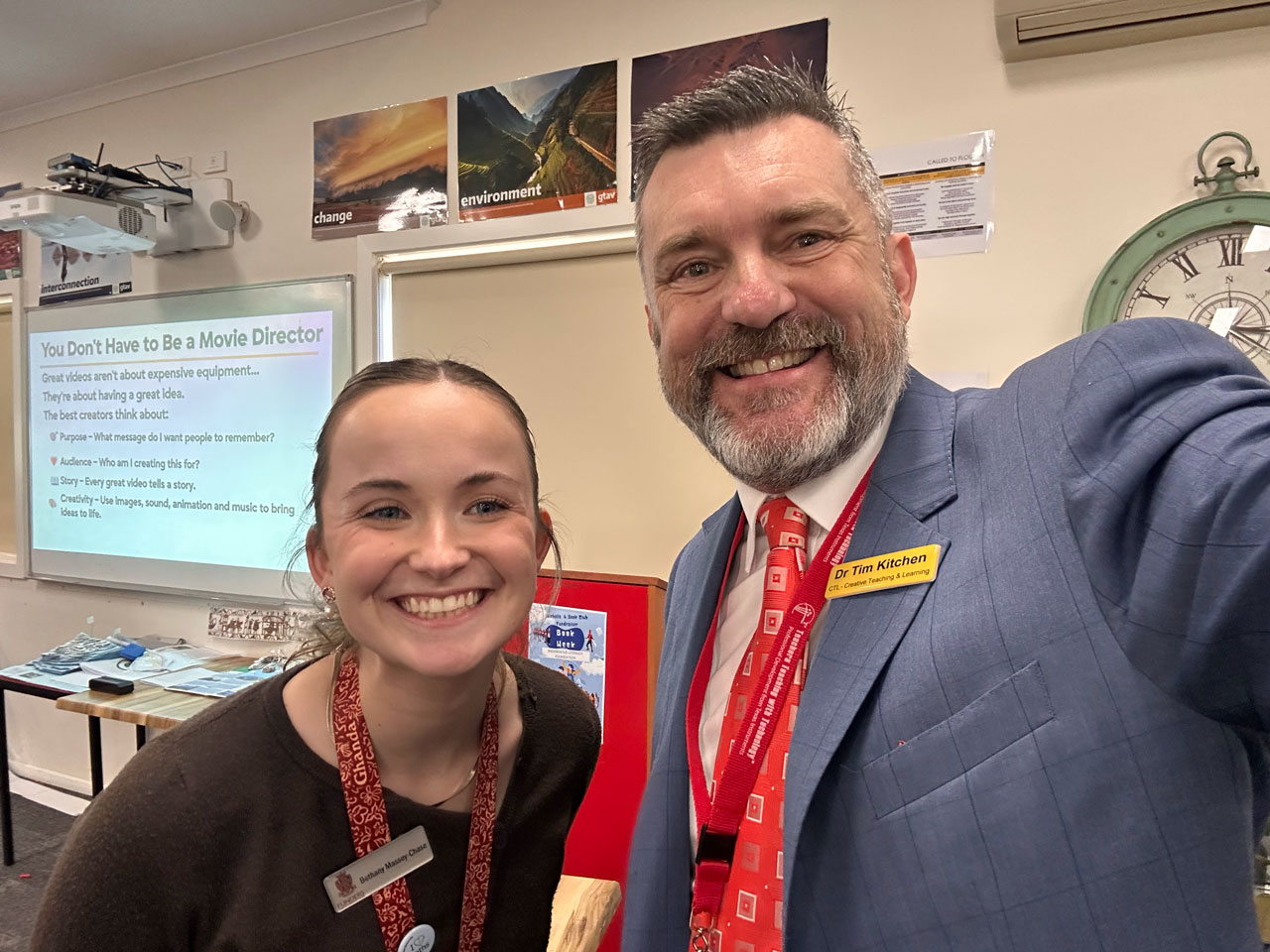
I had the opportunity to work with a Year 7 mathematics class on an activity that combined statistics, global data and digital storytelling. I would like to say a special thank you to Head of Mathematics Mrs Bethany Massey-Chase for allowing me to borrow her class for a double period.
Students explored statistics connected to data centres around the world. This was a particularly relevant context because data centres are essential to the operation of cloud computing and generative AI. They also raise important questions about energy consumption, water use, environmental impact and the growing global demand for digital infrastructure.
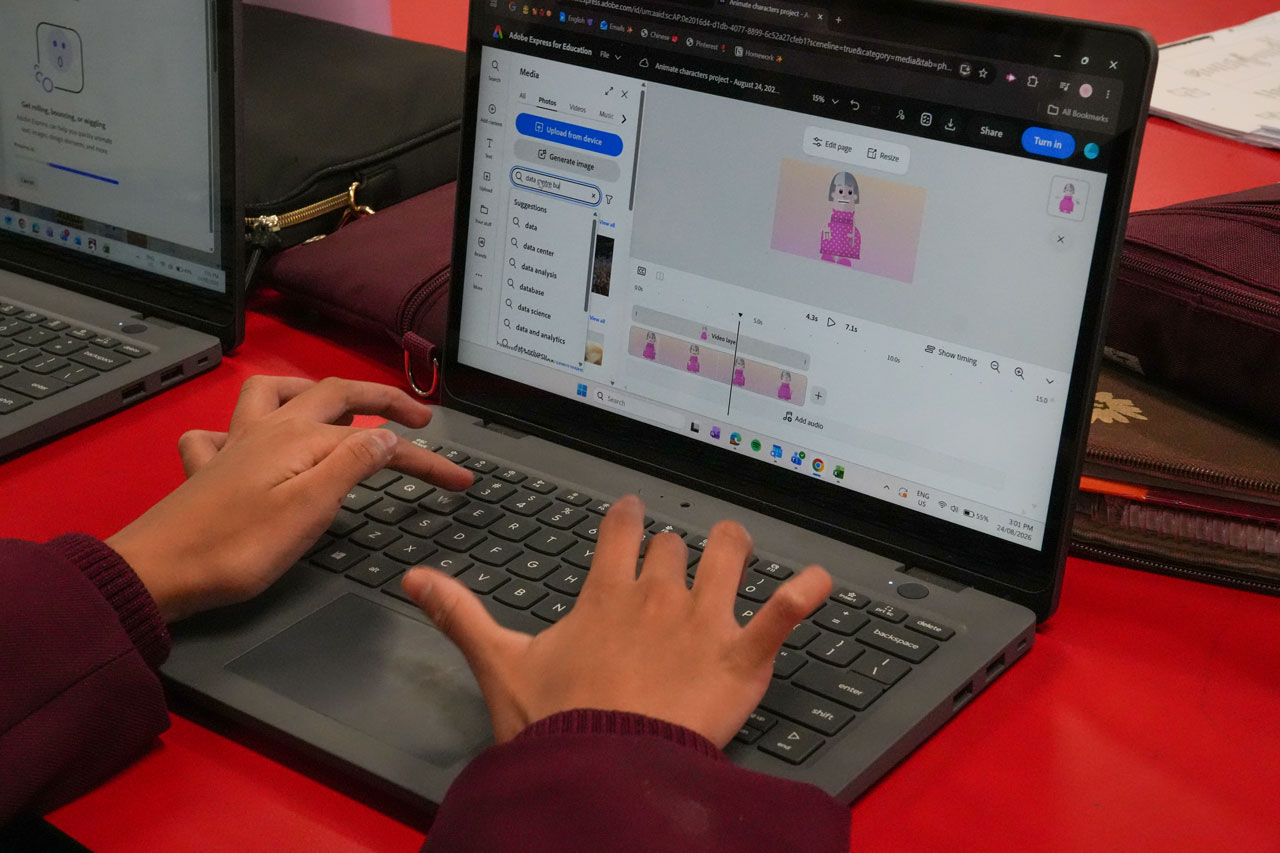
The students were challenged to interpret the statistics and transform what they discovered into a short video or animated story. This required them to do much more than reproduce information. They needed to decide which data was most significant, identify the story contained within it and communicate that story clearly to an audience.
By creating a video or animation, students could combine mathematical understanding with creativity, communication and digital literacy. They had to consider how graphs, numbers, narration, characters and visual elements could work together to make complex information meaningful.
This type of activity helps students recognise that mathematics is not isolated from the world around them. Statistics can help us investigate major global issues, evaluate claims and communicate evidence. Mathematics becomes not only something students calculate, but something they can use to understand and explain their world.
After the classroom demonstrations, the visiting teachers came together for an after-school professional learning session that I facilitated. The focus was on process over product and the use of digital portfolios through Adobe Express.
In an age when generative AI can produce a polished response in seconds, the final product alone may no longer provide sufficient evidence of student learning. Teachers increasingly need ways to see how students arrived at their conclusions, how their ideas developed and what decisions they made along the way.
Digital portfolios can help make this learning process visible. Students can document initial ideas, research, calculations, drafts, feedback, revisions and reflections. They can include photographs, videos, audio explanations, screen recordings and examples of work in progress.
Maths Rethought was a valuable reminder that meaningful educational change occurs when strategic thinking, classroom practice and professional collaboration come together. The day was not about abandoning established approaches to mathematics teaching or adopting technology simply because it is new. It was about thoughtfully examining what effective mathematics learning can look like in a changing world.
Across the think tank, live lessons, student storytelling activity and professional learning session, a consistent message emerged: technology is most valuable when it helps students think more deeply, explore ideas, make connections and communicate their understanding. As AI continues to influence education, the challenge for schools is not merely to keep pace with new tools. It is to ensure that learning remains purposeful, intellectually demanding, creative and deeply human.
My sincere thanks to Flinders Christian Community College for hosting the event, to the school leaders and visiting teachers who contributed to the professional dialogue, and to Dr David Leigh-Lancaster, Antje, Kelvin Finger and Luke Kerr for making their teaching practice visible.
It was particularly enjoyable to work with the Leigh-Lancaster’s who I haven’t seem for over 30 years when we all worked at Kingswood College together in the early 1990s.
Most importantly, thank you to the Flinders students who participated so enthusiastically and reminded us that the best conversations about the future of education should always remain centred on learners.
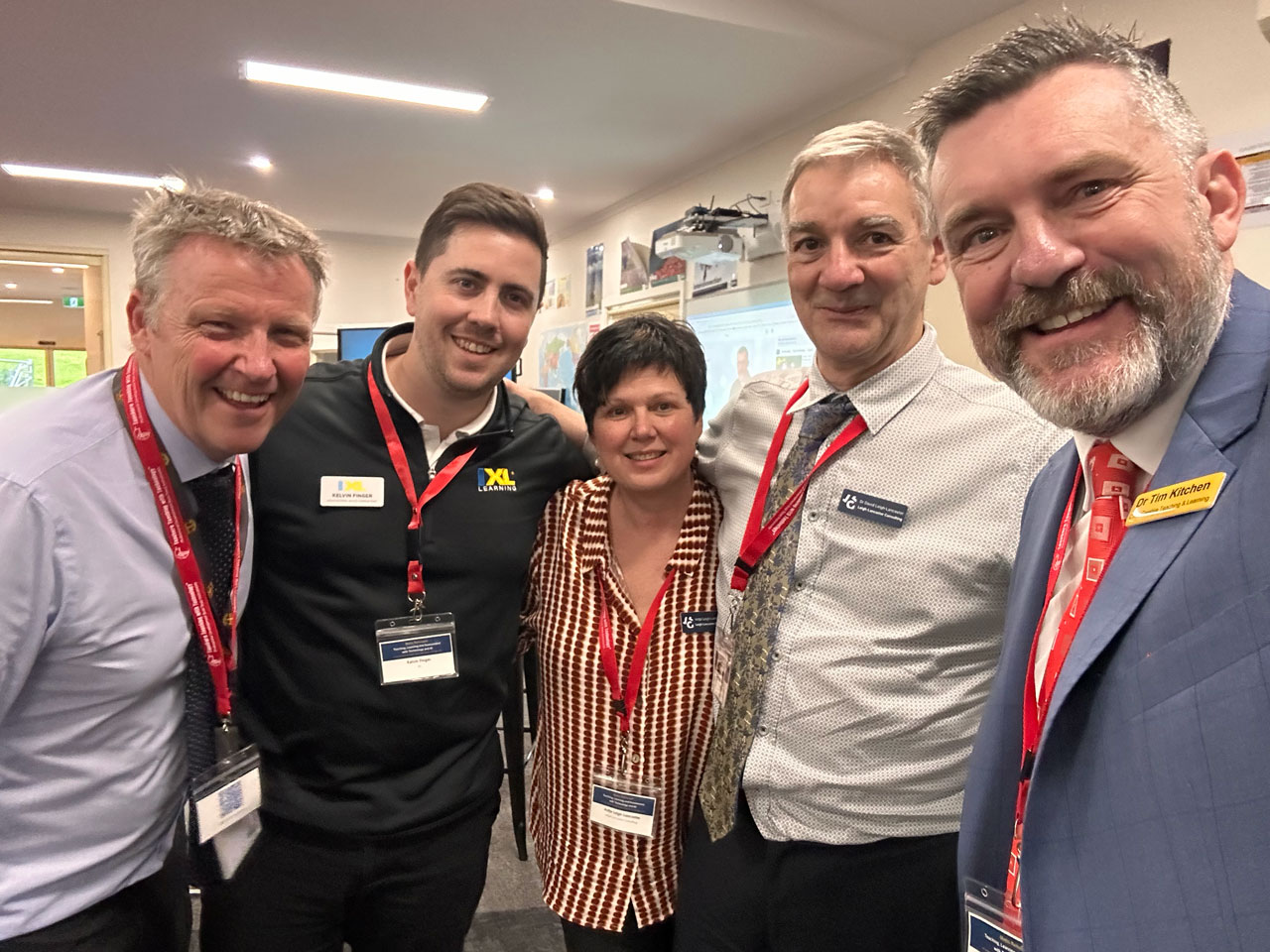
Luke Kerr, Kelvin Finger, Antje Leigh-Lancaster, Dr David Leigh-Lancaster & Dr Tim Kitchen
Drawing on more than 35 years across classrooms, school leadership and education consultancy, the book explores an idea I believe is becoming increasingly important:
AI hasn’t necessarily created many of the challenges schools are facing. It has exposed them.
And that creates an opportunity.
As intelligent machines become increasingly capable, education needs to place even greater value on the capabilities that make us distinctly human:
Curiosity
Creativity
Critical thinking
Empathy
Discernment
Ethical judgement
My new book is designed as a practical resource for teachers and school leaders. It includes strategies, classroom activities and frameworks to help educators rethink curriculum and assessment, embrace AI wisely and ethically, and keep people at the centre of learning.
Because the future of education shouldn’t be about humans competing with machines. It should be about helping young people develop the capabilities machines cannot replace.
Great teaching, now more than ever, is a deeply human endeavour.
Let your networks know about this new publication.
On Wednesday 12 August, I had the pleasure of facilitating a hybrid professional learning workshop at the wonderful Frankston East Primary School for approximately 30 teachers from nine schools across Victoria and South Australia.
The workshop was part of The Connection, an initiative working in partnership with The Smith Family to improve student outcomes in communities experiencing disadvantage. The program brings educators and school leaders together to exchange ideas, share effective practices and build strong professional relationships across schools.
With some participants joining us in Frankston and others connecting online, the hybrid format reflected the collaborative spirit of the program. Although the teachers represented different schools, communities and contexts, they shared a commitment to improving learning opportunities for their students.
Moving beyond the AI hype
Our focus was the safe, ethical and inclusive use of artificial intelligence to enhance creativity and engagement in the classroom.
Generative AI can help students brainstorm, receive feedback, explore different perspectives and express their ideas in new ways. However, its value depends greatly on how the technology is introduced, supported and embedded within learning.
The goal should never be to use AI simply because it is available. It should be used deliberately, transparently and only when it offers a genuine benefit for teachers and learners.
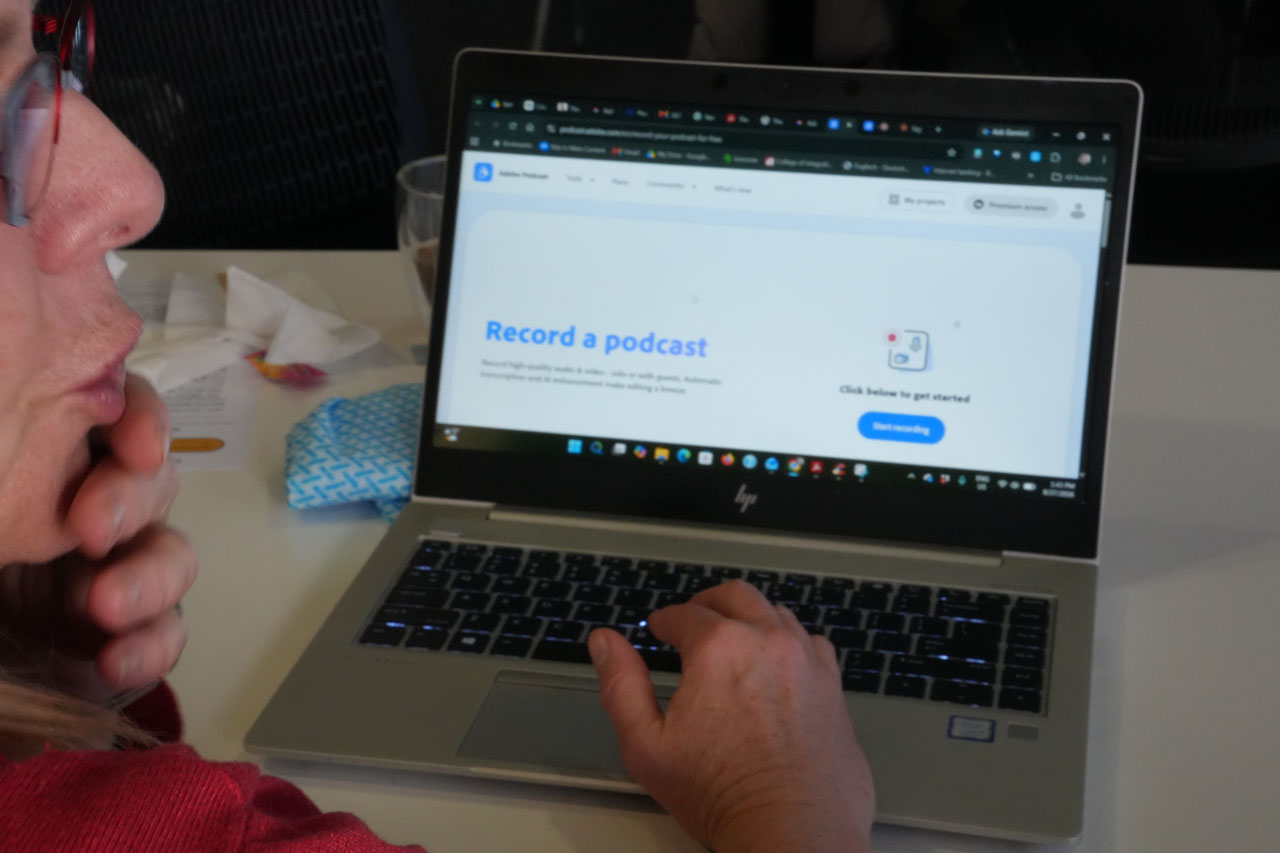
We used Gemini Notebook to allow AI to create a podcast but then took it to the next creative level by building our own podcasts using Adobe Podcast. Some of the education advantage of working with podcasts include:
A podcast lets you share ideas with potentially a wider audience than just your classroom.
Planning and recording a podcast teaches you to organise your thoughts, speak confidently, and get your message across.
Choose your topic, write a script, add music and sound effects — podcasting lets your creativity run wild!
Listeners can tune in whenever suits them — on the bus, at home, or during lunch. It fits around their lives.
Recording, editing, and publishing a podcast builds real-world tech skills that are valued in today’s world.
Podcasting is brilliant for teamwork. Research together, interview each other, and produce something you’re proud of.
Then we used the animation & video editing features within Adobe Express to build an animated introduction for our podcasts.
The feedback
The feedback from the participants was outstanding with:
100% of participants agreed or strongly agreed that the session content was useful, engaging and would inform their work as a leader
100% agreed or strongly agreed that they acquired new knowledge and skills
I would like to thank Nick Johns and Luci McFarlane from The Connection & The Smith Family for organising this event as well Warren Bull, the Principal of Frankston East Primary for hosting.
Most importantly, thank you to the participating teachers for their openness, curiosity and commitment to using technology in ways that keep learning, creativity, inclusion and human relationships at the centre.
If you would like to book me for similar events at your school or network, click here.