


Today I had the pleasure of spending the day with the outstanding staff at Melbourne Girls Grammar (MGG), leading a 90-minute interactive keynote on the safe, ethical and purposeful use of artificial intelligence in education, followed by a series of collaborative discussions with teams from across the school.
The keynote was designed to move beyond simply demonstrating AI tools. Instead, it encouraged staff to think critically about what high-quality teaching and learning should look like in a world where generative AI is becoming increasingly commonplace. Throughout the session, participants explored not only what AI can do, but also what should remain distinctly human.

One area that generated considerable interest was Adobe Express for Education. We explored how the platform enables students to demonstrate their learning through creativity rather than simply producing written responses. Staff were introduced to practical ways students can create animations, videos and digital portfolios that make learning visible while capturing the thinking process behind the final product. These approaches have become increasingly valuable as schools rethink assessment in an AI-rich world.

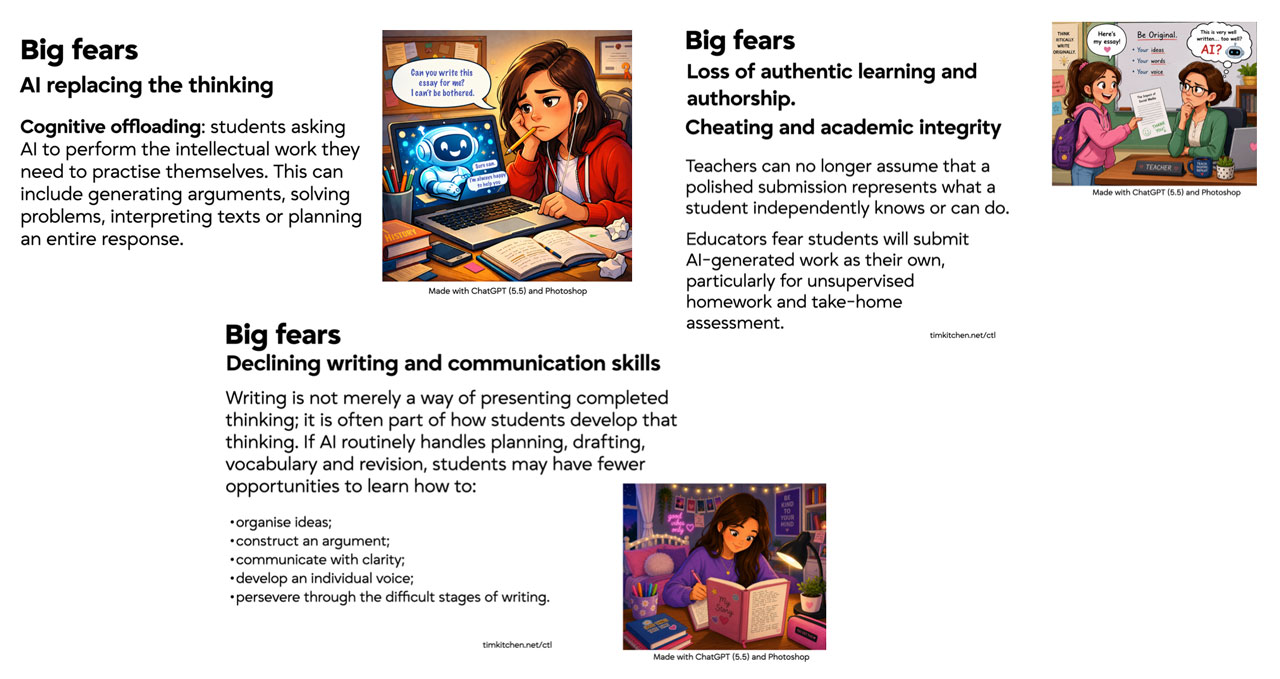
We also examined the latest Australian research into how students are using generative AI for schoolwork, alongside the major concerns currently being expressed by educators. Rather than focusing solely on academic integrity, our discussions broadened to include authorship, attribution, critical thinking, bias, privacy, digital literacy and the importance of helping students become thoughtful and responsible users of AI technologies.
The conversation then shifted to the broader national picture. We unpacked Prime Minister Anthony Albanese’s recent national AI announcement, considering what it may mean for schools as Australia develops a coordinated approach to artificial intelligence. This provided a natural bridge into discussing The Castlereagh Statement, which argues that the emergence of AI presents education with an opportunity to reconsider not simply the tools we use, but the very purposes of schooling. The statement’s emphasis on creativity, discernment, ethical judgement, adaptability and lifelong learning resonated strongly throughout the morning.

The keynote concluded by exploring one of the biggest challenges currently facing schools: assessment. We discussed why traditional approaches are becoming increasingly difficult to sustain in an AI-rich environment and examined practical strategies for redesigning assessment so that it values student thinking, process, creativity and authentic demonstration of understanding. Rather than asking how we can prevent students from using AI, the discussion centred on how assessment can better recognise the uniquely human capabilities that AI cannot replace.

The afternoon provided an opportunity to work with a diverse range of teams from across the school. I spent time with the Heads of Department, discussing leadership, curriculum planning and strategic approaches to AI implementation. Conversations with the Health and Physical Education team explored authentic assessment opportunities and ways AI can support planning without replacing professional judgement. The Drama team considered how generative AI might enhance creative processes while preserving student voice and originality. I also met with members of the Human Resources team, examining the broader organisational implications of AI and opportunities to improve administrative efficiency through responsible adoption.
The day concluded with valuable time alongside the school’s Digital Pedagogy Coordinator Bridie Scarce, reflecting on current practice, future priorities and how Melbourne Girls Grammar can continue building staff confidence while maintaining a strong focus on safe, ethical and purposeful implementation.

One of the most encouraging aspects of the day was the willingness of staff to engage thoughtfully with both the opportunities and the challenges presented by AI. The discussions consistently returned to a central theme: technology should never drive educational change on its own. Instead, schools must remain focused on developing the human capabilities that matter most – critical thinking, creativity, ethical judgement, collaboration and the ability to learn continuously throughout life.
My sincere thanks Luke Francis (Executive Director, Research and Innovation Director, Melbourne Girls Grammar Institute) for organising this even with the MGG leadership team and to everyone at MGG for their enthusiasm, thoughtful questions and willingness to engage in honest conversations about the future of education. It was a privilege to spend the day with such committed educators who are clearly focused on ensuring AI is used not simply because it is new, but because it genuinely enhances teaching, learning and student well-being.
