

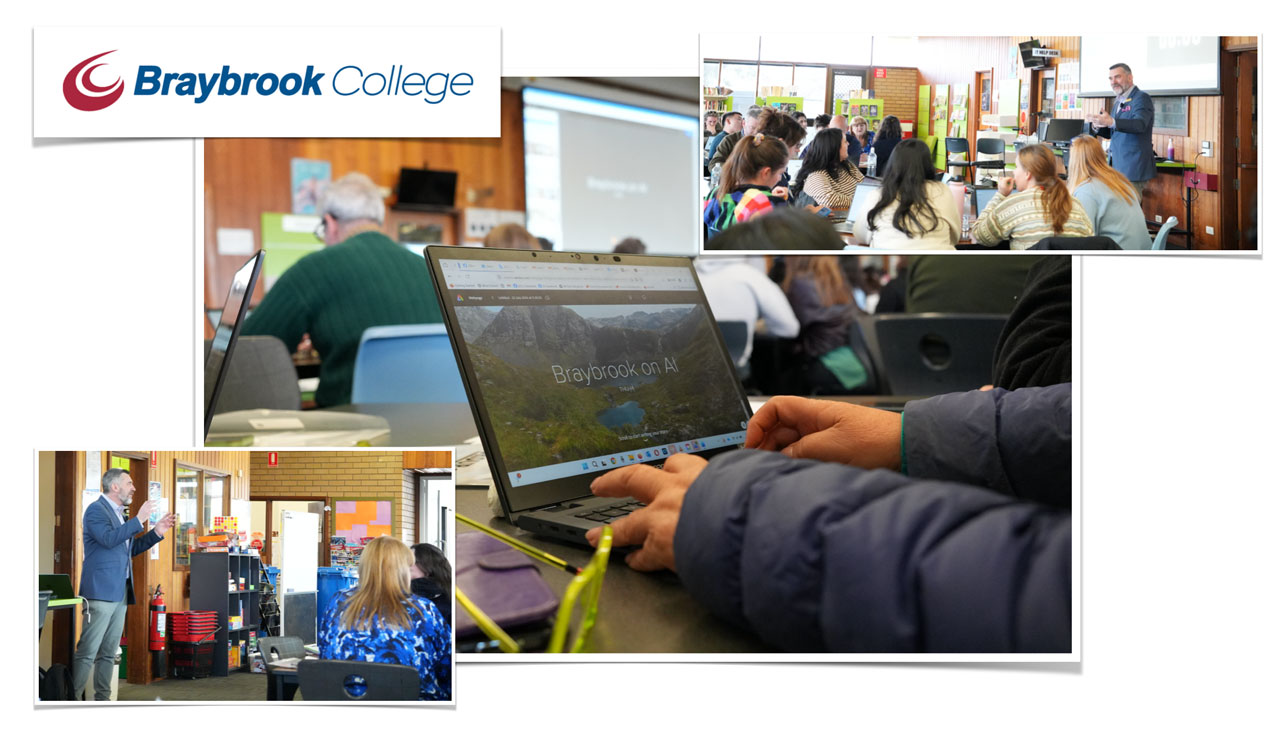
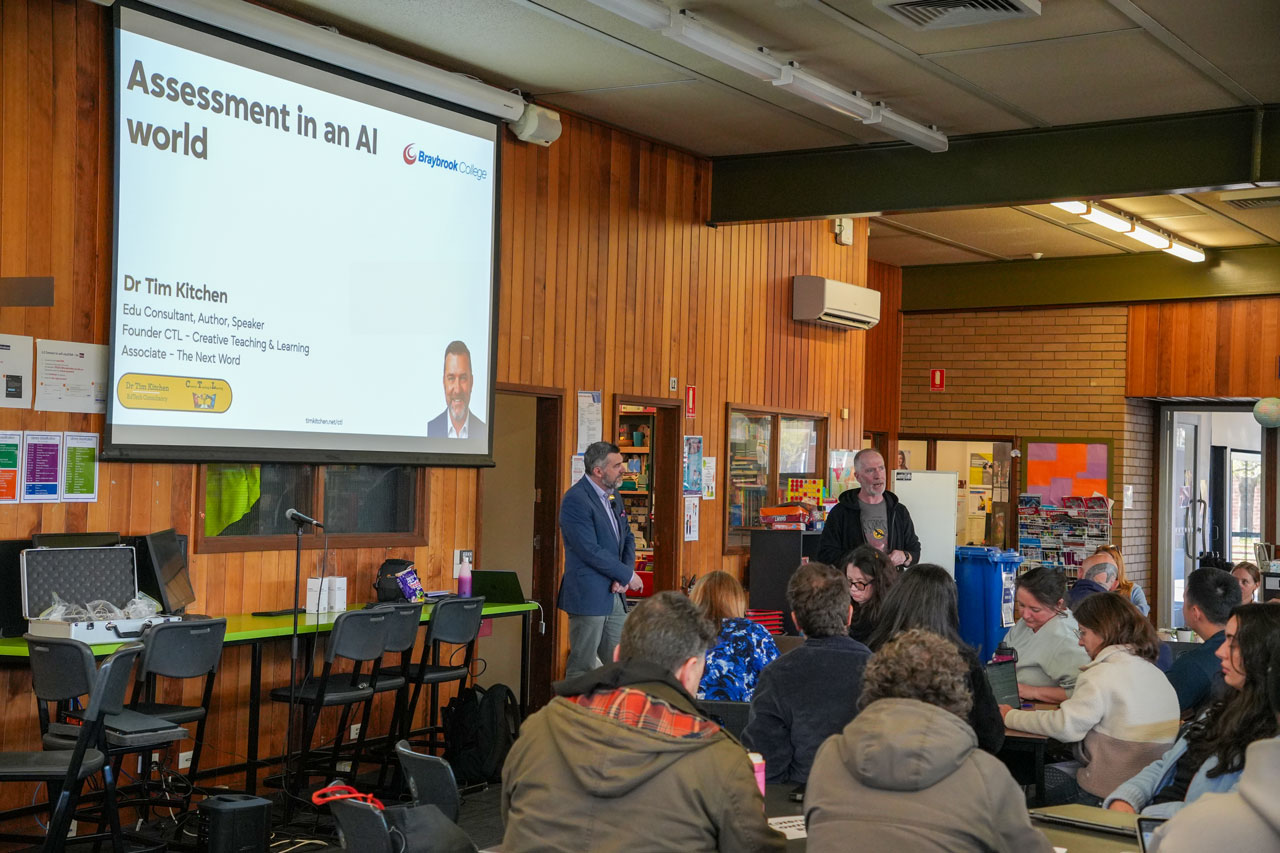
On Wed 22nd July, it was a pleasure to return to Braybrook College this week for my second professional learning session with staff this year. While our first workshop focused on helping teachers build confidence with generative AI, this session tackled a much bigger question:
How should assessment change when artificial intelligence can complete many of the tasks we’ve traditionally asked students to do?
This is no longer a theoretical discussion. AI has become part of everyday life for many students, and schools are increasingly recognising that simply trying to prevent AI use is neither realistic nor educationally desirable. Instead, the challenge is designing assessment that values the thinking, creativity and judgement that remain uniquely human.
AI Is Now a National Education Issue
We looked at Prime Minister Anthony Albanese’s recent announcement of a new national approach to ensure that artificial intelligence develops in Australia’s interests. While much of the media attention has focused on industry, employment and economic growth, the announcement also carries significant implications for schools.
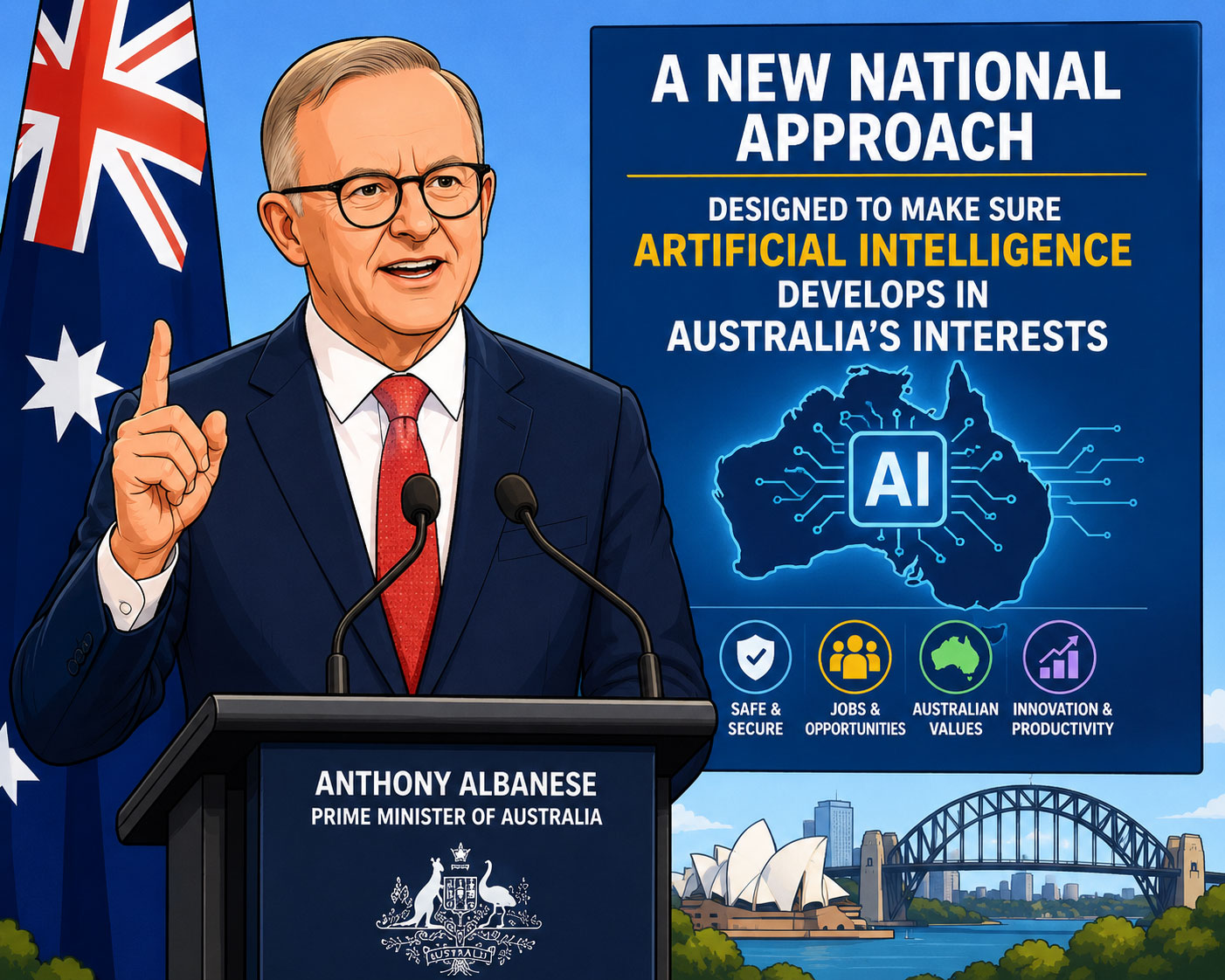
The creation of a national Office of AI, the development of mandatory Australian AI standards and the increasing focus on AI literacy all point towards one clear message: AI is no longer simply another emerging technology. It is becoming an important part of Australia’s future, and education will play a central role in preparing young people to live and work in that future.
For teachers, this reinforces the importance of moving beyond conversations about whether students should use AI and towards discussions about how they can use it safely, ethically and purposefully.
Introducing The Castlereagh Statement
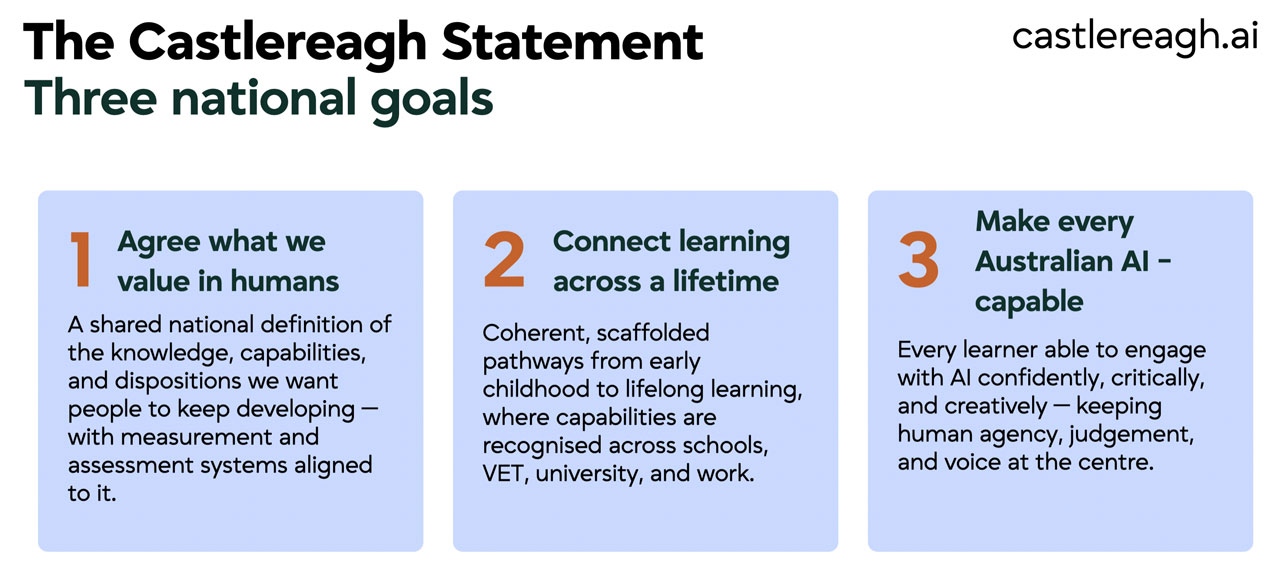
From there, we explored The Castlereagh Statement: A Shared National Vision for Education and Training in an AI-Transformed Australia.
One of the strengths of the statement is that it wasn’t written solely by academics or policy makers. It represents the collective thinking of principals, classroom teachers, university and VET leaders, researchers, industry representatives and students.
Building Digital Portfolios with Adobe Express
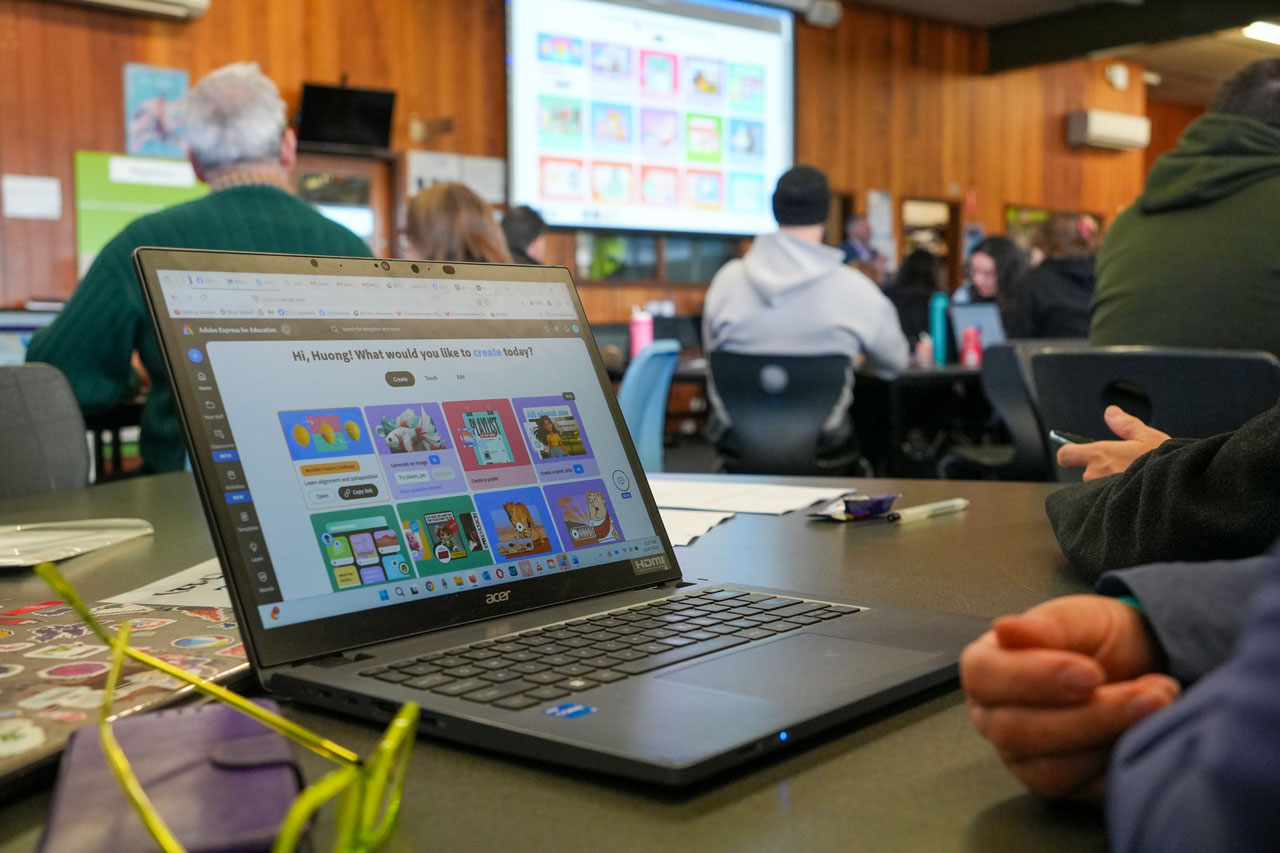
A significant part of the workshop focused on practical classroom implementation. Together we built digital portfolios using Adobe Express, demonstrating how portfolios allow assessment to move beyond a single final submission.
Rather than evaluating only the finished product, portfolios make student thinking visible. Teachers can capture planning, drafts, reflections, multimedia evidence, feedback cycles and demonstrations of growth over time.
This shift from product to process is becoming increasingly important in an AI-rich world because it allows teachers to see the learning journey, not simply the destination.
Digital portfolios also provide students with authentic opportunities to communicate their learning through text, images, video, audio and interactive media, reflecting the diverse ways people increasingly communicate beyond school.
NotebookLM: An AI Assistant for Every Learning Area
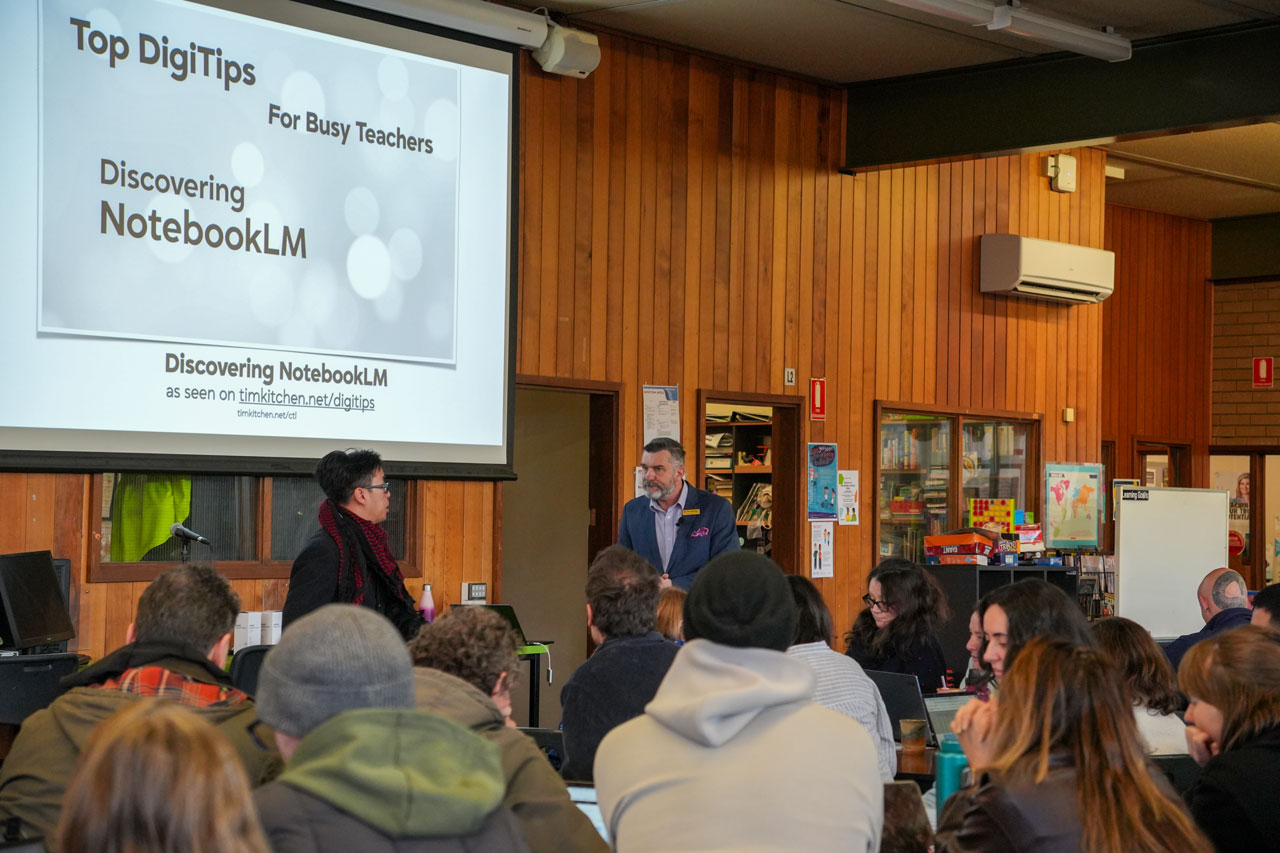
We also explored Google’s Gemini Notebook (formally NotebookLM), one of the most exciting AI tools currently available for education. Unlike general-purpose AI chatbots, NotebookLM grounds its responses in sources selected by the teacher or student. This allows learners to ask questions about their own class materials, curriculum documents, research articles or teacher-provided resources while maintaining much greater transparency about where information originates.
Diagnosing Unhealthy Assessment
One of the most engaging discussions centred around a deceptively simple question:
What makes an unhealthy assessment?
Teachers examined characteristics of assessment tasks that unintentionally encourage students to outsource thinking to AI. Tasks that rely heavily on information recall, generic essays, predictable prompts or products that can be generated with minimal human input become increasingly vulnerable in an AI-rich world.
Rather than blaming students or the technology, these conversations encourage educators to view assessment through a new diagnostic lens. If AI can complete much of the task with little genuine understanding, perhaps the assessment itself deserves closer examination.
Understanding AI’s Strengths—and Its Limits
A key part of redesigning assessment is understanding both what AI does exceptionally well and where its limitations remain. Generative AI excels at producing fluent writing, summarising information, identifying patterns, brainstorming ideas and creating first drafts.
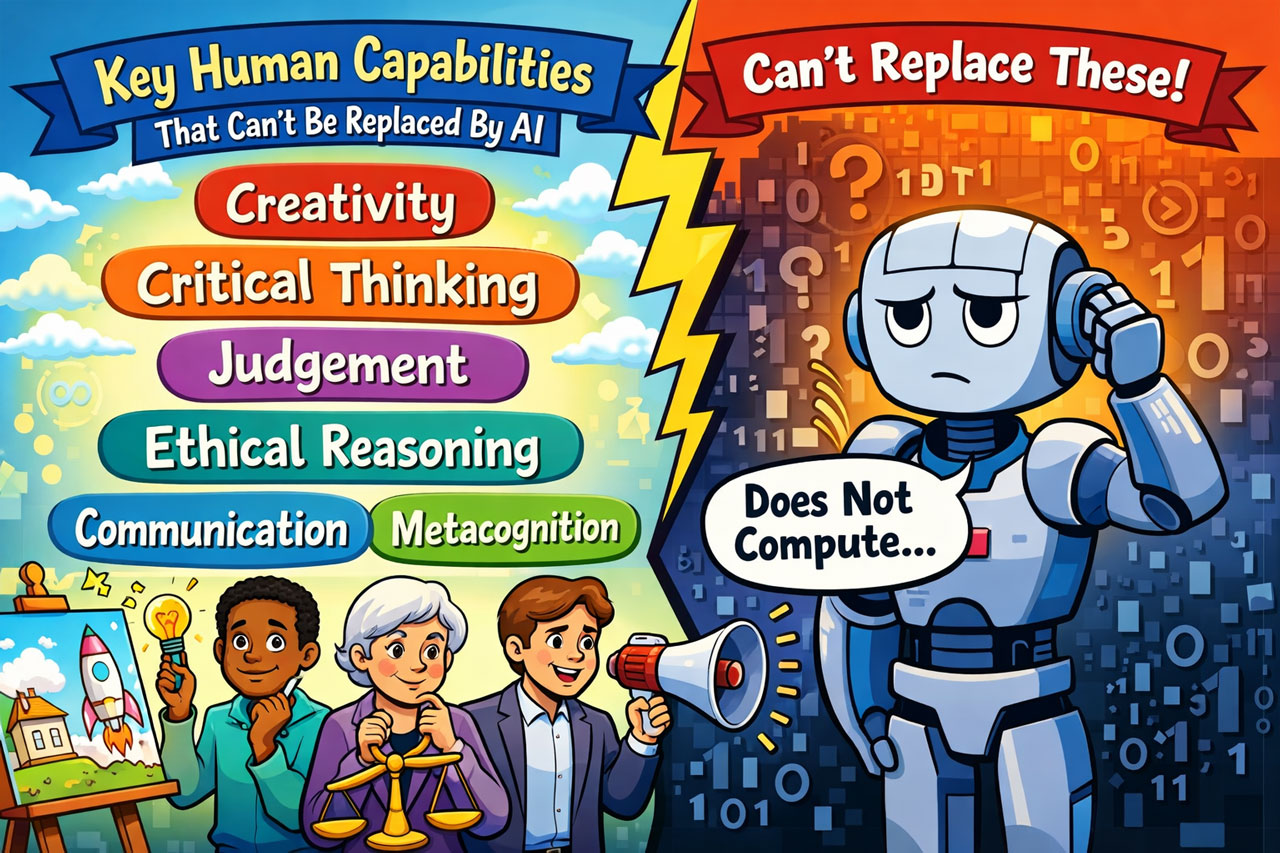
What it cannot genuinely do is care. It has no lived experience, no personal understanding, no moral responsibility and no authentic curiosity. It cannot reflect on its own learning journey, justify decisions based on personal experience or demonstrate genuine growth over time. These uniquely human qualities become increasingly valuable in assessment design.
Redesigning Assessment Through an AI Lens
The day concluded by exploring practical strategies for redesigning assessment in ways that embrace AI while preserving authentic learning. Rather than attempting to create AI-proof tasks, we explored designing assessments that make human thinking more visible.
This includes placing greater emphasis on process rather than product, incorporating reflection and metacognition, using iterative feedback cycles, creating locally contextualised tasks, including oral explanations and presentations, and asking students to justify decisions rather than simply provide answers.
These approaches don’t ignore AI. Instead, they acknowledge its presence while ensuring assessment continues to value the capabilities that matter most.
Looking Ahead
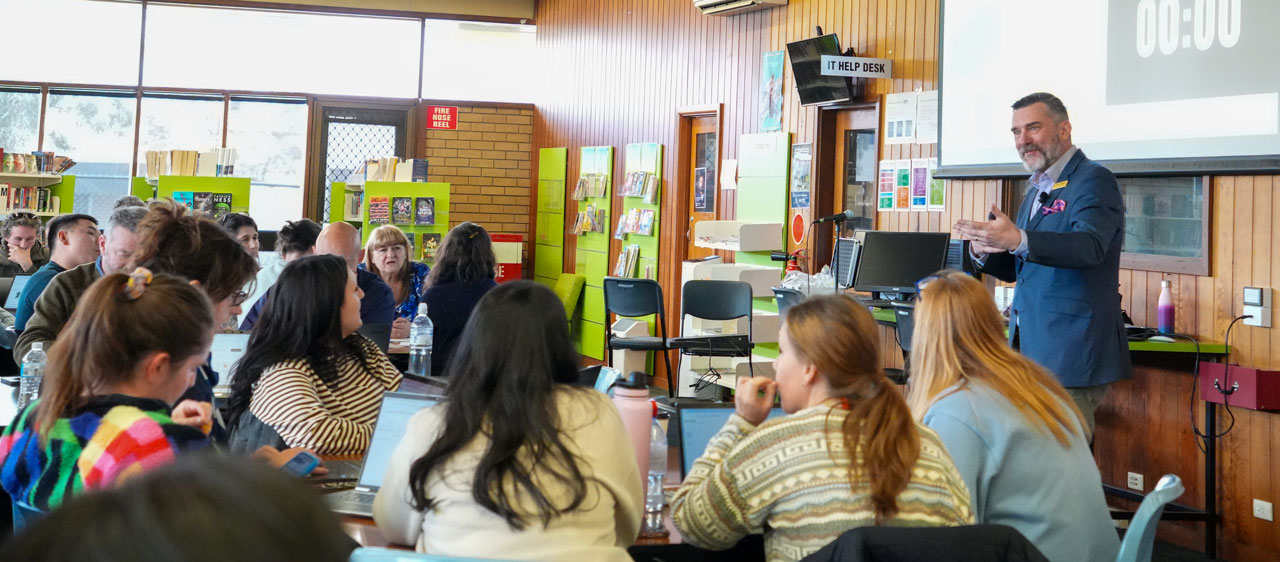
Returning to Braybrook College reinforced something I’ve been observing in schools across Australia. The conversation has shifted. Teachers are no longer simply asking which AI tool they should use. They’re asking deeper questions about curriculum, assessment and the future of learning itself.Those are the conversations that matter.
As Australia’s national AI agenda continues to develop and initiatives such as The Castlereagh Statement gain momentum, schools have an opportunity not simply to respond to technological change but to shape it thoughtfully. Assessment has always reflected what we value most in education.
In an age of AI, perhaps the greatest opportunity is to ensure that what we assess increasingly reflects the human capabilities that will matter most for the future.
I would like to thank Braybrook College Assistant Principal Sean McMahon for organising this session.
 Dr Tim Kitchen