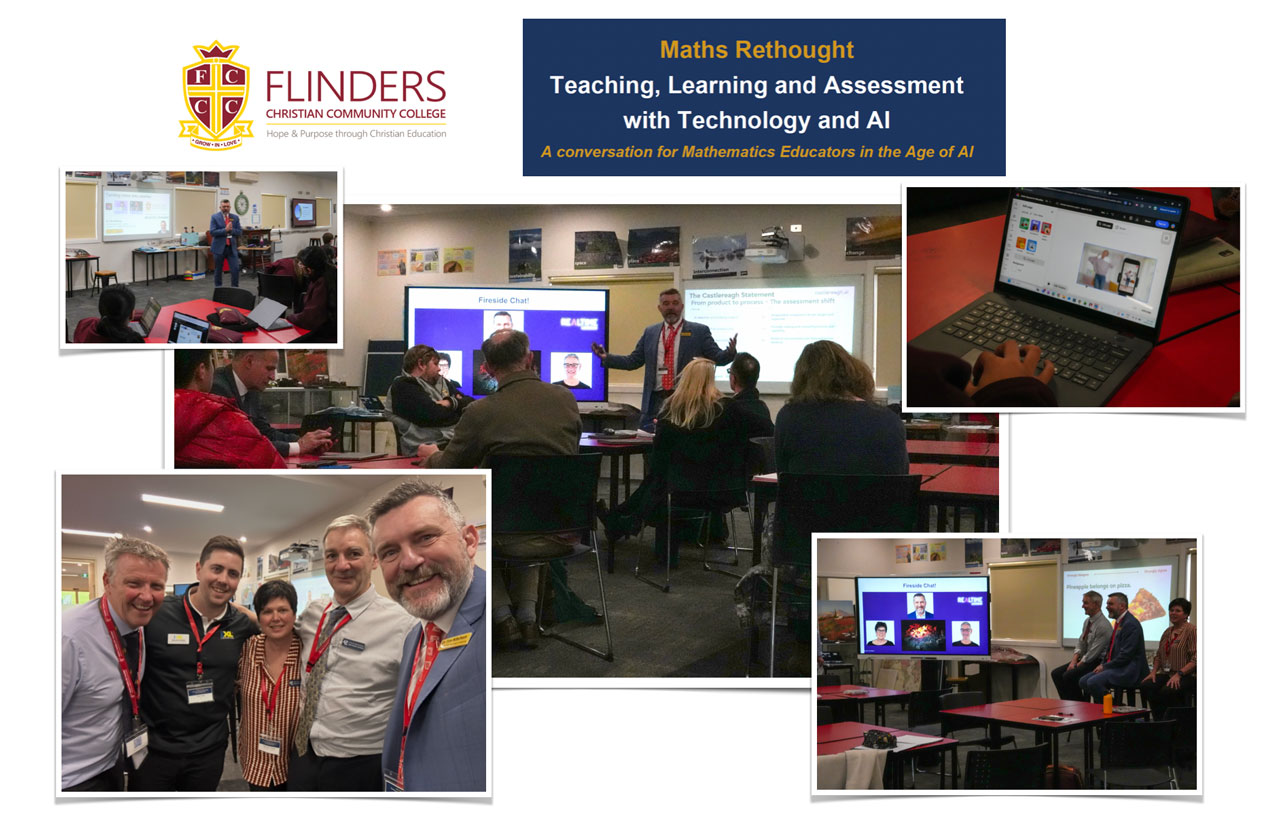
On 24 August 2026, Flinders Christian Community College hosted Maths Rethought at their Carram Downs Campus, a day of professional dialogue, live classroom demonstrations and practical exploration focused on the changing nature of mathematics education.
The event brought together school leaders, mathematics educators and education specialists to consider an important question: how can we best prepare students and teachers for learning, working and contributing in a rapidly changing, AI-rich world?
Luke Kerr, maths teacher at Flinders as well as the founder of Real Time Learning, was the brains behind this event which was partnered by Texas Instruments, Realtime Learning, Leigh Lancaster Consulting, IXL, Edunet and CTL.
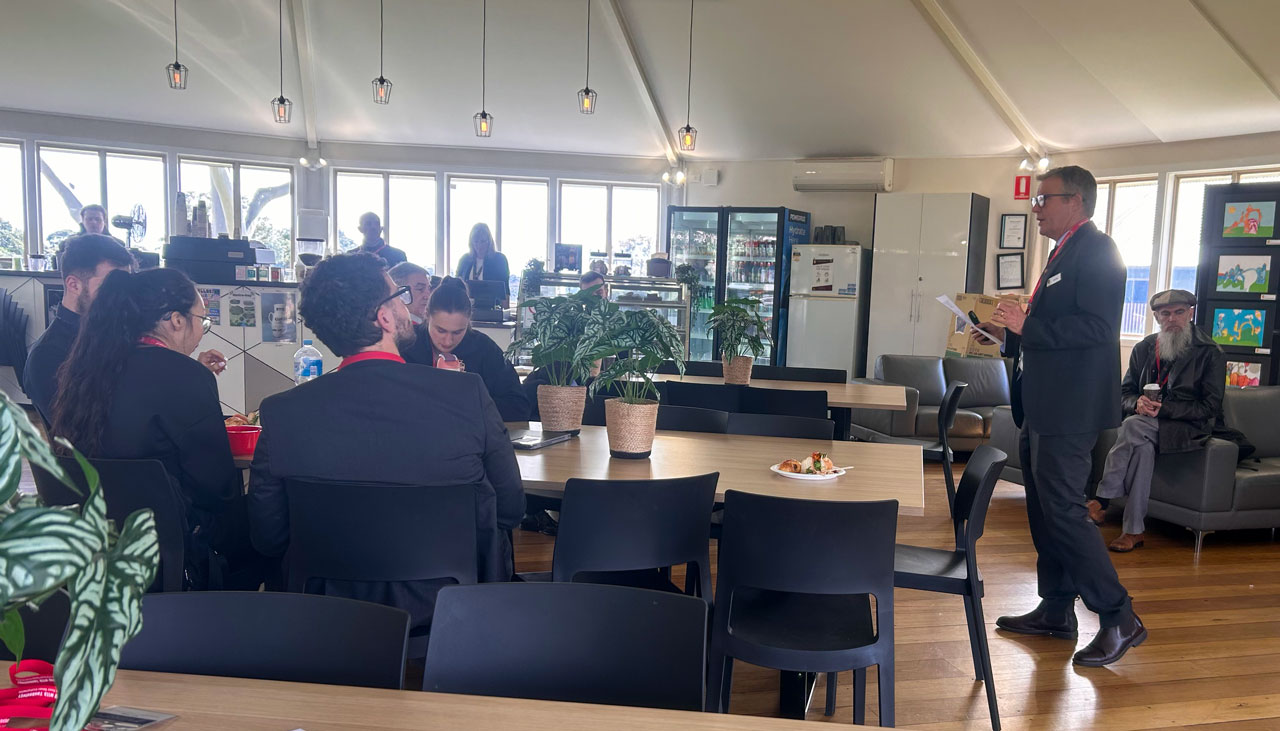
The day began with a think tank involving members of the Flinders Christian Community College executive team. Our discussion explored the growing influence of artificial intelligence on education and the strategic directions schools may need to consider.
Rather than focusing only on particular AI tools, the conversation examined broader educational priorities. What knowledge, skills and human capabilities will students need? How should curriculum, pedagogy and assessment evolve when AI can generate sophisticated content almost instantly? How can schools support teachers to use emerging technologies safely, ethically and purposefully?
Following the think tank, mathematics teachers from several schools joined the event to observe a series of live teaching demonstrations. These sessions provided an opportunity to see experienced educators working with real students and to reflect on the decisions teachers make while learning is taking place.
Dr David Leigh-Lancaster and Antje Leigh-Lancaster (from Leigh Lancaster Consulting), conducted two live demonstrations. The first was a VCE mathematics lesson exploring modelling with circular functions. The second involved a Year 10 class working with quadratic functions. Both lessons demonstrated the importance of helping students move beyond simply applying a memorised formula or procedure. Through questioning, modelling and discussion, students were encouraged to recognise patterns, make connections and develop a deeper conceptual understanding of the mathematics.

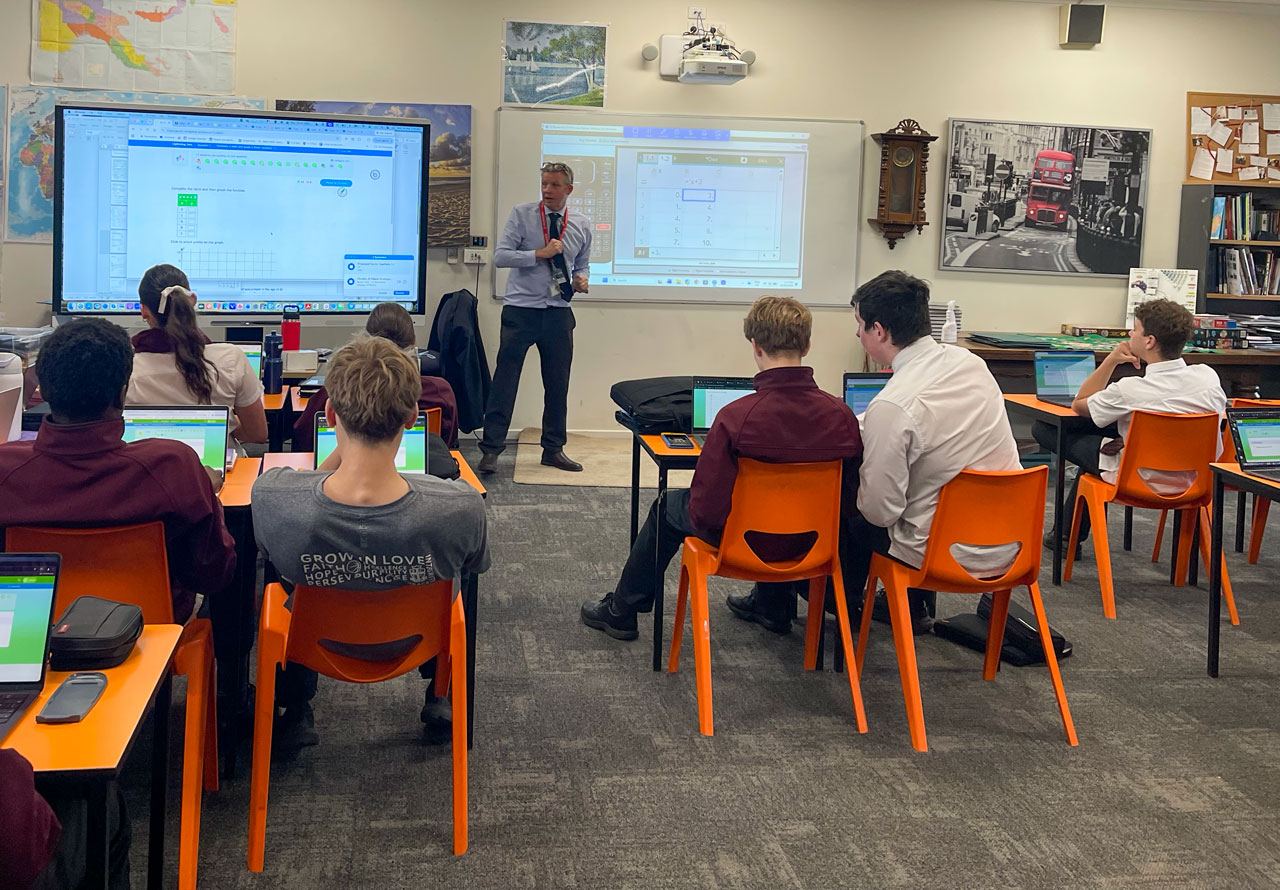
Kelvin Finger from IXL Learning and Luke Kerr from Flinders then conducted a Year 9 lesson on linear graphs. Their session explored how understanding could be developed using PhET, Navigator and IXL. The combination of interactive simulations, visual representations and targeted practice enabled students to explore the relationships between variables and connect abstract mathematical ideas with more visible and dynamic representations. The lesson demonstrated how digital tools can complement one another when each is used for a clear educational purpose.
I had the opportunity to work with a Year 7 mathematics class on an activity that combined statistics, global data and digital storytelling. I would like to say a special thank you to Head of Mathematics Mrs Bethany Massey-Chase for allowing me to borrow her class for a double period.

Students explored statistics connected to data centres around the world. This was a particularly relevant context because data centres are essential to the operation of cloud computing and generative AI. They also raise important questions about energy consumption, water use, environmental impact and the growing global demand for digital infrastructure.
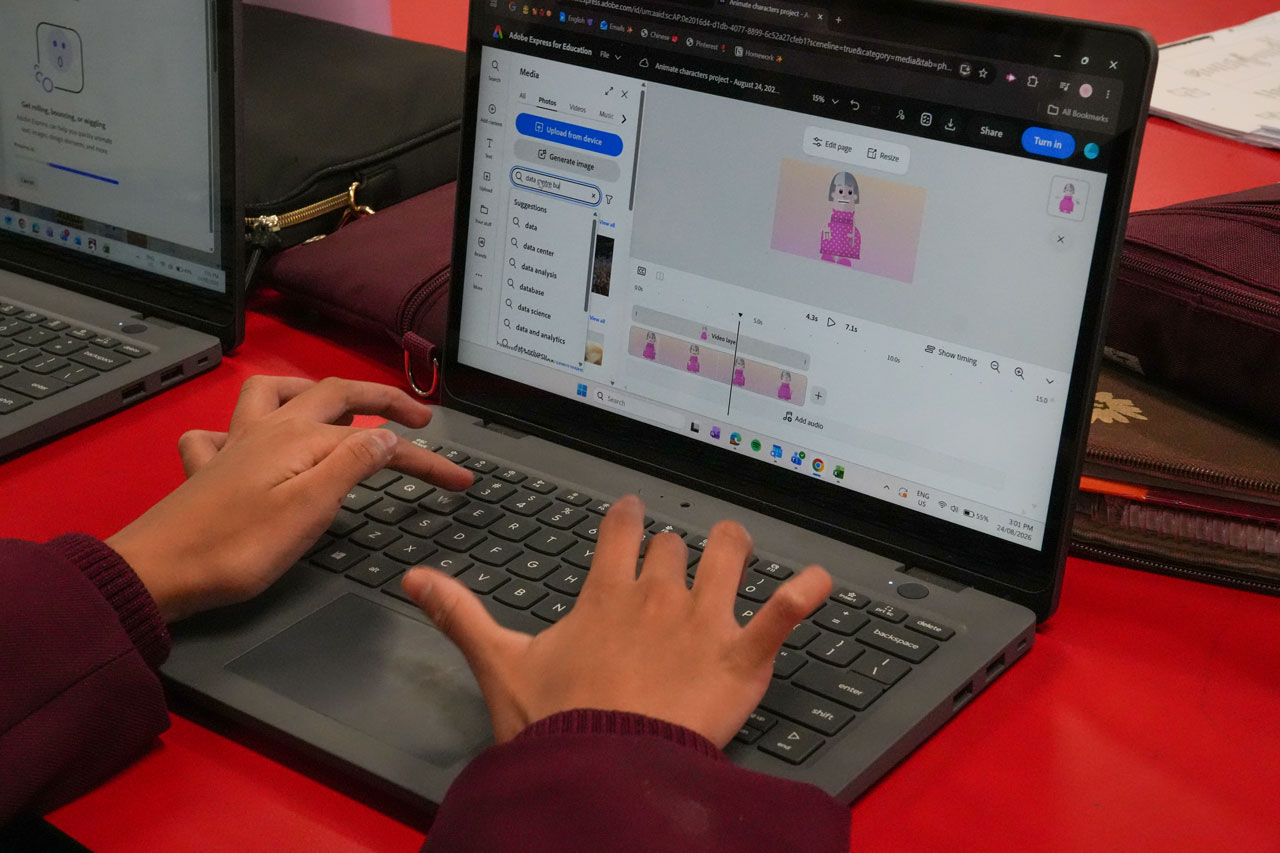

The students were challenged to interpret the statistics and transform what they discovered into a short video or animated story. This required them to do much more than reproduce information. They needed to decide which data was most significant, identify the story contained within it and communicate that story clearly to an audience.

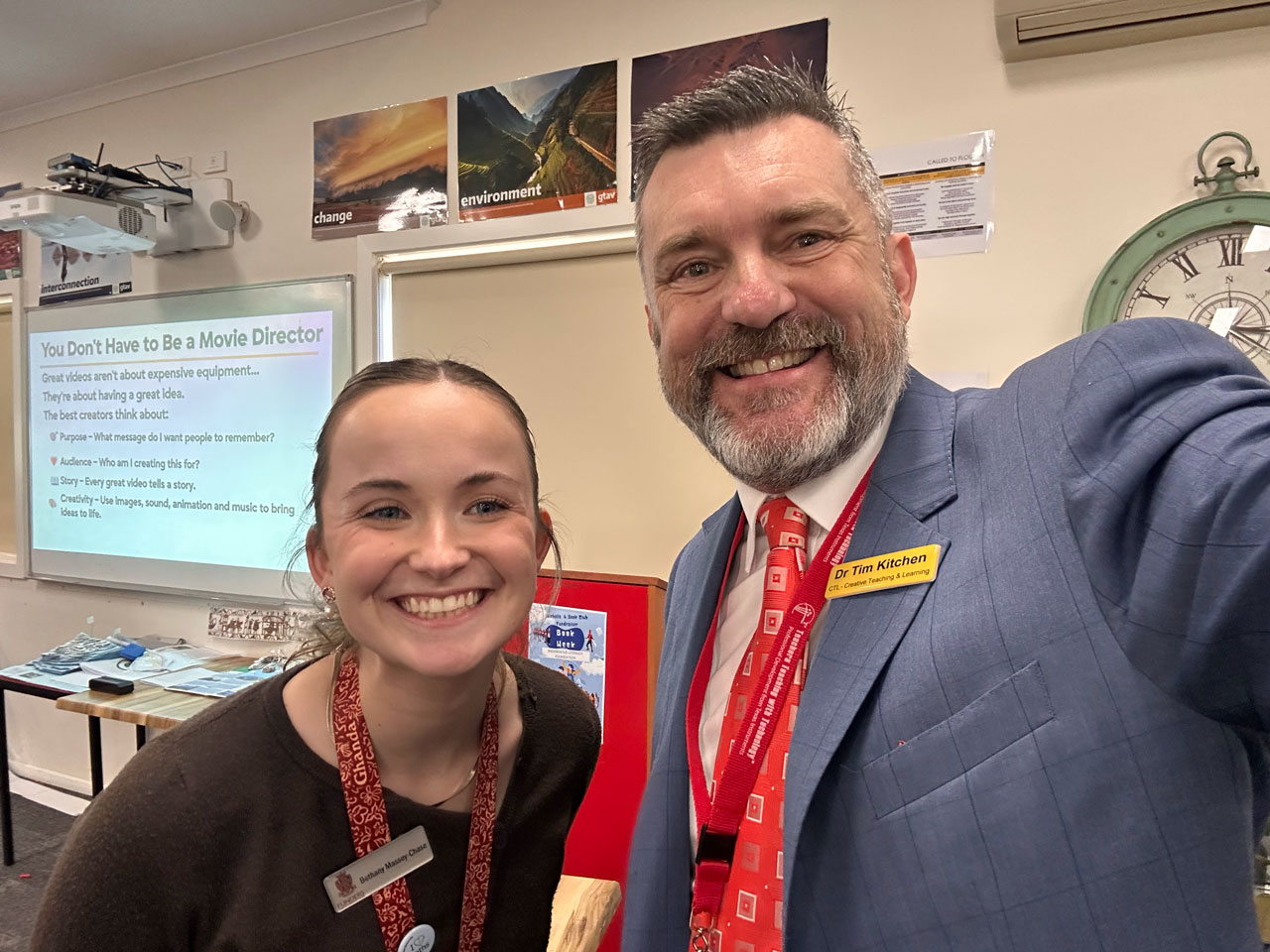
By creating a video or animation, students could combine mathematical understanding with creativity, communication and digital literacy. They had to consider how graphs, numbers, narration, characters and visual elements could work together to make complex information meaningful.
This type of activity helps students recognise that mathematics is not isolated from the world around them. Statistics can help us investigate major global issues, evaluate claims and communicate evidence. Mathematics becomes not only something students calculate, but something they can use to understand and explain their world.

After the classroom demonstrations, the visiting teachers came together for an after-school professional learning session that I facilitated. The focus was on process over product and the use of digital portfolios through Adobe Express.

In an age when generative AI can produce a polished response in seconds, the final product alone may no longer provide sufficient evidence of student learning. Teachers increasingly need ways to see how students arrived at their conclusions, how their ideas developed and what decisions they made along the way.

Digital portfolios can help make this learning process visible. Students can document initial ideas, research, calculations, drafts, feedback, revisions and reflections. They can include photographs, videos, audio explanations, screen recordings and examples of work in progress.
Maths Rethought was a valuable reminder that meaningful educational change occurs when strategic thinking, classroom practice and professional collaboration come together. The day was not about abandoning established approaches to mathematics teaching or adopting technology simply because it is new. It was about thoughtfully examining what effective mathematics learning can look like in a changing world.
Across the think tank, live lessons, student storytelling activity and professional learning session, a consistent message emerged: technology is most valuable when it helps students think more deeply, explore ideas, make connections and communicate their understanding. As AI continues to influence education, the challenge for schools is not merely to keep pace with new tools. It is to ensure that learning remains purposeful, intellectually demanding, creative and deeply human.
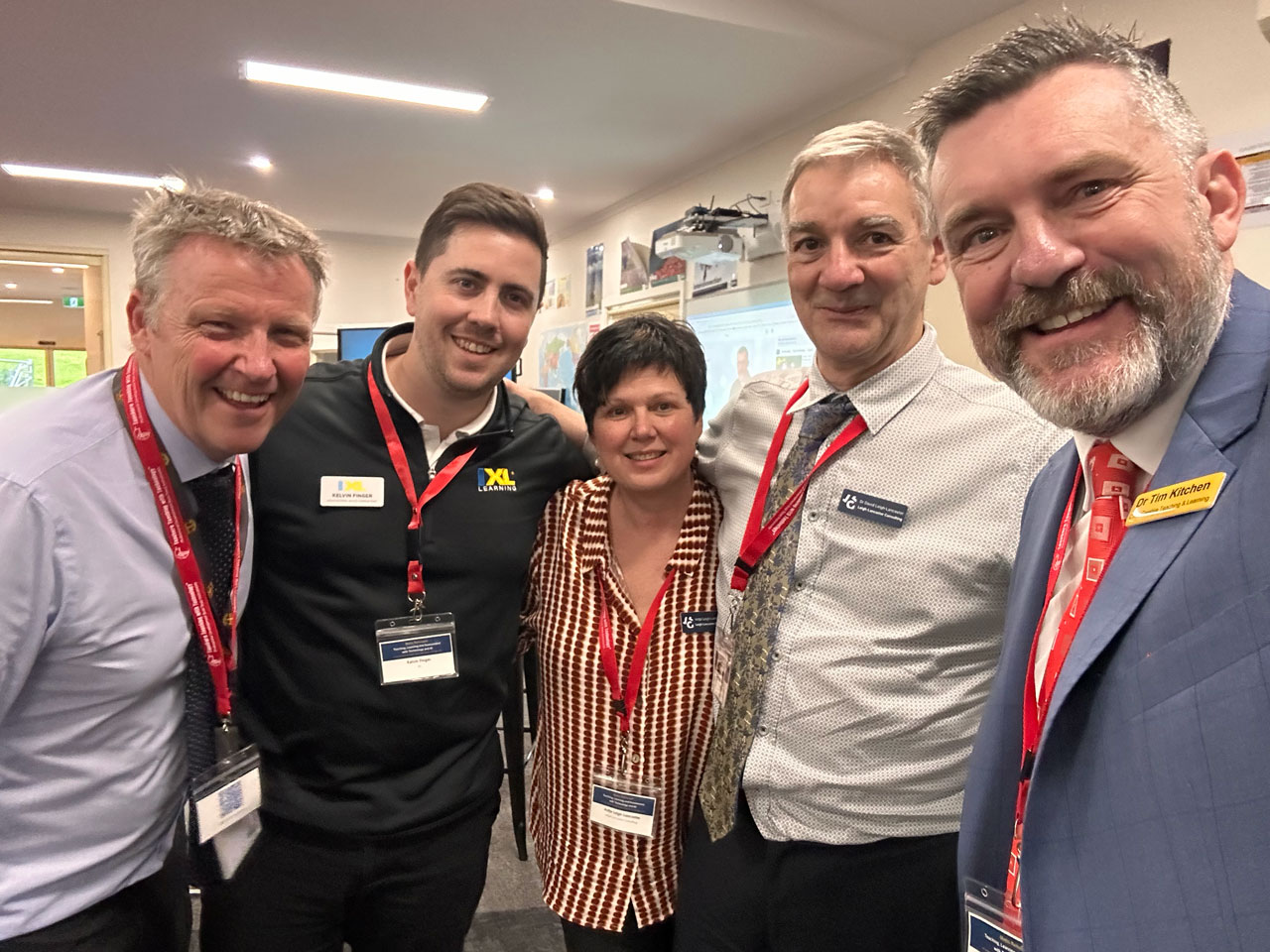
My sincere thanks to Flinders Christian Community College for hosting the event, to the school leaders and visiting teachers who contributed to the professional dialogue, and to Dr David Leigh-Lancaster, Antje, Kelvin Finger and Luke Kerr for making their teaching practice visible.
It was particularly enjoyable to work with the Leigh-Lancaster’s who I haven’t seem for over 30 years when we all worked at Kingswood College together in the early 1990s.
Most importantly, thank you to the Flinders students who participated so enthusiastically and reminded us that the best conversations about the future of education should always remain centred on learners.