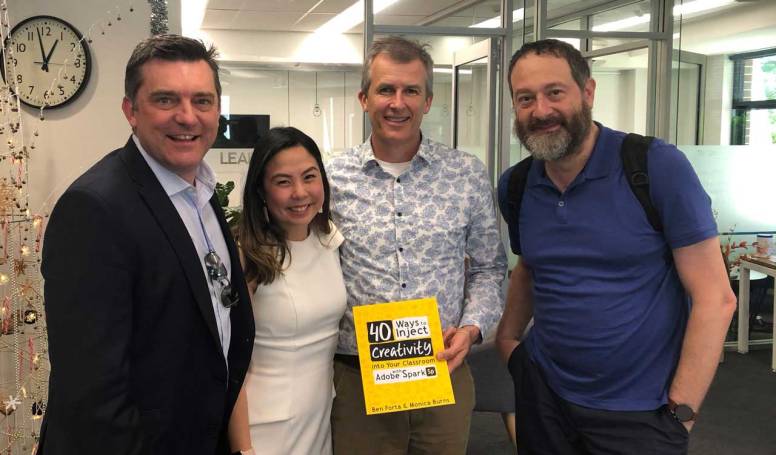
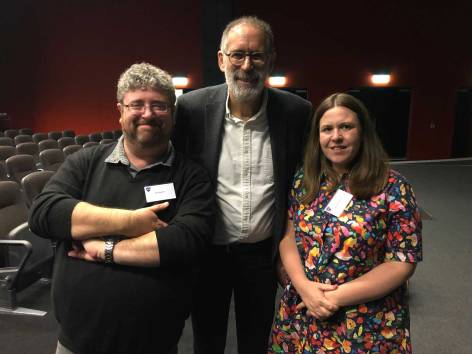
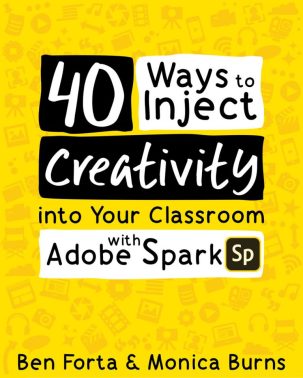
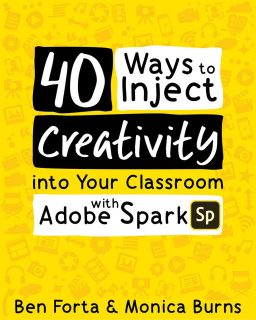
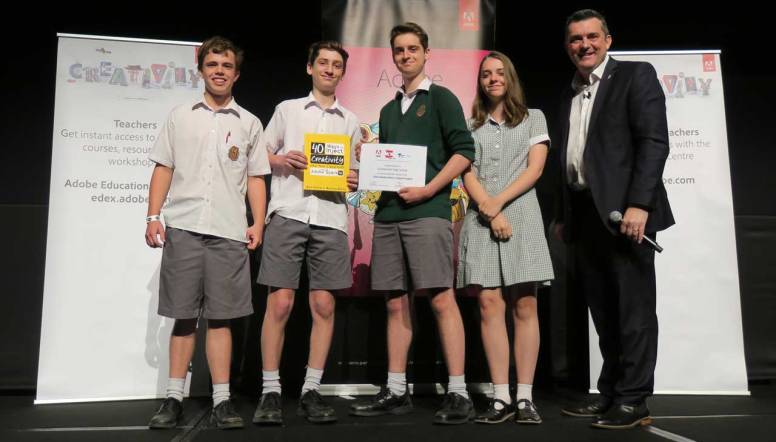
Tim Kitchen, Kim Maksimovic, Anthony England & Ben Forta. Anthony is holding Ben’s new book about how to use Adobe Spark in the classroom.
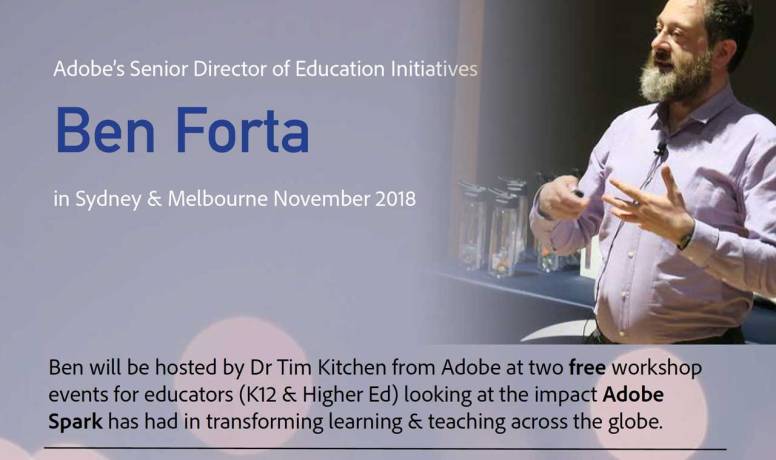
Adobe’s Senior Director of Education Initiatives, Ben Forta began his 2019 Aussie visit with a visit to Pymble Ladies College in Sydney on Tuesday November 20.
Ben lives in Michigan, USA but spends most of his time visiting teachers and students all over the globe with a focus on improving the Adobe experience for education. Ben has been part of the Adobe Spark product team in recent years and he loves sharing the value of the Spark tools.
Pymble Ladies College is a large independent girls school with over 2000 students from K to 12. They have an extensive ICT program and were very keen to show Ben the way they integrate a wide range of Adobe’s creativity & productivity applications throughout the curriculum.
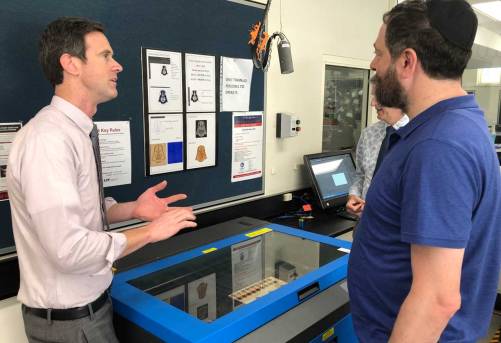
Using Adobe Illustrator to design objects cut via a laser cutter
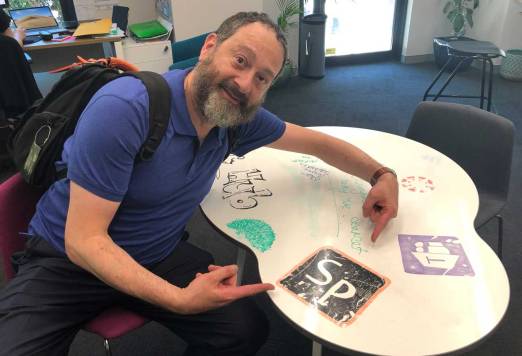
Pymble are obviously big fans of the Adobe Spark tools
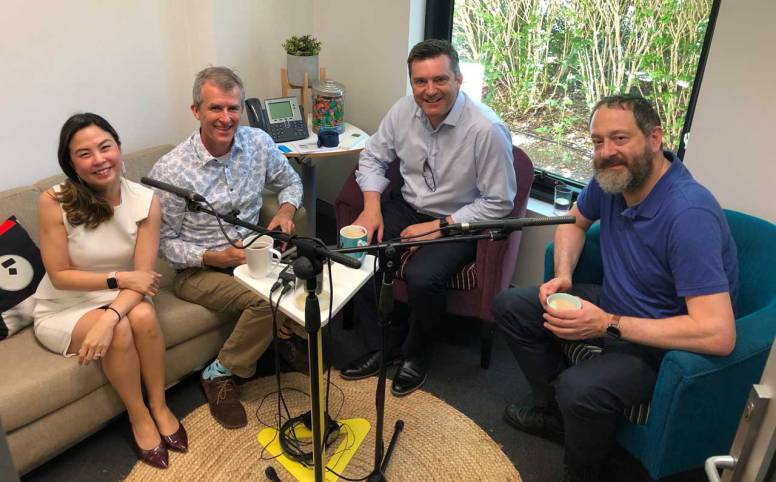
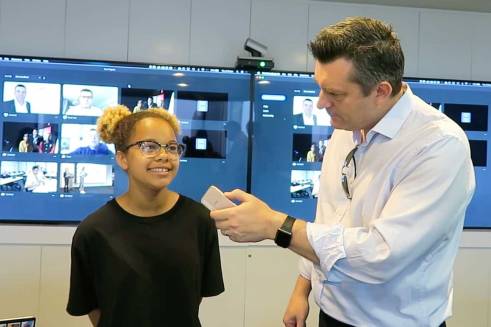
One of the highlights of his visit to Pymble was being interviewed about his work and experiences for one of their podcasts.
A group of young filmmakers from Glenwood High School and Ryde Public School visited the Adobe Sydney office to work with me on a video production Masterclass on November 15.
These students were selected as part of the 2019 NSW Adobe Have a Voice project which aims to provide NSW students (in Years 4 to 9) with an opportunity to collaborate, and have a voice (through video or animation) about something that is important to them and enhance their 21st century communication and creative problem solving skills.
During this masterclass event the student shared the videos that they had made during the year with each other and we chatted about what was great about them and what could have been done to possibly make them even better.
We also looked at a range of video capture and editing techniques that will help enhance future video projects.
Then we introduced the students to Adobe’s amazing new video editing app Premiere Rush
Here are some of the videos that were shared …
Ryde Public School
Game On
Get into sport
Glenwood High School
This video is rated PG – not recommended for primary age students.
A special congratulations to the 15 NSW Department of Education schools who were involved in the Adobe Have a Voice project this year. We are looking forward to having you involved again in the future.
It was my pleasure to be involved with the Big Day In Junior event in the west of Sydney hosted by Hilltop Road Public School. This video captures some of the excitement and learning that took place.
BiG Day In Junior events involve STEM based workshops for Year 5 & 6 students that are hosted in primary schools around Australia.
Students participate in up to five 50 x minute hands on workshops to encourage them to study STEM subjects in high school and in the future. These workshops are usually run by industry professionals. This event was supported by:
On Thursday November 8, I had the great pleasure to meet one of my education heroes, the great Professor Mitchel Resnick, Director of the Lifelong Kindergarten research group, part of the MIT Media Lab in Boston.
The Australian Computer Society and LEGO Education brought Professor Resnick out to Australia to speak in Sydney, Brisbane and Melbourne as part of their ICT Educators’ Global Leaders’ Series. He first came to Australia in the early 1990s with his Mentor Professor Seymour Papert. These days, Resnick is continuing on and expanding the great work of Papert and the constructionist learning movement.
Professor Resnick began by saying that he believes there is nothing more important in today’s world then helping young people grow up as creative thinkers. He said that in such a rapidly changing world, today’s young people will face a never ending stream of unpredictable situations in their life and to thrive in this type of world, the ability to think and act creatively is more important than ever before. However, unfortunately most school systems around the world were not designed to support and foster a culture of creative thinking.
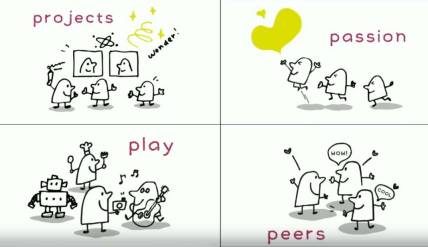
The topic of his presentation was Cultivating Creativity through Project, Passion, Peers, and Play. This topic is based on four guiding principles that he and his team believes can support the development of creative thinking in young people:
Professor Resnick said the best way to develop students as creative thinkers is to provide them with opportunities to work on projects based on their passions, in collaboration with peers in a playful spirit.
Projects
Working on projects is one of the best ways to learn to code (and to learn anything really) but unfortunately that is not the way most students are being taught. Most of the time coding is being taught through a sequential problem by problem or technical syntax based approach rather than learning though projects. Professor Resnick and his team believe that students should start with an idea, create something, experiment, share with others and keep modifying and adapting the solution based on their experiences and feedback.
There are lots of similarities here to the design thinking approach which is well established in the design industry.
Passion
Students (and adults as well) are willing to work longer and harder when they work on things they are passionate about and interested in. When they are passionate about a project, they make deeper connections with the ideas they are working on and are willing to invest more time on them. Projects become more meaningful and memorable when they are based on concepts that students care about.
Peers
Creative learning is a social process, the most creative things we do come in collaboration with other people.
Play
Play, in this context is more of an attitude than an activity. Having a playful approach means students are willing to take risks, try new things and test boundaries. This is when the most creative work happens. It is important to have a comfortable learning environment where students feel safe to experiment, take risks and try new things. When things go wrong and failure happens, this should be seen as a positive opportunity to learn rather something negative.
Scratch
Professor Resnick and his team at MIT have developed the programming language Scratch which is designed for students to program interactive stories, games, and animations and share them through an active online community.
Throughout the presentation, Professor Resnick provided us with a number of samples of how Scratch is being used by students all over the world to enhance creativity. He gave us an insight into some of the new developments with Scratch, soon to be released and shared the power of the Scratch creative learning community which now features over 40 million projects.
Profesor Resnick has committed his life’s work to provide students all over the world with the opportunities to think and act creatively. Trying to bring about this type of change in education and open up these types of opportunities for students to work with projects, passion, peers and play is going to take a concerted effort and he calls all educators everywhere to help create a global movement where students are encouraged to design, create, experiment and explore with new technologies so they can be full and active contributors to tomorrow’s society.
I was delighted to be able to invite two members of the Adobe Education Leadership Community from Victoria (Joel Aarons and Michelle Dennis) to the Melbourne presentation with me and was delighted that there were able to meet the great man.
Here is the full presentation recorded at the Sydney event …
Ben Forta (Adobe’s Senior Director of Education Initiatives) is a coder, author and educator with over 750,000 books in print in 16 different languages. He is part of the Adobe Spark product team, a set of digital literacy tools that are transforming the way students and teachers communicate globally.
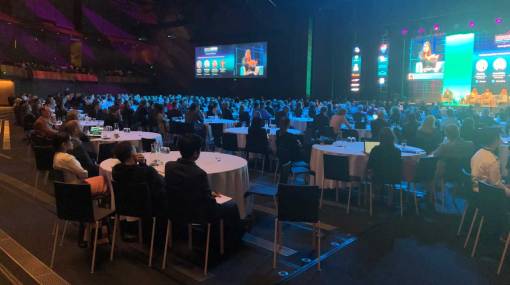
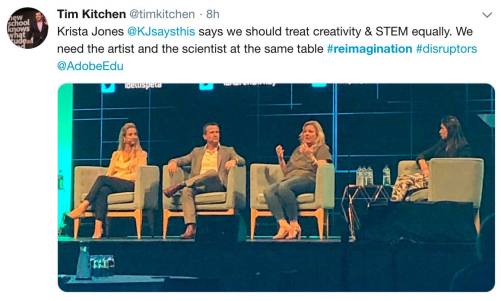
On Thursday November 1, 2018 I was privileged to be invited to the Australian Computer Society’s 2018 Reimagination Thought Leaders’ Summit at the Melbourne Exhibition and Convention.
The Australian Computer Society (ACS) is an association for information and communications technology (ICT) professionals and this summit featured Australian and international thought leaders from industry, academia and the political sphere.
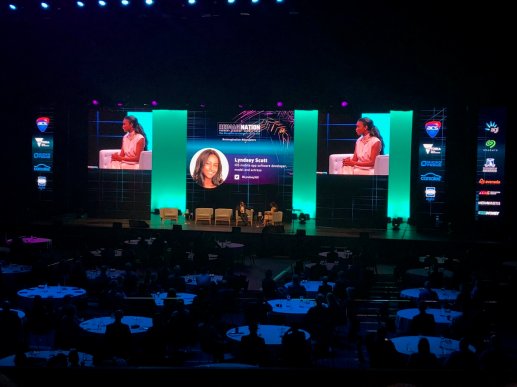
Lyndsey Scott
One of the highlights was the opening interview with model, actress and coder Lyndsey Scott.
Lyndsey is based in Los Angeles where she is a freelance coder and (like many in LA) trying to follow her passion for acting. She is a mentor with girlswhocode.com and a strong advocate for encouraging girls to consider a future in the computer industry.
She believes that young people should be content creators, not just consumers and she said that coding literacy should be a mainstream part of the school curriculum, especially in primary schools.
Lyndsey shared how she is excited about a future with developments in virtual reality, augmented reality and automated vehicles. She is also excited that technology developments have made the world smaller and closer and more people are now able to have a voice about important issues.
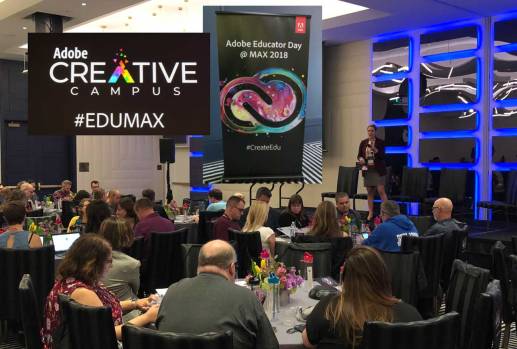
Almost 20% of the 14,000 participants from 60 countries who attended the Adobe Max conference in LA this year were involved with education or training. Many of them attended one of the two education pre-conference events EduMax & Educators Day.
I managed to get to both events and produced the following two videos with the help of Adobe Customer Success Manager Jerry Wong …
Fourteen schools from the Victorian Department of Education registered to be involved in the 2018 Victorian Have a Voice project. Most of those schools produced videos for the Showcase event at the main ACMI Cinema on Tuesday October 23.
The aim of this program is to provide Victorian students in Years 4 to 9 with an opportunity to collaborate, and have a voice (through video or animation) about something that is important to them and enhance their 21st century communication and creative problem solving skills.
The Have a Voice task was to work as a group (minimum of two) to produce a short G-rated video story (maximum of two minutes) or animation (maximum of one minute) about a topic or issue that is important to the group.
See the videos that were featured at the 2018 Showcase below …
Topics that the students chose this year included:
War
The Environment
Conservation
Anxiety
Bullying
Domestic Violence
Gender Equality
Cultural Diversity
Sportsmanship
Drug use
The schools who ended up showcasing their work this week were …
Brooke McNamara (Acting Manager, Vic DET Learning and Teaching Branch) gave the official welcome to nearly 150 students and teachers who came to the showcase.
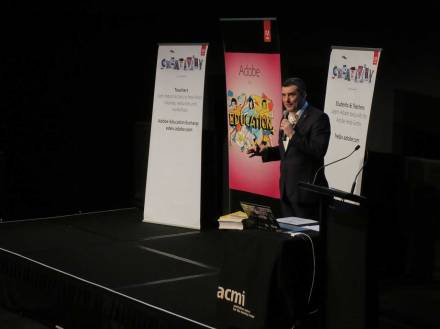
It was my pleasure to MC the event and interview representatives from each school about the work they produced and what they learned from the experience.
During the Showcase, we did a live demo of Adobe’s new multi-platform video editing app Adobe Premiere Rush and made a short film featuring still & moving images of the students.
Stay tuned for the video about this event, soon to come to CreateEdu TV
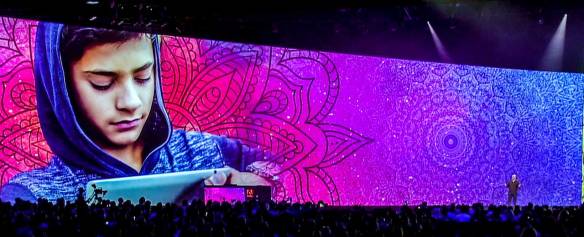
Adobe’s Chairman, President and Chief Executive Officer Shantanu Narayen officially welcomed 14,000 attendees (as well as thousands more watching live online) to the 2018 Adobe Max conference at the Los Angeles Convention Centre in California, USA.
Shantanu began his keynote address by sharing that one of the pleasures and privileges of his job is meeting creative professionals and students in all parts of the world and how incredibly moving it is to see the passion they pour into their work. He said it fills him with pride to hear about the role Adobe plays helping to bring their ideas to life.
On a visit to India earlier this year, Shantanu reflected on his own schooling experience and how the importance of education was always instilled in him. He said that basic education resources were often limited and, at best, the curriculum stopped with reading, writing and arrhythmic. Shantanu shared that he really believes that students today whodon’t have access to educational resources, especially technology and digital literacy skills will be disadvantaged for the rest of their lives. He reflected that it is a passion of his (and everyone at Adobe) to extend beyond the creative professional and to make Adobe’s creative tools more accessible to more people.
Shantanu said that all disciplines of education can be dramatically improved when they move beyond a test bases assessment to include pictures, video, animation and graphics. He said that Adobe Spark was introduced to address that basic need.
He also said that he was thrilled to earlier this year to announce a partnership with the India ministry of skill development to enable more than a million students to have access to Adobe Spark. From his point of view, a million people addressed in India, billions more to go all around the world
It’s that spirit of creativity, bringing ideas to life and telling stories through technology that lives in not just creative professionals but everywhere, photographers, film makers, designers, illustrators and artists.
You can see the recording of Shantanu Narayen’s keynote and the rest of the first day of Adobe Max day via – https://max.adobe.com/
Make sure you check out the amazing new Adobe Premiere Rush multi platform video editing tool now of the Creative Cloud as well as on iOS.
Also check out Project Gemini all in one drawing & painting tool for the iPad (to be released next year)





























 Dr Tim Kitchen