Big Day In – Wagga

BDIWagga1

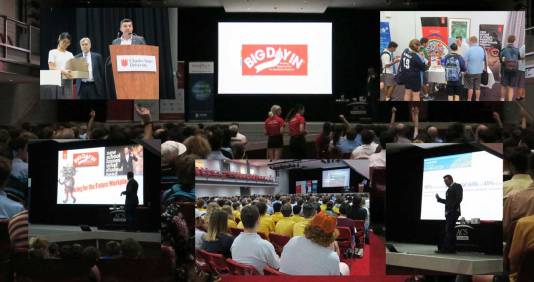
The Big Day In events for 2018 commenced in rural NSW at Charles Sturt University, Wagga Wagga (CSU) last Wednesday 7th March.

About 600 students from around the NSW Riverina region (and beyond) listened to a wide range of presenters from the IT industry, all with a similar aim to encourage the young audience to consider a future in IT and develop their digital communication skills.

IMG_5573a

The BiG Day In is an IT careers conference designed by students for students. It is designed for both high school (Years 9-12) and University students interested in careers in technology and I have had the pleasure of being a regular presenter at these events throughout Australia over the past four years.

Jason Howarth, Associate Head of School of Computing & Mathematics at CSU welcomed the students and encouraged them to consider doing a CSU course when they finish their schooling.

CSU1

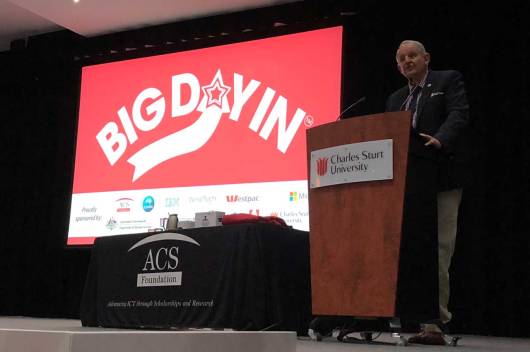
Councillor Greg Conkey OAM, Mayor of the City of Wagga Wagga, also added his welcome to the 600 students and their teachers and officially opened the event with some comments about the exciting opportunities that are available in his city within the IT industry.

Mayor1

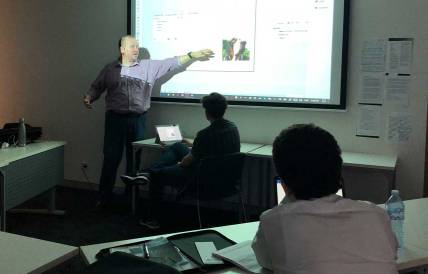
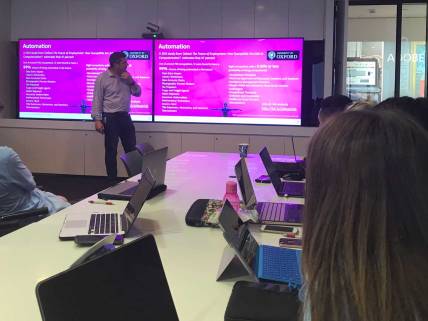
My presentation was titled Preparing for the Future Workplace. Key points included:

  • Workout what your passions are and think entrepreneurially and turn those passions into a job while you are still and school and university.
  • The World Economic Forum rates creativity as the third most important skill required to thrive in 2020 and beyond.
  • Creative problem-solving is critical in the age of automation.
  • 47% of jobs are at risk of being automated over the net 20 years
  • In the age of automation, more jobs will demand 21st-century skills such as interpersonal skills entrepreneurialism and creative problem-solving
  • According to a recent study by Innovation and Science Australia, 92% of future jobs will need digital skills, and 45% of jobs will need people who can configure and work confidently with digital systems and technology.
  • People will also change jobs more frequently. An Australian student leaving school today is likely to have five careers and 17 jobs over there working life.
  • According to recent Great Place to Work surveys, information technology companies dominate as the best workplaces
  • Learn the skills that help you stand out from the crowd and brand yourself creatively for others to notice.
  • Take advantage of access to the industry standard Adobe creative digital technology applications that you have at school to help prepare yourself for the future workplace.

My personal assistant, Rob the Robot featured several times throughout this presentation. Here is the special welcome that he gave the students.

This animation sequence was made in about 15 minutes thanks to the amazing face recognition feature within Adobe Charter Animator.

Clickhere to see the resources I shared during this event.

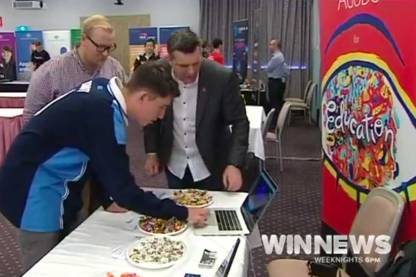
The local Win TV News sent out a crew to capture the day. I was featured in their story showing the wonders of Character Animator to some students from Wagga Wagga High School.

win1


Special thanks to John Ridge and Kerrie Bisaro from the Australian Computer Society Foundation for the great work they do in managing the the Big Day In events.

The next event goes over two days in Sydney at UTS on 20th & 21st March.


Digital Creativity at Wagga High

WaggaHigh1

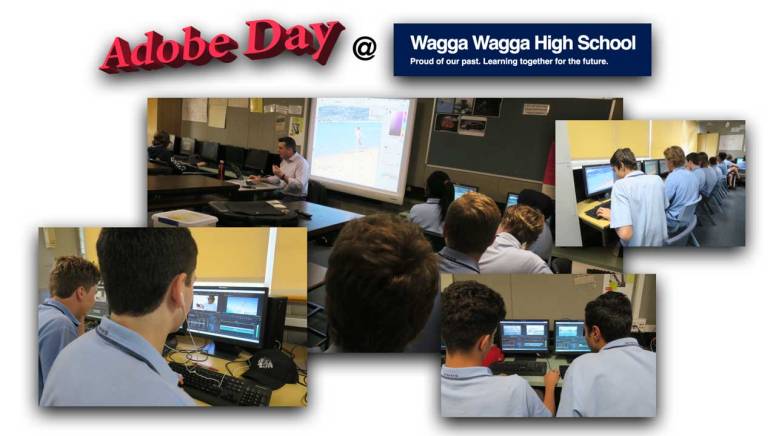
One of my favourite Aussie rural cities is Wagga Wagga in southern NSW and on Tuesday 6th March, I had the pleasure of working with a number of Year 9, 10 & 11 students and teachers from Wagga Wagga High School.

IMG_5519a

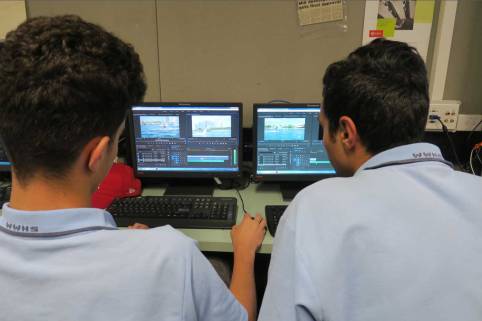
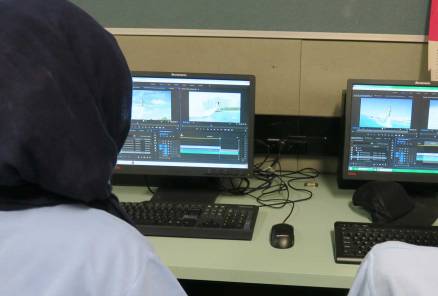
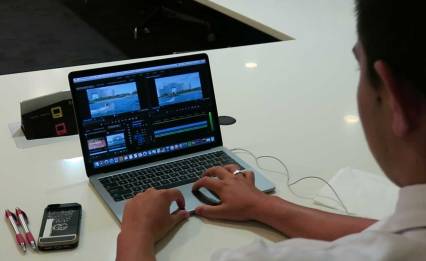
Video production is now considered a standard digital literacy. Student who develop skills in video production give themselves an edge when it comes to branding themselves and enhancing their ability to communicate.

Adobe Premiere Pro is well recognized as an industry standard video editing tool. As part of the Adobe Creative Cloud, all NSW government schools get it for free (thanks to the NSW Department of Education).  It is always a pleasure to show students the potential of what they have and how it can make a difference for them.

Refugee connection

IMG_5511a

Wagga Wagga has been a refuge for many fleeing Syria, Iraq, Afghanistan and other war torn parts of the world. One of the classes I was teaching had two boys who had recently arrived from Iraq with their families as refugees. For these boys, it was the first time they had experienced the power and potential of digital video editing. Their faces glowed with amazement and in their broken English they expressed their thanks and gratitude at being introduced to a whole new way of communicating. Opportunities that many Australian students take for granted.

For students like these, having access to tools like Adobe Premiere Pro, Photoshop, InDesign etc opens up a whole world of possibilities that was previously hidden to them. This reinforces the decision made by the NSW Department of Education and the Victorian Department of Education & Training who central purchase the software allowing their students and teachers access without the schools having to budget for it.

The look on the faces of the refugee students as the realised they could manipulate video and tell a digitally creative story was priceless.

IMG_5510a

Working with the Wagga Wagga High Teachers

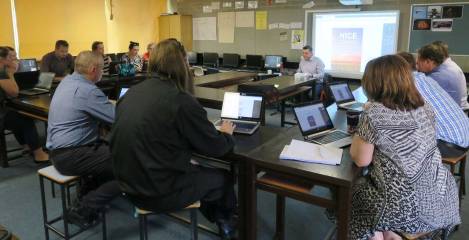
After school, the English department as well as a number of technology teachers joined in on a professional learning session based on multimodal text with adobe Spark.

IMG_5537a

Special thank you to Josh McKenzie – IST, Multimedia & VET Entertainment teacher at Wagga Wagga High for organising this day.

Adobe Professional Learning in Sydney

IMG_5503a

Last Wednesday 28th February, a number of teachers from NSW Government, Catholic & Independent schools visited the Adobe office in Darling Harbour for four hours of intensive digital creativity with Adobe tools.

Adobe Education Leaders Brett Kent and Chris Betcher helped out with this event by offering some great breakout workshops.

IMG_5481a

Brett Kent sharing his knowledge of Adobe Photoshop

IMG_5475a

Chris Betcher (right) sharing the benefits of Adobe Comp, Acrobat and InDesign

With the help of Brett & Chris, we were able to cover a wider range of Adobe tools including the three Adobe Spark tools, Photoshop, Adobe Comp, InDesign, Premiere Clip, Acrobat, Muse and Premiere Pro.

This slideshow requires JavaScript.

Find out more and register for future NSW PL events via – http://bit.ly/adobeNSW17

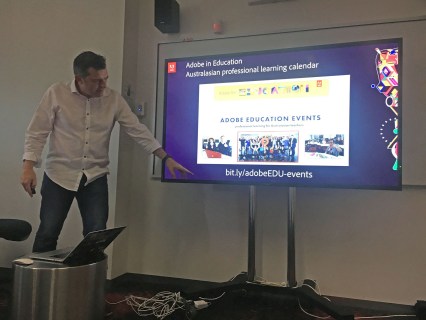
A full list of all Adobe PL events (face to face and online) can be found via – http://bit.ly/adobeEDU-events


Adobe Professional Learning in Brisbane

IMG_1633a

The Southbank campus of TAFE QLD was the venue for an Adobe professional learning event for Brisbane based educators on Tuesday 27th February, 2018.

This was the first of a series of events Adobe Education has planned for QLD educators. Click here to find out about future QLD events.

RTJ1

It was great to again work with Adobe Expert Richard Turner-Jones who ran a breakout session on Acrobat and InDesign.

IMG_1641a

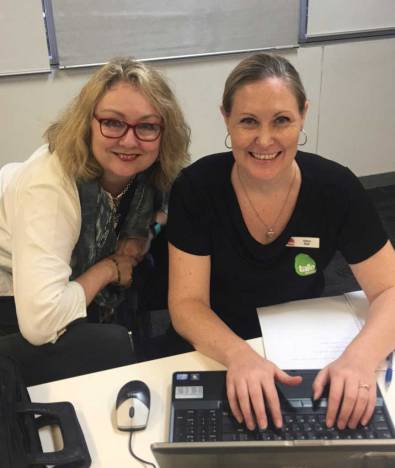
Adobe Campus Leader, Juliette Bentley (left) also shared her time to run a breakout session on Adobe Spark.

Jason

Jason Lane (Adobe Campus Leader) also shared his passion for animation with a breakout workshop on Adobe Animate.

Special thank you to QLD Adobe education Leader Kev Lavery from TAFE QLD for helping to put this event together.

Character Animator @ Swinburne Uni

Adobe workshop_220218 (6)

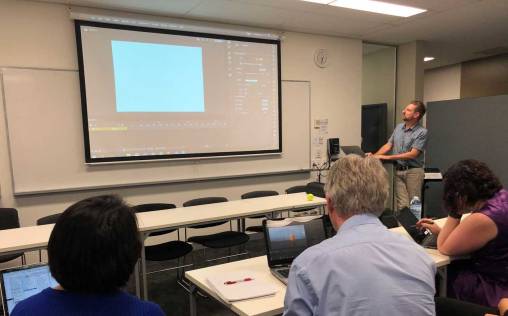
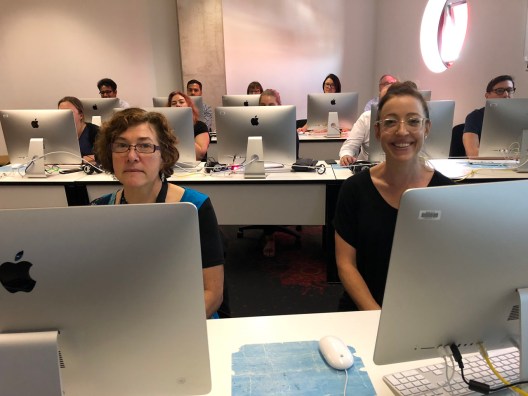
When Swinburne University in Melbourne advertised that I was running an Adobe Character Animator workshop, it filled up so fast there was a waiting list. So, on Thursday 22nd February, we ended up running two workshops with a total of over 50 lecturers from a variety of faculty areas throughout the University.

Adobe Character Animator allows users to manipulate a 2D digital puppet by tracking  facial movements via a webcam, thus providing real-time animation that can be recorded and used for a variety of purposes. Traditional digital animation is very time consuming with each movement needing to be manually key-framed in a timeline, as a result, not practical for most educators. Character Animator, which is now a fully fledged part of the Adobe Creative Cloud, provides the opportunity for all teachers to include small animations into their lessons to help engage their students.

This slideshow requires JavaScript.

Students can also use Adobe Character Animator to help them present their learning and produce creative assessment options.

IMG_1436

Special thank you to Linden Clark, the Project Coordinator at Swinburne’s Learning Transformations Unit for organising this event. The Learning Transformations Unit is responsible for resourcing and preparation Swinburne staff. Adobe has had a close relationship with the Swinburne Learning Transformations unit for a number of years and are proud to support their Digital Aquarium space.

If you are interested in finding out more about Adobe Professional Learning opportunities in Australasia go to the Coming Events Spark Page

Also, subscribe to my monthly newsletter on the Adobe Education Exchange

Adobe workshop_220218 (8)

Adobe Day with NBSC, Freshwater

IMG_5472a

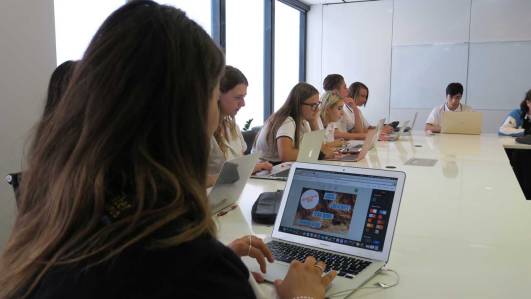
Northern Beaches Secondary College, Freshwater Senior Campus visited the Sydney Adobe Office on Friday 16th for an Adobe Day based on online production with Adobe Muse and Photoshop.

IMG_5417a1

The theme for this day was preparing for the future workplace and the first activity was for the students to use Spark Post to list some job skills that will be valuable for them when they leave school.

IMG_5421a

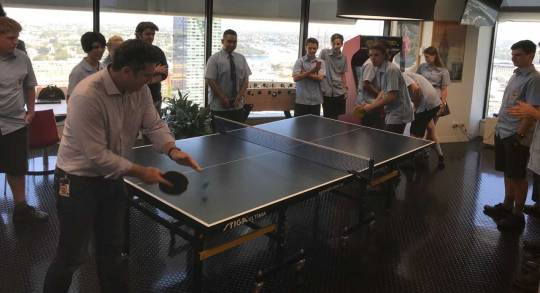
Building on this theme, the students had a tour of the Adobe office and witnessed first hand a modern IT workplace in action. This was invaluable for a major industry study that they are all working on.

office1

Back in the training room, the students were introduced to Adobe Muse as a way of building a website. They built their own sites and learned some techniques that will help them with a range of future assignments at school and beyond.

They also learned about the importance of compressing large images with Photoshop prior to adding them to a website.

IMG_5461a

A special thank you to their teacher Andrew Lai for organising this event. Andrew is part of the international Adobe Education Leaders program and a very strong advocate for the use of Adobe tools in education.


Adobe Day with St. Francis Xavier’s College, Hamilton in Sydney

IMG_5410a

Thirty Year 12 students from St. Francis Xavier’s College, Hamilton traveled to Sydney from Newcastle to spend a day at the Adobe office focusing on enhancing their video production skills with Premiere Pro & After Effects.

IMG_9341a

An important part of the HSC for these students is a major industry study that features the use of a range of multimedia software. Not only were these students able to enhance their use of a range of Adobe products, they also had the opportunity to explore Adobe as a multi-national company with 55 offices all over the world.

IMG_9348a

We spent some time going through a range of video capture techniques and how they can be manipulated with Premiere Pro.

One of themes throughout the day was understanding what job skills will be most required in the future. The students were exposed to some recent research about the future workplace and then applied their newly found knowledge to a range of short Adobe Spark projects.

IMG_9344a

Adobe Day with Mater Maria Catholic College – Sydney

MaterMaria1

On Tuesday 13th February, group of Year 12 Media students from Mater Maria Catholic College in Sydney visited the Adobe Office in Darling Harbour for the first Adobe Day for 2018.

Part of the HSC Multimedia course involves doing an industry study and a major project that involves a range of digital technologies. The students worked on a range of techniques with Premiere Pro, Photoshop & After Effects to build a video story.

MaterMaria8

Stay tuned for a video story on CreateEdu TV about this day.

Teaching Creative Problem Solving – new research

The Bett Show is the largest education technology conference in Europe with close to 35,000 attendees. It was held this week in London and Adobe used this platform to launch its most recent study titled Creative Problem Solving in Schools: Essential Skills Today’s Students Need for Jobs in Tomorrow’s Age of Automation.

probsolv1

In this study, Adobe surveyed 2,000 educators, policymakers and influencers (K12 & Higher Ed) from the U.K., Japan, Germany and the U.S., with a focus on how the people shaping education and students’ experiences view creative problem solving as a critical skillset.

http://cps.adobeeducate.com

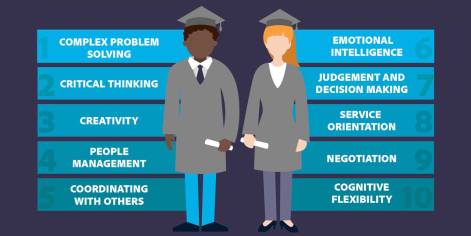
One of the motivations behind this research came from the World Economic Forum’s predictions about which skills will be required to thrive in the future. Consistently, the number one predicted required skill set is complex problem solving. This was predicted to be the case for 2015 and was again the number one prediction for 2020. Interestingly, creativity was the tenth most required skill predicted by 2015 and jumped up to number three for 2020.

http://www3.weforum.org/docs/WEF_Future_of_Jobs.pdf

Top 10 skills will be required to thrive in 2020 and beyond.
probsolv2

Definition of creative problem solving

Creative problem solving was defined in the Adobe study as the process of redefining problems and opportunities, coming up with new, innovative responses and solutions, and then taking action.

The importance of teaching creative problem solving for student’s job prospects

The educators, policy makers and influensers surveyed by Adobe were asked to share their opinions on how important it is for students to learn creative problem solving skills in school. 97% of the educators and 96% of the policy makers agreed that it was important.

probsolv3

Globally, 74% of educators and 76% of policy makers agreed that professions that that require creative problem solving are less likely to be impacted by automation in the future.

probsolv4

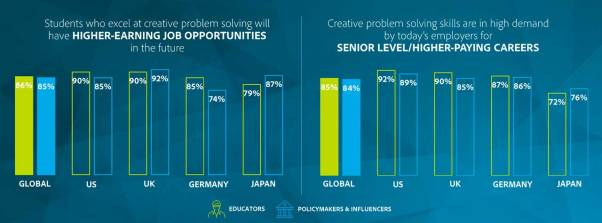
86% of educators and 85% of policy makers agreed that students who excel at creative problem solving will have higher-earning future job opportunities. 85% of educators and 84% of policy makers agreed that creative problem solving skills are in high demand by today’s employers for senior level and higher paying careers.
probsolv5

Sub-skills connecting to creative problem solving

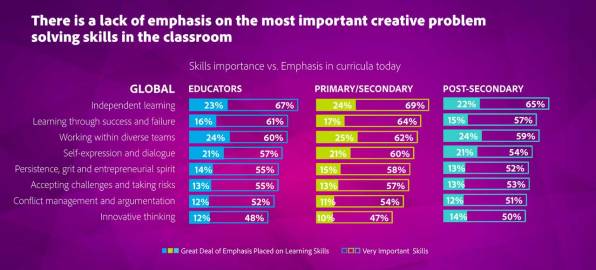
A range of sub-skills connected with creative problem solving were presented to the participants to be rated in terms of their importance to be learned at school. Independent learning was globally rated the highest, closely followed by learning through success and failure & working with diverse teams.

The most important sub-skills related to creative problem solving across K12 & Higher Education were identified as:

  • Independent learning 67%
  • Learning through success and failure 61%
  • Working with diverse teams 60%
  • Self-expression and dialogue 57%
  • Persistence, grit and entrepreneurial spirit 55%
  • Excepting challenges and taking risks 55%
  • Conflict management and argumentation 52%
  • Innovative thinking 48%

However, when asked how much of an emphasis there is on each of the above skills in school curricula today, the results are low across the board.
probsolv7

When asked if there was enough emphasis on creative problem solving in today’s curricula, 69% of the educators said no as did 61% of the policy makers and influencers.

When asked to comment, a German policy maker said, In schools today there are tasks, but no value is placed on creative solutions – only the fact that the tasks are executed correctly. Creative problem solving and more independent work would have to be integrated into the curriculum for all subjects this stage.

A policy maker from Japan said, The specifics of individual curriculum do not allow space for the integration of creative problem-solving.

85% of educators and 80% of policy makers & influencers agree that creative problem solving does not frequently play a role in schools. This was most evident in Japan with 90% + of the participants agreeing and less of factor in the US with an average of 75% of participants agreeing.

Globally, 80% of educators and 67% of policymakers agreed that teaching problem-solving should be integrated across all courses with only 20% of teachers and 33% of policy makers and influencers says that be a dedicated course focused on teaching creative problem-solving.

probsolv8

Why are schools not focusing on teaching creative problem solving?

So what is preventing creative problem solving from being integrated effectively into the curricula? The biggest barrier appears to be time, with 79% of the participants saying they have a lack of time to create. The second biggest barrier is a lack of training (77%) followed by a lake of software resources in classrooms (73%) and in student’s homes (73%).

Standardised testing is also seen as a barrier to nurturing creative problem solving according to 72% of the participants. An educators from the US reflected … with standardised testing … that most primary and secondary schools … are legally bound to, it doesn’t leave time or freedom for new teachers that are being taught innovative learning strategies to incorporate them into the classroom.

A German Higher Education teachers said … today’s courses are more orientated towards standardise knowledge that can be tested … this teaching leaves less room for developing creative solutions.

A UK secondary educator made this comment … policies are too restricted in what they ask teachers to teach … it is harder for us to build well rounded students.

A UK Higher Education teachers refleceted that … cuts in funding have made nurturing creativity in students worse. There is also a larger amount of material the students need to learn for the exams than ever before, so that tutors spend time on teaching cert facts.

There is a consensus that we need to both reform curricula and find ways to integrate creative problem-solving into today’s classrooms. Globally, 89% of educators and 87% of policy makers and influencers agree that we need to find ways to better integrate creative problem-solving into existing school curricula. 87% of educators and 88% of policy makers and influencers believe we need to find ways to reform the current curriculum to better nurture creative problem-solving in the classroom.

How Adobe can help?

Educators believe that technologies like those found in the Adobes Creative Cloud suite of software can help students develop creative problem-solving skills inside and outside of the classroom.

probsolv9

An educator from the UK commented that … Adobe provides industry relevant applications which allow students to build relevant skills. In the classroom, this allows them to make and learn from mistakes, as well as come up with solutions to achieve outcomes.

A Japanese educators said … in an exercise using Adobe Creative Cloud, each individual student is asked to report their analysis vision, analytical method, data analysis, etc. And thoroughly discussed with the faculty to clarify the problem and develop a creative viewpoint.

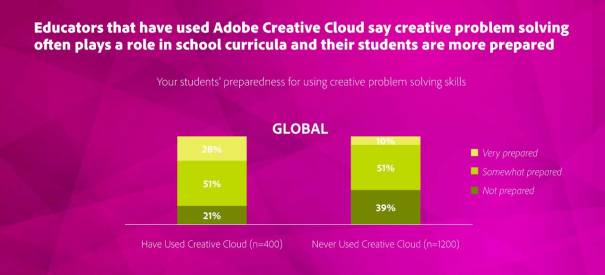
Educators that encourage their students to use Adobe Creative Cloud software say that creative problem-solving often plays a role in school curriculum and their students are more prepared for the future workforce.
probsolv10

Educators believe Adobe creative cloud software could help students develop all the most important creative problem-solving skills.

probsolv11

Educators are highly interested in education offerings and support from Adobe, especially free lesson plans and case studies. A list of different offerings from Adobe who are rated by participants in the survey. 74% were interested in projects and lessons for educators to implement using Adobe creative cloud software. 72% where interested in case studies on how to use Adobe creative cloud software draw school subjects.

Conclusion

The main conclusion from this study is that creative problem-solving skills are essential for today’s students to learn while they are in K12 and higher education to help prepare them for their future jobs in tomorrow’s age of computerisation and automation. And encouraging teachers and students to use creativity and productivity software such as is found within the Adobe Creative Cloud to communicate and construct learning is a great way to encourage creative problem solving.

More findings, information about this new study and a wide range of infographics can be found via http://cps.adobeeducate.com/

Free Professional Learning opportunities for Educators – Semester 1, 2018

DigLitAdobe1

To all educators interested in enhancing their (and their student’s) digital literacy, communication & creativity skills – check out these coming free online & face to face professional learning opportunities from Adobe Education …

Online opportunities:

click the links to find out more and register
Digital Imaging for Educators – 5 week EdEx course starting Feb 5
• 30min Live Event – Video editing with Premiere Pro for beginners Feb 6, 7PM
• 30min Live Event – Making Photoshop puppets come alive with Adobe Character Animator Feb 8, 7PM
Podcasting in the Classroom – 2 week course starting Feb 12
• 30min Live Event – Advanced Video Editing with Adobe Premiere Pro Feb 22, 7PM
Digital Collages in the Classroom – 2 week course starting March 5
Graphics and Illustration for Educators – 5 week course starting March 12
Animating Characters in the Classroom – 2 week course starting March 19
• 30min Live Event – Teaching Mathematics through Animation March 27, 7PM
Train the Trainer – 8 week course starting April 16
Product Prototypes in the Classroom – 2 week course starting April 16

Click here for a live & updated overview of all Adobe in Education Professional Learning events

adobe1a

Face to Face opportunities:

click the links to find out more and register

NSW

Victoria

Queensland

adobe1b

Join the Australasian Adobe Professional Learning Monthly Newsletter to stay in touch with Adobe in Education.