Adobe Day with Arthur Phillip High

IMG_1931a

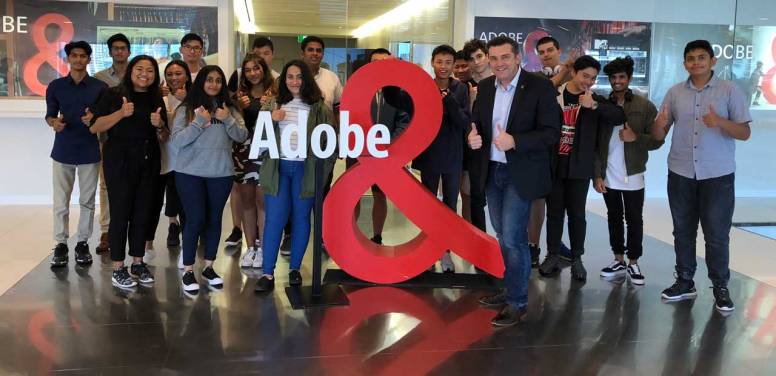
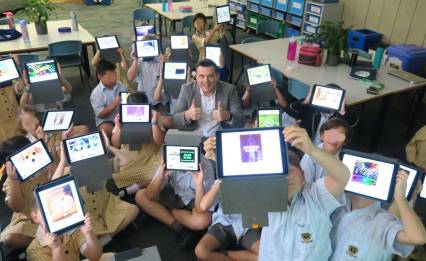
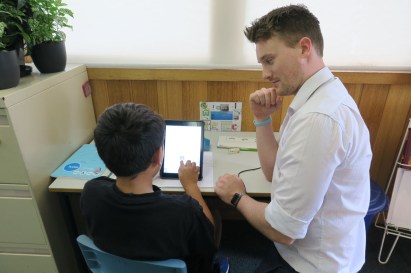
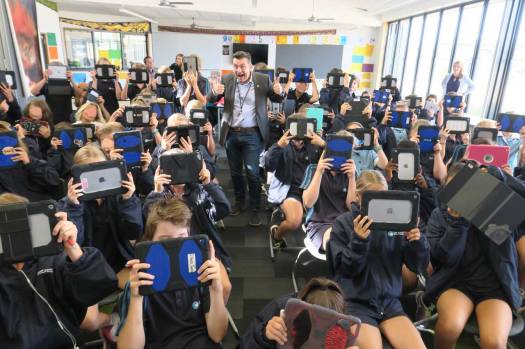
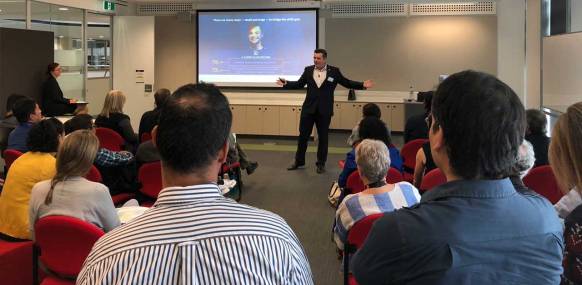
A number of senior secondary students from Arthur Phillip High School in Parramatta visited Adobe’s Sydney office for an Adobe Day.

Rob the robot made a special appearance to help quiz the students on their knowledge of Adobe as a company.

Then the students were introduced to the Adobe Spark tools (Spark Post, Spark Video & Spark Page) with a focus on producing a Spark Video about what they have learned about Adobe as a company.

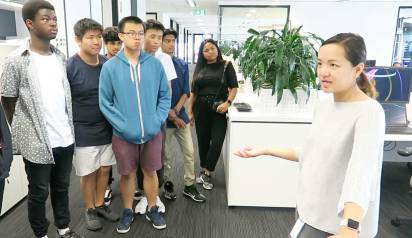
The students had a tour of the office.

And met some interesting Adobe staff

APHS3

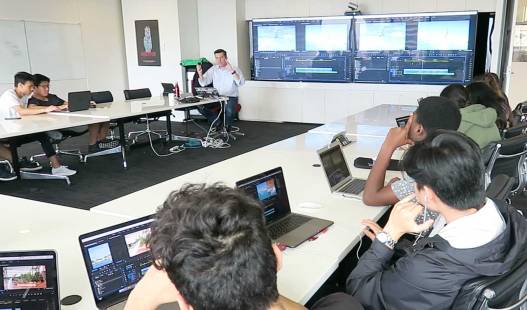
Following the tour, we went through a range of video editing techniques with Adobe Premiere Pro.

It was great to see what these talented students were able to produce in just a few hours of work-shopping with this industry standard application.

APHS6

APHS8

APHS7

APHS9

Special thank you to Media teacher, Jesusa Mercado for organising this event for her students.


Click here to find out more about Adobe Days.


Adobe Day with Ceders College

IMG_5955a

A group of media students from Ceders Christian College, near Wollongong, NSW got up early on Wednesday 4th April and made their way to Adobe’s Sydney office for an Adobe Day focused on video literacy with Premiere Pro and Photoshop.

Adobe Days usually involve students either on an excursion to the Adobe Office or an incursion when an Adobe expert visits a school or university to help student enhancing their digital literacy skills.

ceders1

The students were very impressed with the views of Sydney from the 27th floor. It is always exciting to give students an aim to reach for, especially for those interested in working for a multi-national company in the future.

ceders2

We started the session by looking at the way Adobe Character Animator can be used to animate a puppet by tracking facial movements via a webcam. Character Animator became a fully fledged part of the Adobe Creative Cloud in October last year.

Then I introduced the students to the power and potential of Adobe Premiere Pro as a communication tool. They learned a wide range of video editing techniques with this application that is now considered the industry standard in the world of TV and video production.

After the morning tea beak, the students went on a tour of the Adobe office. A couple of the students enjoyed a short game of table tennis with me and they had the opportunity to meet some of the Adobe staff, including (Adobe Founders Award winner, Michael Stoddart).

By the end of the day, the students each developed a video story with both Premiere Pro and Photoshop.

Adobe’s agreement with AISNSW has allowed independent schools in NSW (and also in other regions) the opportunity to access Adobe software for their students and staff. With video production now being considered as important as reading and writing, these students have developed some communication skills that will benefit them in the future.

Special thank you to Ceder’s media teacher Jessica Barsenbach for organising this excursion.


Stay informed about future Adobe in Education professional learning opportunities for teachers in Australasia via:


 http://bit.ly/adobeEDU-events


If you haven’t already, please join the Australasian Adobe Professional Learning Group on EdEx to stay in touch with Adobe in Education – 
http://bit.ly/adobe-edu-updates

Also, keep in touch with the APAC Adobe in Education active use program via the CreateEdu TV Channel on Vimeo – https://vimeo.com/createedu

Creativity @ Cronulla, NSW

IMG_5915a

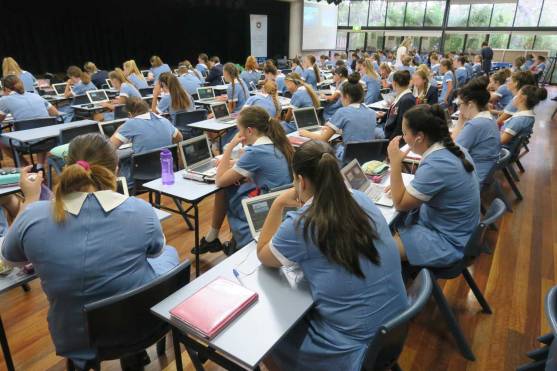
All 95 Year 9 & 10 media students at Our Lady of Mercy College had an all-day incursion with me this week focused on enhancing their video literacy skills with Adobe Premiere Pro.

IMG_5922a

The girls used a mix of footage that I provided for them and footage that they captured themselves to create a video story. They learned some of the basic editing tools within Premier Pro as well as some of the more advanced techniques that help add to the quality any video production.

I shared with them that video is now considered a literacy and that 70% of all Internet traffic today is via video thanks to sites like YouTube and Vimeo. I told the girls that, these days, it is almost as important to be able to make a quality video as it is to be able read & write.

IMG_5918a

For just about all of these students, it was the first time they have used Adobe Premiere Pro, so I was very impressed with what they were able to achieve with just one days training.

IMG_5925a

Special thanks to Mrs Kristy Treloar and the multimedia teachers at Our Lady of Mercy College for organising this incursion. I am looking forward to visiting again next year and seeing what the students have been able to achieve with their new video literacy skills.

Transforming Learning @ Swinburne Uni

IMG_9851a

I was invited to present at the 2018 Swinburne University Learning Transformations Conference which was held on Thursday 29th March.

This is an annual event run by the Learning Transformations Unit which is responsible for the exploration and exploitation of learning technologies at Swinburne as well as the resourcing, preparation and scholarship of Swinburne staff; and the development of partnerships that increase and extend Swinburne’s online provision and presence.

IMG_1504a

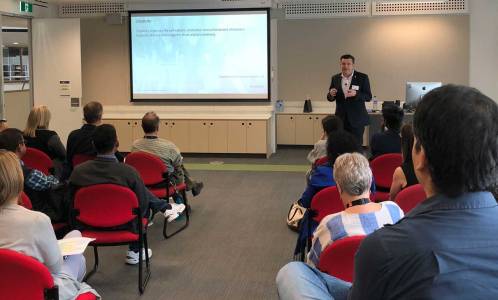
I was presenting in the employability stream and my topic was Focusing on creative problem solving skills will enhance employability in the age of automation. As you can see from the above image (thanks to Adobe Character Animator), Rob the Robot made another staring appearance.

I shared some of the research around future job skills and the potential threat of automation and computerisation. A 2015 CEDA (Committee of Economic Development of Australia ) warned that more than five million jobs could disappear in the next 10 to 15 years because of technological advancements. It threatened that computerisation and automation could see more than six out of 10 jobs in rural and regional Australia vanish.

https://www.ceda.com.au

A 2017 report by PWC, titled Workforce of the Future: The competing forces shaping 2030 surveyed 10,000 people across China, India, Germany, the UK, and the U.S. with an aim to “better understand the future of work.” 37% said that they thought artificial intelligence and robotics will put their jobs at risk, up from 33% in a similar study in 2014.

https://futurism.com/reports-ai-robots-threaten-jobs-5-years

We looked at a 2013 study by The University of Oxford titled The Future of Employment: How Susceptible Are Jobs to Computerisation?  It claimed that 47% of jobs are at risk of being automated in the next 20 years. It also provided a website that allows users to type in the name of a job and it will give them the probability of that job being computerised in the future.

http://bit.ly/jobsatrisk

I asked the audience to call out some job names to see what their future is likely to be according to this Oxford analytical tool. They were reassured that post-secondary teachers only had a 3.2% probability of being computerised in the future. Many were surprised that Computer Programmers had a 48% probability of being automated in the future.
IMG_0705a

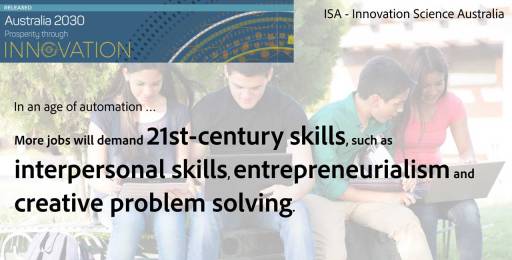
We looked at the recent ISA (Innovation Science Australia) report that indicated that automation is not necessary a bad thing. It said that our ageing population is likely to create a 6% shortfall in the number of workers needed to maintain our current GDP (Gross Domestic Product) growth in 2030. It suggested that Innovation and digital technologies such as automation and computerisation will help fill Australia’s future labour gap, by improving productivity and performing tasks workers do not want, or need, to do. It also inferred that more jobs will demand 21st‑century skills, such as interpersonal skills, entrepreneurialism and creative problem solving.

https://www.industry.gov.au/Innovation-and-Science-Australia/Australia-2030/Pages/default.aspx
ISA1

Another point of interest from the ISA study is that in the future and current age of automation, more jobs will demand 21st-century skills such as interpersonal skills entrepreneurialism and creative problem-solving skills.

If students are encouraged to develop skills & techniques such as creativity that computers can’t yet manage, then they are preparing themselves for a brighter future.

creative1

We then looked at the recent study undertaken by Adobe on creative problem-solving in schools that highlights that creative problem-solving skills are critical in the age of automation. It was with 2000 educators and education policy makers from around the world. Nearly all of them (97%) agreed that creative problem-solving is important for students to learn in school. About three quarters of them of them (76%) agreed that professionals that require creative problem-solving skills are less likely to be impacted by automation.

Find out more via – http://cps.adobeeducate.com/

IMG_2132a

twitter bird 1

There were some interesting tweets shared during this session …

research shows creativity boosts self-esteem, motivation and curiosity. Surely that makes creativity a life skill.

So many Adobe products available for staff and students – really impressive work being done. 20 Adobe Creative Cloud products available on Swinburne-owned PCs through the Application Catalogue, plus heaps of free ones online

Learning all about Adobe with Dr Tim Kitchen – Tim’s animated character Rob who introduced the session was created in 10 minutes using Adobe Character Animator

The World Economic Forum has forecasted the top 5 employability skills for 2020 as being: complex problem solving, critical thinking, creative, people management, and coordinating with others

How secure is your job in the future? Will technology replace your job? The University of Oxford website will forecast it

looking at the jobs of the future — and those that are likely to be swallowed by automation . Pro-tip: academics are fairly safe.

talking about how face-tracking software can be used to quickly create engaging animation for students

research shows creativity boosts self-esteem, motivation and curiosity. Surely that makes creativity a life skill.

we learn from failure — we should create opportunities for students to try, fall short, learn and try again

Most believe creative problem solving is important and will be so in the future. But most agree we are not doing enough to foster it in the classroom.

Should everyone learn to code? is concerned we may have the wrong focus. Many coding jobs may be automated. 21st century skills/capacities such as creative problem solving, collaboration and interpersonal skills can’t be automated.


The full set of resources I shared during this session can be found on the Adobe Education Exchange via – http://bit.ly/adobe-29March18

A chat with Dan Haesler

IMG_1816

During the 2018 Future Schools Conference in Melbourne, I had the opportunity to catch up with my friend Dan Haesler, the Director of Cut Through Coaching & Consulting.

Here is the podcast we recorded …

Download here

Soon after we recorded this podcast, Dan recorded on with Sir Ken Robinson. Click here for a preview.

Dan’s book #SchoolOfThought is a great set of anecdotes and posts from Dan’s blogs.

Dan can be contacted via https://danhaesler.com/connect/


Meeting Sir Ken at the Future Schools Conference

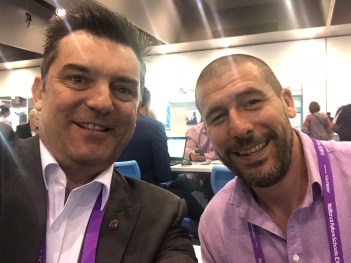
Me&SirKen

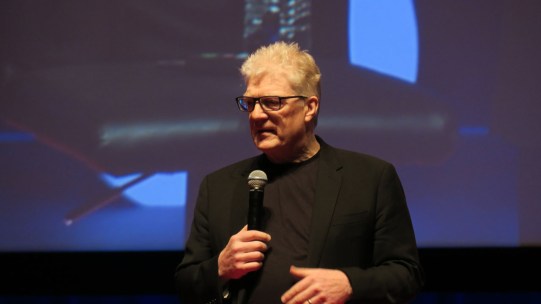
It is not often that Sir Ken Robinson comes to Australia, let alone to my home town of Melbourne. So when I heard that he was keynoting this year’s National Future Schools Conference, I jumped at the opportunity to hear the great man and had the pleasure to have a few words with him.

Sir Ken is the world authority on creativity in education. He has been named as one of Time/Fortune/CNN’s ‘Principal Voices’ and acclaimed as one of “the world’s elite thinkers on creativity and innovation”.  In 2003, he received a knighthood from Queen Elizabeth II for his services to the arts and three years later he did his first TED Talk (Do Schools Kill Creativity) which has recently gained over 50 million hits on TED.com and over 14 million hits on YouTube. This is acclaimed to be the most watched TED talk in the history of TED talks.

IMG_5867

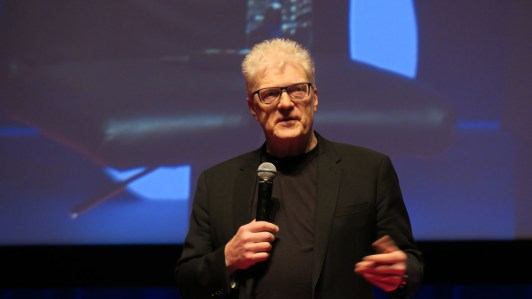
Sir Ken was in fine form with an engaging collection of humerous anecdotes and poignant statements about the state of education systems around the globe. I have seen him present live on two occasions and have watched a number of recordings over the years and I am constantly impressed with his oratory skills and the way he can hold an audience for an extended period of time without the use of many, if any, visual aids.

IMG_5890

Sir Ken’s main message was based around moving education beyond its current focus on standardised testing. His aim for education (as the above image shows) is to enable students to understand the world around them and the talents within them. It appears that the aims of education in many schools and education departments is to get good scores in standardised tests and Year 12 results.

IMG_5869

He said that depression is the world’s single largest health issues and that in many cases the systems we have in place in schools can encourage many students to be disengaged and not successful which can lead to depression and anxiety.

He also talked about the power of collaboration and how schools are not encouraging it. Most schools systems are based on individual competition and students are ranked according to how well they can do an examination. Sir Ken said collaboration is as equally a powerful motivation to succeed as competition.

IMG_5879

Sir Ken said that we have the resources we need to fix the system but we are not making the connections. There are wonderful teachers and school leaders in every education system who see the issues and are working hard to enhance creativity and provide their students with opportunities to collaborate with each other in different age groups, with students in other countries and with industry representatives. These teachers are making a positive difference by working around the system that is so focused on test results and tend to prioritise certain disciplines over others. Sir Ken says a lot of the things that happen in schools are done to aid efficiency rather than education and learning. We need to revolutionise education from the ground up.

IMG_5874

Sir Ken also made the point that it is not just about STEM. He said it is also about the Arts and Humanities. He emphasised that subjects like Mathematics and Science should never be given priority of other curriculum such as the Arts. If our aim is to produce fulfilled individuals and active and compassionate citizens, then teaching Arts and Humanities is as important as teaching Mathematics, Science & Engineering.

IMG_5870

He used an interesting agricultural metaphor to describe the current state of education and how it can be improved. He said that traditional agricultural practices with pesticides and aggressive farming techniques ruin the soil and don’t encourage future yields. More modern and sustainable agricultural approaches place a priority on caring for the soil and yields are stronger and  longer lasting.

This is true of education. The traditional approach has been detrimental for many students who don’t fit the traditional model of what it is to be ‘intelligent’. They are left disengaged with the system and with life. A more sustainable approach that values students rather than the test result produces a much better learning culture for all students, a culture where the miracle of learning is common place.

Sir Ken said the teachers job is to encourage miracles and that teachers are in the miracle business, the best business you can be in.


Big Day In – Sydney

BDISydney1

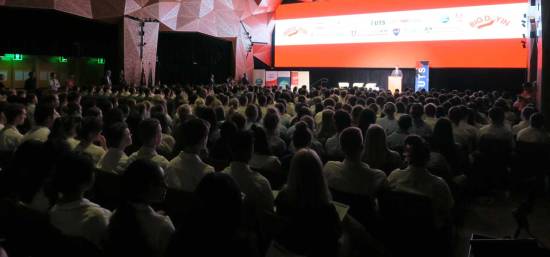
About 1,600 students attended two days of Big Day In presentations this week at UTS (University of Technology Sydney).

IMG_5754a

Professor Attila Brungs, Vice Chancellor and President, UTS welcomed everyone to his university. He shared  about the amazing growth that has occurred at UTS over the past few years and the commitment they have made to link with industry and government to provide their students with outstanding opportunities to thrive and potential build their passions into future work opportunities.

IMG_5758a

Hon Victor Dominello MP, Minister for Finance, Services & Property officially opened the event. He told the audience about the many wonderful opportunities there are in NSW to build a future in the IT industry. He made the point that many industries can have a positive impact on the world over time but working in IT can make a wide impact very quickly.

IMG_5767a

I had the honour of being the opening keynote presenter and shared the value of creativity as a skill that will help young people thrive in the future.

IMG_5776a

My special helper Rob the Robot feature during the presentation to give a robot’s perspective on things like automation and how that will effect the future workplace.

IMG_5804a

A key part of my message was to encourage the students to develop skills and interest in areas that are not likely to be computerised in the near future. I showed them a study from Oxford that predicted that 47% of jobs are at risk of being automated in the next 20 years.

http://www.oxfordmartin.ox.ac.uk/downloads/academic/future-of-employment.pdf

I showed them part of the recent ISA (Innovation Science Australia) study that claimed that more jobs will demand 21st‑century skills, such as interpersonal skills, entrepreneurialism and creative problem solving. And that 92% of future jobs will need digital skills, and 45% of jobs will need people who can configure and work confidently with digital systems and technology.

https://www.industry.gov.au/Innovation-and-Science-Australia/Australia-2030/Pages/default.aspx

IMG_5783a

I also told them that according to the ISA study, an Australian student leaving school today is likely to have five careers and 17 jobs over their working life. A very different world to when I was their age and when their teachers were at school.

It worries me that our education system is still based on an old mindset that believes the most important thing in education is to get a good Year 12 result so that students can get into university and have a chance at a good career. We don’t live is that world anymore.

I introduced the students to the recent work from Marc Prensky that looks at a wide range of specific skills that are required by the future worker.

skills1

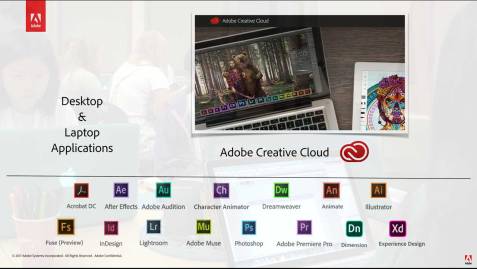
And I encouraged the students to learn how to brand themselves in creative ways so they can stand out from the crowd. Of course, I suggested they learn a range of the Adobe tools they have at their schools and encouraged the NSW DoE students to take advantage of the free access they have on their own devices provided by the NSW Government.

AdobeCC1

Over the two days, there were a wide range of other presenters from companies such as

  • Microsoft
  • Animal Logic
  • TechnologyOne
  • Westpac
  • WiseTech Global
  • BT Financial Group
  • SMB Consultants
  • JAR Aerospace
  • Micro Focus &
  • Tradie Pad
IMG_5819a

Michael Quandt from Animal Logic, the makers of The Lego Movie (and lots more)

It was great to have the support of Jerry Wong and Anna Nakao (Adobe Customer Success Managers) at the Adobe table as the hundreds of students can streaming past asking questions about how to access and work with Adobe tools.

IMG_5811a


Special thanks to John Ridge and Kerrie Bissaro from the Australian Computer Society Foundation for the amazing work they do in running these events throughout the country.

I’m looking forward to the next one that I will be involved with in Melbourne on 30th May.


Professional Learning for teachers at the Adobe Sydney Office

IMG_5740a

A group of very creative educators from a wide variety of schools visited the Adobe Sydney office in Darling Harbour this week for some intensive work-shopping on a range of Adobe products.

I was delighted to have Adobe Education Leaders Brett Kent and Chris Betcher with me to help run the breakout sessions. Brett share some of his breadth of experience with Photoshop in the classroom and Chris focused on the Adobe Spark tools.

IMG_5729

I ran two video breakout session, one of Premiere Clip and the other on Premiere Pro.

Collectively we looked at Adobe Character Animator and did an over view of a range of valuable Adobe classroom solutions such as the Adobe Education Exchange – https://edex.adobe.com

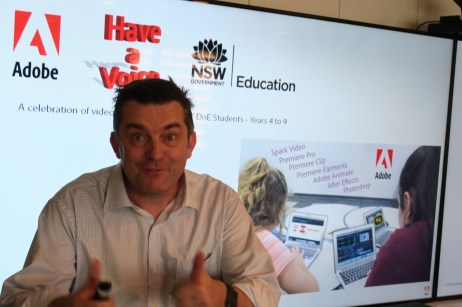
I used this opportunity to also promote the Adobe Have a Voice project for NSW DoE schools.

IMG_5726

Stay tuned to the Adobe Edu Coming Events Spark Page to keep up to date with future event similar to this – http://bit.ly/adobeEDU-events

Sparking creativity @ Carey

IMG_5696a

It was such a joy to go back to my old school (Carey Baptist Grammar School) and work with students and teachers at their Donvale campus last week.

Adobe Spark was the focus for this day and I had the opportunity to work with the Year 6s, 4s & even the Year 3s (which is as young as I have worked with in my time at Adobe).

This slideshow requires JavaScript.

My family history with Carey goes right back to 1923 when my Grandfather Charles Ridley Kitchen was a foundation scholar. My father went there in the early 60s, my uncle Rev Tim Costello in the 70s, I was there as a student from 1979 to 1986, I taught the Carey Kew Junior School from 1996 to 2000 and these days I have a nephew & a niece at the school.


It was delightful catching up with Patrick Gray who was teaching a Year 4 class that day. I taught Patrick’s brother Richard in my first years of teaching in the early 1990s at Kingswood College. At the time Patrick was just starting school.

IMG_5702

Richard was a very creative student who developed a strong passion for video production with me in the days just before digital editing was available. He is now a full-time movie director based on Los Angeles with currently 9 full-length movies to his name.

Richard Gray’s IMDb site

Special thanks to Kelvin Finger Carey Junior School Donvale, eLearning Advisor for organising this special Adobe Day at his school.

Adobe Day at Surf Coast Secondary College, Victoria

IMG_5622a

For the past few years, Surf Coast Secondary College have invited me to work with their Year 7 students as well as their senior media students to help improve their use of Adobe products.

This slideshow requires JavaScript.

The Year 7s were introduced to the amazing Adobe Spark tools. They worked in small groups to create a series of posters and videos about what they collectively liked.

The senior media students were introduced to Adobe Premiere Pro to help them with their future video productions. Premiere Pro is now considered the industry standard for video production and it is part of the Adobe Creative Cloud which is now available to all Victorian secondary schools for free via EduStar thanks to the Victorian Department of Education & Training.

More information on this can be found via: http://bit.ly/cc-edustar

Special thanks to Andrew Brown, Digital Learning Leader at Surf Coast SC for helping to make this day possible.