Gen Z students see themselves differently to their teachers

In October, 2016 Edelman Intelligence and Adobe undertook an international study titled Gen Z in the Classroom, Creating the Future to help explore how creativity plays a role in preparing Generation Z students for their future in the workforce, and how students learn and think about the future in the context of creativity.

This is the first in a series of my journal posts based on this study. Click here to get a summary of all the findings.

research1Who are Gen Z?

Gen Z, also known as the Post Millennials or the iGeneration, refer to young people born between the mid 1990s and the early 2000s. In 2017, they would include students in their mid-teens and early 20s. So broadly speaking, they are today’s high school students and university under-graduates.

The study involved over 2,500 Gen Z students and over 1,000 teachers of Gen Z students from the Australia, the United Kingdom, the United States and Germany.

flags1

Study objectives

The objectives of the study were to:

  • Understand how students view creativity and its impact/application across all different types of classes and potential careers;
  • Explore what creative tools students and educators see as most helpful in developing their online brands;
  • Uncover the synergies and gaps within the student/educator experience today when it comes to creativity, as well as what each group sees as the future of learning and working; and
  • Identify which regions “shine” in how they are preparing for the future workforce when it comes to creativity, and which fall behind.
img_7704a

Difference in perceptions

One question where there was an interesting differentiation between the teachers and students was Which of the following words describes Gen Z – Smart, Creative, Hard Working, Team Player, Curious, Social, A little lazy, Outgoing, Bored by the past, Follower, Multi-tasker, Nervous about the future, Shy, Ambitious, Lonely, Original, Confident & None of these?

The students and teachers were able to provide multiple answers and the Gen Z’s top responses in all four countries were:

  • Creative (Australia – 46%, US – 47%, UK – 37%, Germany – 44%)
  • Smart (Australia – 43%, US – 63%, UK – 39%, Germany – 40%)
  • Team player (Australia – 44%, US – 42%, UK – 42%, Germany – 40%)

The teachers of Gen Z student’s top responses in all four countries were:

  • A little lazy (Australia – 74%, US – 76%, UK – 65%, Germany – 70%)
  • Social (Australia – 60%, US – 65%, UK – 51%, Germany – 30%)
  • Bored by the past (Australia – 49%, US – 49%, UK – 33%, Germany – 49%)

Only German teachers (26%) used the term Creative in the top 5 descriptors of Gen Z students.

So it appears that Gen Z students see themselves differently from their teachers. Some of the possible reasons for this do come out in other parts of this study which I will write about in future articles.

What is creativity?

When recently chatting to educators about these perceptions the thought arose that students may define creativity differently to their teachers.

Some argue that creativity cannot be formally defined. I tend to think that Sir Ken Robinson provides a good definition when he says in his book Out of Our Minds (and on many other occasions) that creativity is the process of having original ideas that have value. The ideas may not be so original that no one has ever heard of them before, they need to be original within the context of the creator in their classroom, home, community etc.

The idea does need to be valued. This is a possible sticking point of distinction between Gen z students and their teachers.Students may well see something as simple as adding a filter on an Instagram image as being creative, where as their teacher may see no value or originality in this process, therefore not recognise that activity as being creative.

I would like to encourage students and teachers to keep the conversation about the importance of creativity going in all curriculum areas.

Sir Ken says that everyone has the ability to be creative bu virtue of being human. He also suggests that creativity is possible in all areas of human life, in science, the arts, mathematics, technology, cooking, teaching, politics, business etc. And finally, Sir Ken points out that creativity can be cultivated and refined. It can be taught and can involve an increasing mastery of skills, knowledge and ideas.

Click here for more on this.

There were a number of findings in the study where both Gen Z students and teachers of Gen Z agreed.

I will expand on them in future posts.

_________

Stay informed about future Adobe in Education professional learning opportunities for teachers in Australasia via: http://bit.ly/adobeEDU-events
Join the Australasian Adobe Professional Learning Group on EdEx to say in touch with Adobe in Education edex.adobe.com/group/apac-pl/

Check past Adobe in Education active use activities via timkitchen.net/ and CreateEdu TV http://bit.ly/CreateEduTV

 

Adobe Apps for Chromebooks

adobegoogle

Adobe announced this week that a range of their mobile apps are now available on Google Chromebook laptops that allow the use of Android apps. This is great news for teachers and students who rely on Chromebooks and have been frustrated by a lack of access to Adobe’s great creativity tools.

chromebook1

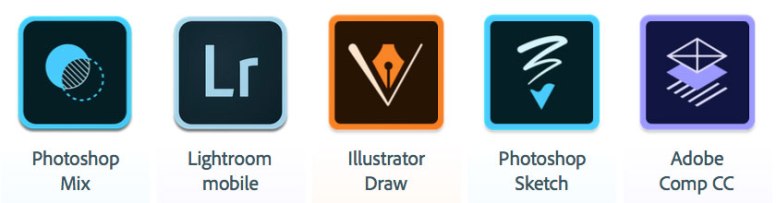
Chromebook users  will now be able to download the following mobile apps for free on their devices if they allow the use of Android apps:

This is the beginning of a long-term plan for Adobe applications and Chromebooks in partnership with Google. Adobe will be releasing details about future products as they are available.

Students of all ages can benefit from these apps, but if they’re logging in on their own device they will need to be 13 or older to sign up for an Adobe ID.

Students don’t need to be online all the time to access the apps on their Chrombooks. The only times a student needs to be connected to the internet are to receive updates and to sync their Creative Cloud account to other devices.

The mobile apps are a great way to introduce students to design concepts and design tools, but they’re best used as a supplement to Adobe Creative Cloud, not a replacement. The mobile apps have key features from the Creative Cloud products, but users are limited in what they can accomplish using the mobile apps alone.

Click here to see a range of helpful tutorials

Click here to see the Adobe Blog about this annoucement

Join the now over 350,000 teachers on the free Adobe Education Exchange to get lots of ideas on how to work with these apps in the classroom.

edex

Stay informed about future Adobe in Education professional learning opportunities for teachers in Australasia via: http://bit.ly/adobeEDU-events

Join the Australasian Adobe Professional Learning Group on EdEx to say in touch with Adobe in Education https://edex.adobe.com/group/apac-pl/

Check past Adobe in Education active use activities via this journal and CreateEdu TV http://bit.ly/CreateEduTV

 

Creativity at Brigidine College, Brisbane

img_9293a

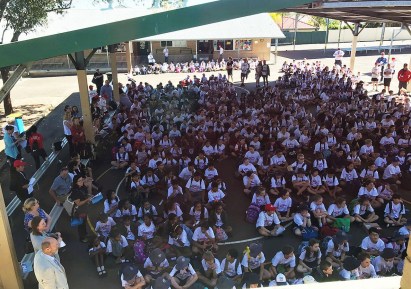
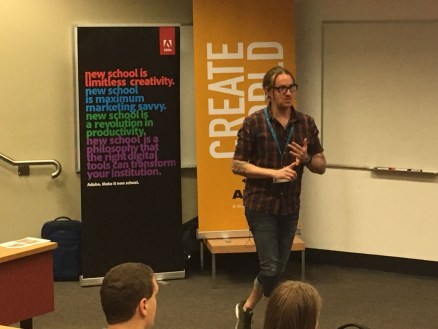
Brigidine College is a delightful Independent Catholic Girls School in the hills of Indooroopilly, near the centre of Brisbane, Australia. I had the pleasure of keynoting one of their opening staff days for 2017 and also running some Adobe related workshops.

The keynote topic was Creativity in Education is no longer an option, it’s an absolute necessity : Preparing GenZ for the real world. It was an honour to introduce many of the staff to the work and messaging of Mitch Resnick, Seymour Papert, Sir Ken Robinson, Edward de Bono, Professor Yong Zhao, Alfie Kohn, Dan Haesler, Marc Prensky and other education thought leaders.

I also used this opportunity to share the most recent research from Adobe titled: GEN Z in the Classroom: Creating the Future. This involved 2,521 students and 1,016 teachers from Australia, US, UK & Germany. Key objectives of this study are:

  • Understand how students view creativity and its impact/application across all different types of classes and potential careers;
  • Explore what creative tools students and educators see as most helpful in developing their online brands;
  • Uncover the synergies and gaps within the student/educator experience today when it comes to creativity, as well as what each group sees as the future of learning and working; and
  • Identify which regions “shine” in how they are preparing for the future workforce when it comes to creativity, and which fall behind.

More information & findings can be found via adobeeducate.com/genz

My keynote slides are available via: http://bit.ly/adobe-brigidine17

Following the keynote, Brian Chau (Adobe Solution Consultant) and I ran a series of hands-on workshops with a focus on Adobe Spark and Adobe Acrobat DC.


How & why Adobe tools are making a creative difference in Aussie classrooms

As the 2017 school year approaches, teachers and students all over this part of the world are making the most of the last week or so of the holiday break but also starting to prepare for the academic year ahead.

This is a great time of year to look at some of the Adobe applications that teachers and students all over the world are using in the learning and teaching process.

The following video may help inspire you. It was filmed at the Adobe Education Community Leadership Summit in Sydney last October and feature a range of educators from all areas of Australia sharing how and why they use Adobe products in their classrooms to enhance the creative construction of learning and communication.


You can stay informed about future Adobe in Education professional learning opportunities for teachers in Australasia via: http://bit.ly/adobeEDU-events
Join the Australasian Adobe Professional Learning Group on EdEx to say in touch with Adobe in Education https://edex.adobe.com/group/apac-pl/

Check past Adobe in Education active use activities via this journal and CreateEdu TV http://bit.ly/CreateEduTV

What schools should be like every day

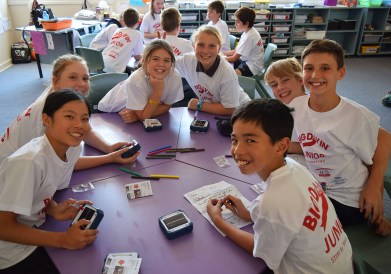
The following video clip comes from the 2016 Junior Big Day In which is an initiative from the Australian Computer Society Foundation, hosted at the wonderful Hilltop Road Public School in Sydney’s west.

It is an example of what schooling could be like everyday with links between education and industry driving authentic and vital 21st century communication, creativity and computational thinking skills.

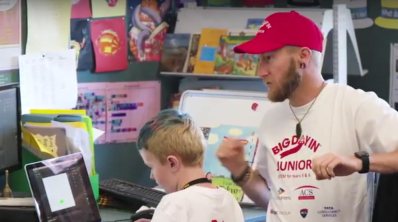
When you are looking at this clip, note the genuine excitement, discovery and engagement in the faces of the students and the teachers. Everyone is learning and making together with a real sense of purpose. This is what education should always be about.

This is the second year of the Junior Big Day In program which has grown to involve over 900 Year 5 & 6 NSW students.

screen-shot-2016-12-19-at-3-05-18-pm

image courtesy of ACS Foundation

Many of the technologies and activities on this day are affordable and accessible to most schools. In my travels around Australia and beyond, I see many schools establishing maker spaces and opening up these types of opportunities in their libraries and classrooms. However most of these learning activities are happening before school, recess, lunch time and after school. It appears as if this type of learning is not important enough to be integrated into the mainstream curriculum.

screen-shot-2016-12-19-at-3-05-31-pm

image courtesy of ACS Foundation

It is my dream that these type of activities are used regularly in classrooms all over the world to enhance student’s literacy, numeracy, science, history, geography, arts & physical skills. In doing so, students will be better prepared for lifelong learning in an every changing and uncertain future.

Wouldn’t it be nice if school was like this every day!

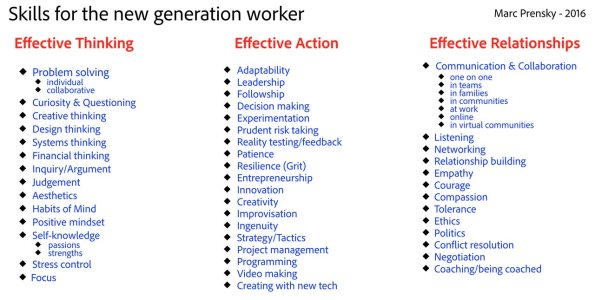
Thought leaders such as Marc Prensky and Professor Yong Zhao regularly share the importance of schools allowing students the opportunity to discover their passions and potentially turn those passions into 21st century employability and entrepreneurial skills such as:

21cskills

Adobe Education Leader and teacher at Hilltop Road Public School, Brett Kent and his Principal Natalie See were instrumental in the planning of this day with the ACS Foundation. It is great to see some of Adobe’s creativity software being featured in the video.

brett1

Special thanks to John Ridge and Kerrie Bisaro from the ACS Foundation for putting this event together.

_____

Here is the video story I put together from the 2015 Junior Big Day In


Award winning NSW student work

Talented NSW Adobe Campus Leader Andrew Lai from Northern Beaches Secondary College Freshwater Senior Campus, very proudly shared with me the following video that helped Monique (one of his Multimedia students) come first in the state for Industrial Technology this year.

She used a range of Adobe tools to produced the wonderful short film.

Well done Monique! Well done Andrew!

andrewlai16

Proud NSW teacher, Andrew Lai (Adobe Campus Leader)

If you are a NSW DoE teacher, make sure your students take advantage of free access to Adobe’s Creative Cloud software via https://nsw-students.onthehub.com Click here to find out more.

21st Century Learning at Woorana Park Primary

Every so often, I come across a school that is doing really amazing things in terms of ICT integration in the curriculum. Woorana Park Primary in Melbourne is one of those schools.

Kieran Nolan (@kdnolanT) is the school’s Education Technologist and the programs he has set up with the teaching staff are an outstanding example of what is possible in a Primary School.

Terry Cantwell (Adobe Campus Leader) from Real Time Learning (@rtlaustralia) has very creativity used Adobe Premiere Pro, After Effects, Character Animator, Photoshop and Audition to produced the following YouTube clip about what the school is achieving …


CreateWorld Conference 2016

cw16banner1

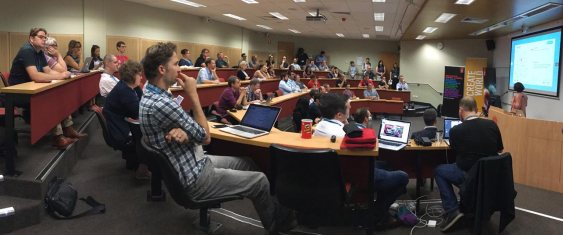
It was a privilege to be invited back to keynote and support the CreateWorld Conference in Brisbane at the Griffith University, Queensland College of Art.

img_2825a

The theme this year was “The Creativity of Things” – a play on the internet of things, and (as it says on the conference site) an exploration of how innovative people are using small, ubiquitous, connected devices to create art, to stimulate learning, to inspire, and to share.

This event involved educators from universities from all over Australia and New Zealand. It also, for the first time, included a number of arts and media related teachers from K12 schools in Queensland.

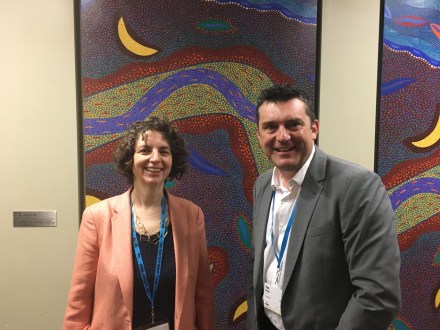
A personal and professional highlight for me was hearing from and meeting Natalie Rusk from the MIT Media Lab’s Lifelong Kindergarten Group.

img_8804

Two of my biggest education heroes come from this group. Its founder Seymour Papert and its current director Mitchel Resnick. Natalie, a research scientist,  has worked with both of them for many year. She is a lead developer and co-founder of Scratch, a graphical programming language that enables students to design and code interactive animations, games and a range of other creative projects. She also started the Computer Clubhouse after school which has over 100 sites in 20 countries.

img_8832

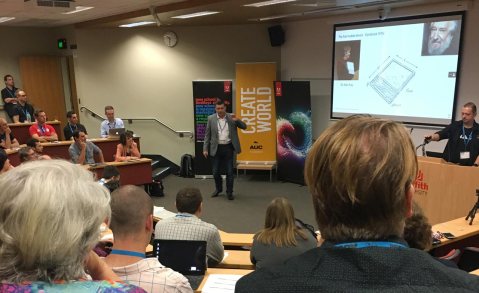
I was very pleased to be able to complement much of Natalie’s messaging during my keynote presentation  with supporting quotes from Seymour Papert and Mitch Resnick. A quote from Resnick that we both consequently shared was, Success in the future – for individuals, for communities, for companies, for nations as a whole – will be based not on what we know or how much we know, but on our ability to think and act creatively. Resnick said this in a webinar hosted by Adobe Education in 2014 (http://bit.ly/mitchresnick-adobe14).

img_0717a

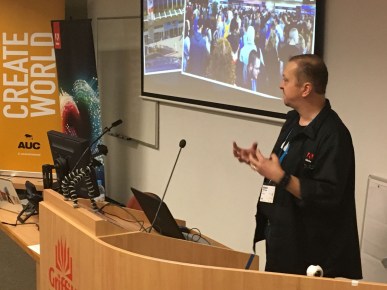
My friend and colleague, Brisbane based Adobe Solution Consultant Richard Turner-Jones, shared some of the new developments at Adobe that came out of the 2016 Adobe Max conference.

img_8813

JB Tinker from XCERIO (Adobe’s certification partner) talked about the value of doing Adobe certification and used this event to launch the 2017 Adobe Certified Associate World Championships competition.

img_8814

Richard and I ran a series of very well attended workshops throughout the conference including:

  • Adobe’s 3D Solutions with Photoshop, Fuse and Project Felix
  • Great looking Websites without coding using Adobe Spark Post, Spark Page,
    Photoshop & Adobe Muse
  • HTML Animations & Mobile App Development with Adobe Animate CC
  • Simple Video Solutions with the free Adobe Premiere Clip (iOS & Android) &
    Adobe Spark Video
  • Mobile App Design with Adobe Experience Design

The day 2 keynote was Adam Jefford, Head of Creative Industries at Pimpama State Secondary College. Adam talked about some of the really creative ways his school is challenging the traditional curriculum and inspiring its young people to think outside the square and prepare themselves for an unknown world. Earlier this year, Adam was awarded a Good Design Award for Jump Start – a design thinking and social entrepreneurship program he co-founded empowering school students to make a positive change in the world through design-led creativity and entrepreneurial endeavours.

img_8868

Another highlight for me was catching up with my friend Hohepa Spooner from the Auckland University of Technology (AUT). Hohepa did a presentation titled Creating Apps and eBooks for Education with Adobe Experience Manager Mobile and the Adobe Creative Cloud. His presentation looked at the Mobile Apps and eBooks that have been created at the AUT Centre for Learning and Teaching, and the Faculty of Māori and Indigenous Development – Te Ara Poutama and how they are used in teaching and learning in various faculties and departments within the university with a focus on the use of Adobe Experience Manager.

img_8880

Another feature of this event was The Shed where a number of vendors had displays for the participants to tinker and play. I enjoyed playing a 3D printed electric guitar.

img_8837

Universities involved in CreateWorld 2016 included:

  • AUT University (NZ)
  • Charles Sturt University (NSW)
  • Griffith University (QLD)
  • University of Auckland
  • The University of Queensland
  • The University of Waikato
  • The University of Western Australia
  • University of Newcastle
  • University of Wollongong

Congratulations to Daniel Della-Bosca, Seth Ellis, Dale Patterson and Tony Gray for putting this conference together.

Adobe resources shared at this event can be found via – bit.ly/adobe-createworld16

Paul’s legacy lives on

img_8739a

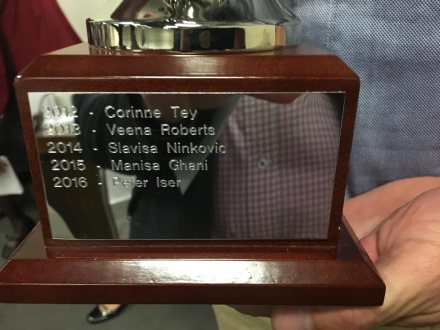
The Paul Kitchen – Junior Teacher of the Year – St Vincent’s Clinical School

One of my father’s passions was teaching medical students from The University of Melbourne during their clinical experience at St Vincent’s Hospital, Melbourne. Each year since his passing in 2011, a trophy in Paul’s honour has been awarded to encourage the medical teaching staff at St Vincent’s to continue in his tradition of great teaching.

This year, the trophy was awarded to Dr. Peter Iser, a General Medical Physician who works at St Vincent’s and Geelong. Peter was taught by Paul, and fondly remembers him as an inspirational teacher and surgeon.

img_8724a

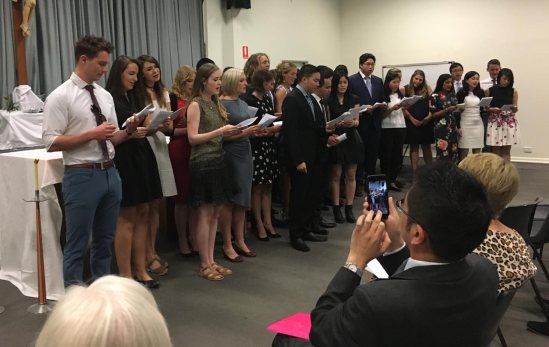
The 2016 graduating medical students from St Vincent’s Clinical School

The Paul Kitchen Junior Teacher of the Year award is announced annually at a special graduation mass at St Vincent’s that precedes the student’s graduation ceremony at The University of Melbourne when they officially become doctors.

My mother Merrill spoke about Paul’s passion for progressive education and how he helped drive the teaching program at St Vincent’s to a more problem based and inquiry approach. I recall many past conversations with Paul about the value of this approach in K-12 education.

This is the first year when the graduating students would have never been taught by Paul at any stage. The medical students may have never met Paul, but many of the teaching and administration staff  remember him fondly and it is always a pleasure and privilege for our family to be asked to pass on this special award and continue Paul’s legacy.

img_8738a

Click here to see my tribute to Paul posted in 2012.

Click here to see the Royal Australasian College of Surgeons write up about Paul

ISV – Maker Fest 2016

isva

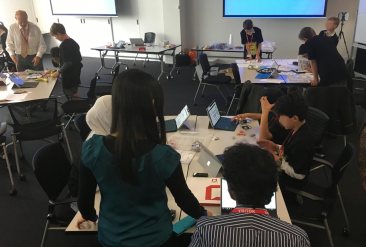
Independent School’s Victoria (ISV), invited Adobe Education to be involved with their first ever Maker Fest this week. The Fest involved a range of activities for teachers and students with an aim to encourage students to construct, tinker and learn lots in the process.

One of the highlights for the teachers was hearing from Adrian Camm, Head of Teaching and Learning at The Geelong College. Adrian is passionate about progressive education methods and he shared some of his experiences and philosophies. He recommended five key points for school leaders to follow to make a difference …

  1. Create a shared vision among the staff & students
  2. Switch from passive to active learning in the classroom
  3. Provide permission
  4. Make your default answer to requests “yes”
  5. Always remind people (especially teachers) that they are awesome

Other highlights of the day included seeing a number of students working with robots and circuits and simple programming applications to solve problems and build things.

img_8698a

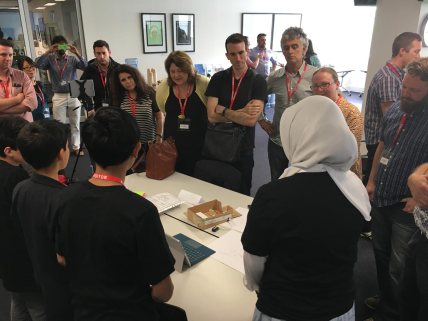
The students worked in groups and were given the opportunity to share what they had made and learned to the visiting teachers.

img_8704a

I had the pleasure of showing the teachers some of the great Adobe resources, including the Adobe Education Exchange which now involves close to 350,000 teachers globally. The Adobe Spark products were also popular at this event.

edex1

https://edex.adobe.com/

adobe-spark1

https://spark.adobe.com/

It was also great catching up with my friend Luke Kerr from  who is making a big difference in the area of STEM education with his team at Real Time Learning.

img_8706a

The maker movement in education is the latest adaptation of Seymour Papert’s Constructionist Learning theory. I’ve often referred to Professor Papert as the godfather of ICT integration in education. His learning theory supports a student-focused, inquiry approach to teaching and learning where students use existing information to build new knowledge. With this approach, students learn through doing with a project-based focus, making connections between various ideas facilitated by the teacher rather than dictated by the teacher.

Click here for my  article about the recent passing of the great Seymour Papert.

Special congratulations to Lynda Cutting, Irene Anderson, Melinda Hargreaves and the rest of the ISV team for making this day such a success. I’m looking forward to being involved again in 2017.